 Pin
Pin The first time I truly understood the magic of a perfect Wiener Schnitzel wasn't in Vienna, but in my aunt's kitchen on a rainy Tuesday afternoon. She pulled out a piece of veal no thicker than a coin, a bowl of breadcrumbs, and somehow turned it into something that tasted like crispy, golden sunshine. I watched the butter foam around the edges, listened to that distinctive crackle, and realized this wasn't just cooking—it was a ritual. That day taught me that the simplest dishes often demand the most respect.
Years later, I made this for a dinner party and watched my skeptical friend take one bite, close his eyes, and smile without saying a word. That's when I knew I'd nailed it. The key was respecting the process and not rushing the details that seemed too fussy at first.
Ingredients
- Veal cutlets: Four pieces about 150 grams each, pounded incredibly thin to around 1/4 inch—this thinness is what makes them tender and allows them to cook through without the outside burning.
- All-purpose flour: 100 grams for the first breading stage; it gives the egg wash something to grip and creates structure.
- Eggs and milk: Two large eggs beaten with 4 tablespoons of milk creates a custard-like binder that's thinner than whole eggs alone, which helps the breadcrumbs adhere without clumping.
- Fine dry breadcrumbs: 150 grams of quality breadcrumbs (homemade panko works beautifully too) create that coveted shattering crust when they hit hot fat.
- Clarified butter or neutral oil: 250 milliliters—clarified butter is the traditional choice because it browns the coating to burnished gold and adds subtle, nutty flavor, though a high-smoke-point oil like grapeseed works too.
- Lemon wedges and fresh parsley: For brightness; the acid cuts through the richness and the herbs add a whisper of freshness that balances the richness.
Tired of Takeout? 🥡
Get 10 meals you can make faster than delivery arrives. Seriously.
One email. No spam. Unsubscribe anytime.
Instructions
- Pound the veal to paper-thin perfection:
- Place each cutlet between two sheets of plastic wrap and use a meat mallet to pound gently and evenly until it's about 1/4 inch thick. Don't pulverize it—you want thin, not shredded. Pat the cutlets completely dry with paper towels and season both sides lightly with salt and pepper.
- Build your breading station:
- Arrange three shallow dishes in a row: flour in the first, egg-milk mixture in the second, breadcrumbs in the third. This assembly-line setup prevents chaos and keeps your hands from becoming a breaded disaster.
- Bread each cutlet with intention:
- Dredge the veal in flour first, shake off any excess, then dip it into the egg mixture to coat both sides. Finally, lay it gently into the breadcrumbs and coat evenly, pressing very lightly so the coating stays loose and airy rather than compacted.
- Fry until golden brown:
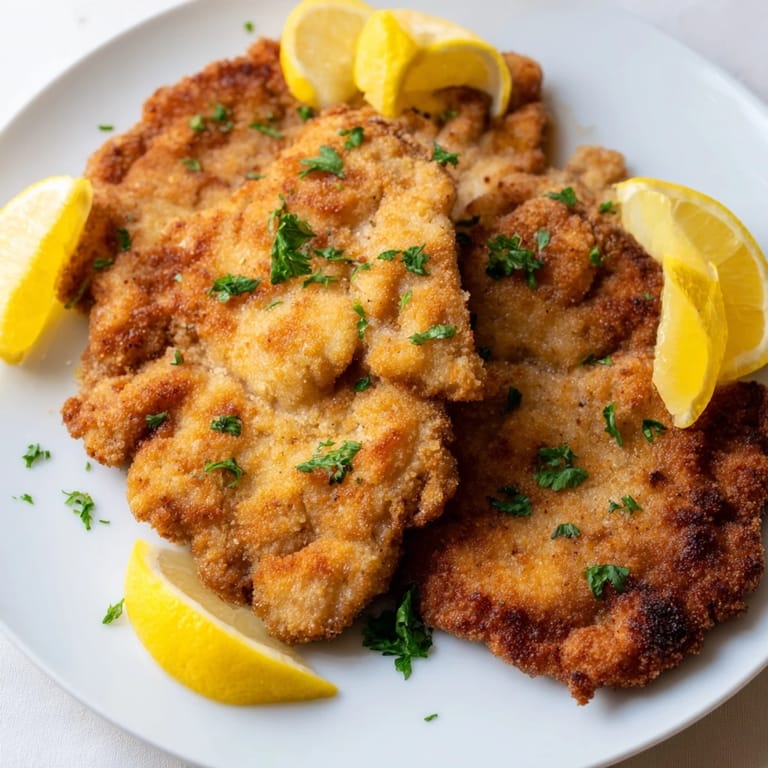
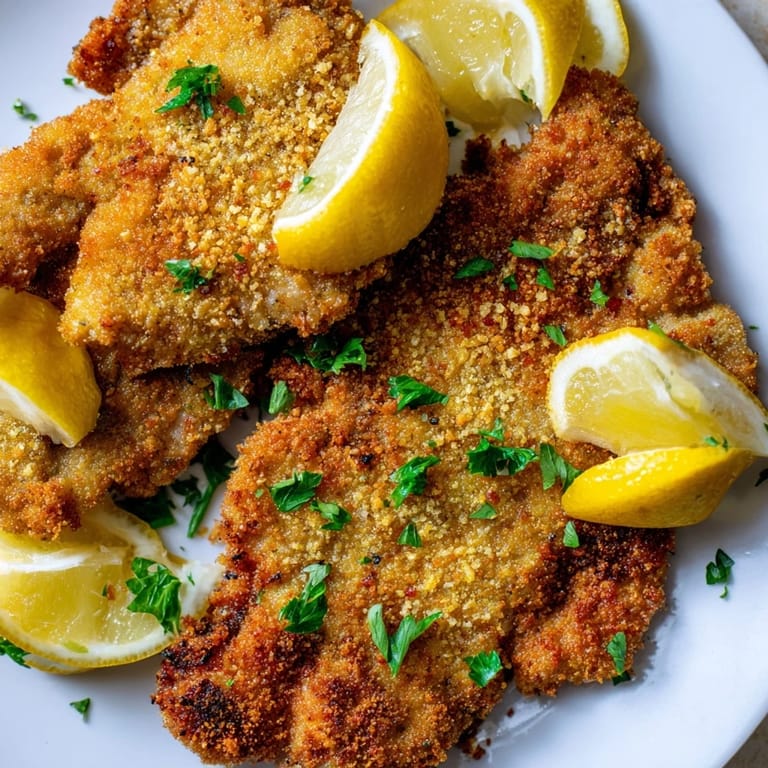
- Heat your clarified butter or oil in a large skillet over medium-high heat until it shimmers and moves like liquid mercury. Working with one or two cutlets at a time (never crowd the pan), fry for 2 to 3 minutes per side, tilting the pan and spooning the hot fat over the top for even, blistering browning. You'll know it's done when the exterior is a deep burnished gold.
- Drain and serve immediately:
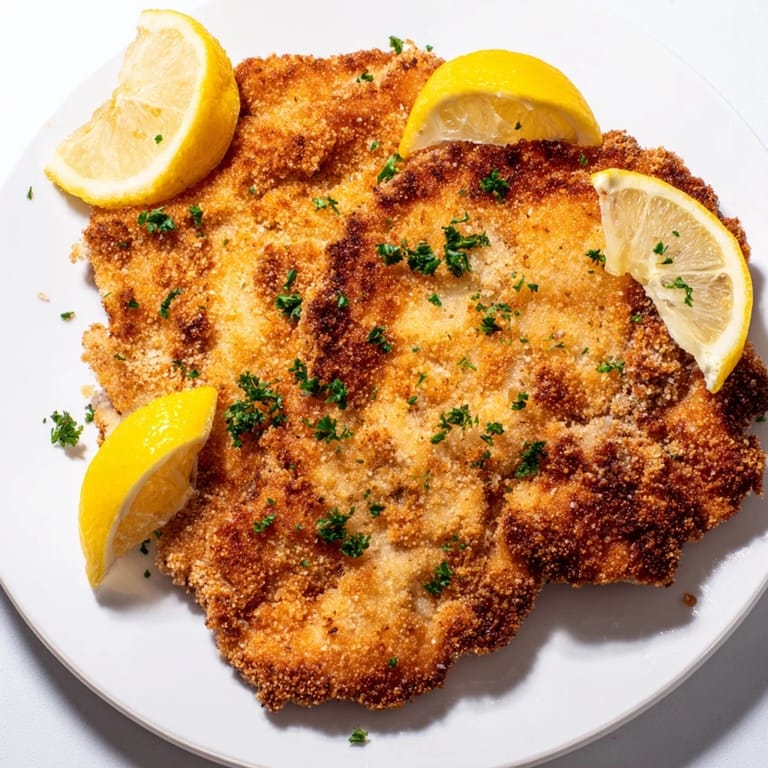
- Use a slotted spatula to carefully lift each schnitzel onto paper towels for just a moment to blot any excess fat. Serve right away—the moment it cools, the crust begins to soften. Plate it with lemon wedges alongside and a generous scatter of fresh parsley if you like.
 Pin
Pin I learned the hardest lesson about this dish when I tried to be clever and fry two oversized schnitzels at once. The result was a soggy, pale disappointment that taught me humility and patience. Now, whenever I make it, I remember that moment and slow down intentionally.
On Choosing Your Protein
Veal is traditional and produces the most delicate, tender result—its mild flavor lets the cooking technique shine. If veal isn't available or feels too expensive, you can use thin-cut pork cutlets or even chicken breast pounded paper-thin, though purists will tell you that's no longer a true Wiener Schnitzel but rather a Schnitzel Wiener Art, which is simply a different (and still delicious) thing. The technique remains exactly the same regardless of what protein you choose.
The Best Sides
Traditionally, Wiener Schnitzel is served with warm potato salad dressed in a vinegary broth while still warm, or a cool, crisp cucumber salad with fresh dill that provides acidic contrast to the richness. Some people add a small dollop of lingonberry jam or lemon curd for unexpected sweetness and tartness. The beauty of this dish is that it's already so complete on its own; the sides are really just there to refresh your palate between bites.
Storage and Make-Ahead Tips
Wiener Schnitzel is absolutely best eaten fresh and hot, but you can pound and bread the cutlets up to 4 hours ahead, stacking them on parchment paper in the refrigerator. This actually helps—the coating adheres better and fries more evenly. Leftovers are wonderful sliced cold the next day in a sandwich with a smear of mayo and some fresh greens, though they'll never have quite the same magic as when they came straight from the pan.
- Cold schnitzels taste fantastic in an Austrian-style sandwich with good mustard and crisp vegetables.
- If reheating, use a low oven rather than a microwave to preserve the crispness of the coating.
- The dish doesn't freeze well once fried, but you can freeze the breaded, uncooked cutlets for up to a month.
 Pin
Pin There's a reason this dish has been beloved in Vienna for centuries—it's the perfect balance of technique, respect for ingredients, and pure, uncomplicated deliciousness. Make it once, and you'll find yourself coming back to it again and again.
Recipe Questions
- → What is the best veal cut for Wiener Schnitzel?
Choose tender veal cutlets, about 150 grams each, pounded thin to about 1/4 inch for ideal texture and even cooking.
- → How can I ensure the breading stays crispy?
Use a light, loose breadcrumb coating without pressing it into the meat, then fry in hot clarified butter or neutral oil for an even golden crust.
- → Why use clarified butter or neutral oil for frying?
They have a high smoke point, which allows frying at medium-high heat without burning, ensuring a crispy crust and juicy interior.
- → Can I prepare the veal cutlets in advance?
It is best to bread and fry the cutlets just before serving to keep the coating crisp and the meat tender.
- → What are traditional accompaniments for this dish?
Commonly served with lemon wedges, fresh parsley, and side salads like potato or cucumber, sometimes complemented with lingonberry jam.
- → How should I handle the cutlets to maintain tenderness?
Gently pound between plastic sheets to avoid tearing, then pat dry to help the breading adhere properly.