 Pin
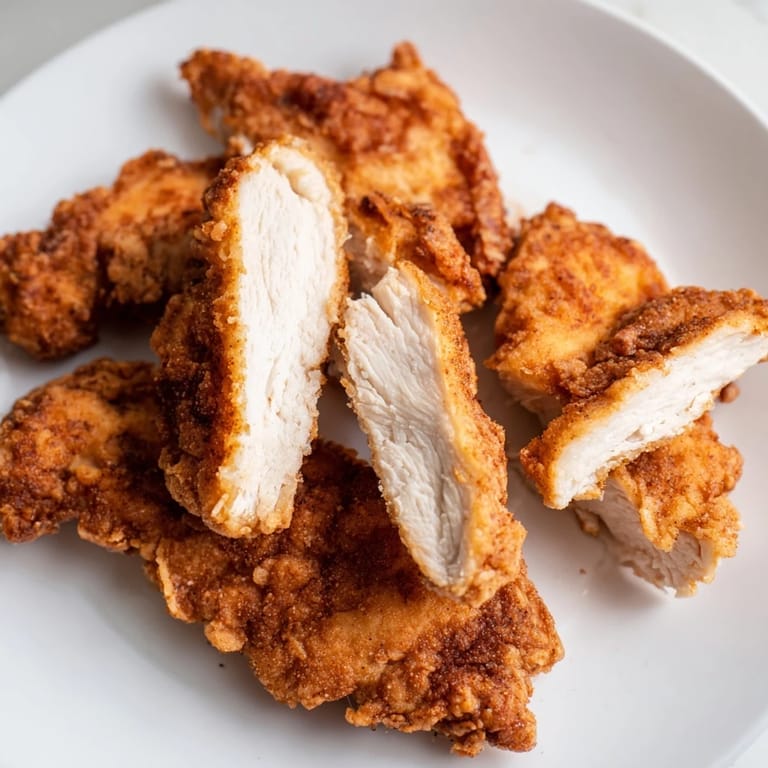
Pin There's something about the smell of buttermilk sizzling in hot oil that takes me straight back to my grandmother's kitchen on lazy Sunday afternoons. She'd stand at the stove with a knowing smile, explaining how the tangy marinade was the secret to keeping the chicken impossibly juicy while the flour crust turned golden and crackling. I've tried many fried chicken recipes since then, but none quite matched that magical combination she swore by, so I set out to recreate her method and make it my own.
I remember making this for my roommate's birthday potluck, and she devoured half the batch before anyone else even arrived. She kept asking what made them different from every other fried chicken she'd had, and honestly, I think it was just how the buttermilk and the resting time worked together, creating this perfect texture that stayed crispy even as it cooled.
Ingredients
- Chicken tenders or breasts: Use whatever you find, but I've learned that slightly thicker pieces stay juicier during the fry without drying out at the edges.
- Buttermilk: The star player here—its acidity tenderizes the chicken while the cultures add subtle depth that plain milk can never achieve.
- All-purpose flour: Mix it with the seasonings to build a crust that doesn't just taste good but has actual structure and crunch.
- Paprika: This quietly becomes the backbone of flavor in both the marinade and coating, so don't skip it or go cheap.
- Garlic and onion powder: They dissolve into the buttermilk and coat, creating layers of flavor rather than just surface seasoning.
- Baking powder: The secret weapon that makes the crust extra light and crispy, almost like it's been fried twice.
- Vegetable oil: Keep it neutral so it doesn't compete with the chicken—this is one place where splurging doesn't help.
Tired of Takeout? 🥡
Get 10 meals you can make faster than delivery arrives. Seriously.
One email. No spam. Unsubscribe anytime.
Instructions
- Mix your marinade:
- Whisk together the buttermilk with all the seasonings until everything dissolves smoothly. You want it to smell savory and rich, almost like a sauce you'd want to drink.
- Marinate the chicken:
- Submerge each piece in the buttermilk mixture, making sure nothing sits above the surface. Two hours is the minimum, but overnight transforms the texture into something almost impossibly tender.
- Prepare your coating:
- Mix flour and seasonings in a shallow dish—this is where you build the flavor profile of the crust, so taste the dry mix and adjust if something feels flat.
- Dredge and rest:
- Pull each piece from the marinade, let the excess drip away, then press it firmly into the flour so the coating sticks rather than just dusts the surface. Letting them sit on a plate for a few minutes helps the coating set.
- Heat your oil:
- Get that oil to exactly 350°F—use a thermometer because guessing here is how you end up with soggy insides or burnt outsides. The temperature should feel intense but not smoking.
- Fry in batches:
- Work in small batches so the oil stays hot and the chicken cooks evenly; three to four minutes per side until golden brown and the internal temperature hits 165°F. Listen for the sizzle to tell you the temperature is holding steady.
- Drain and serve:
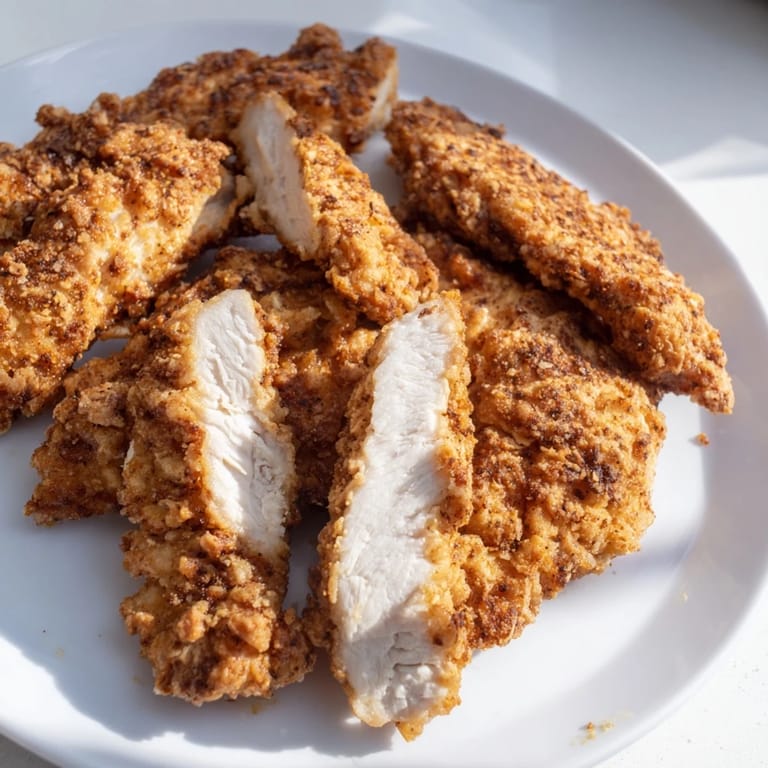
- Lay them on a wire rack so steam doesn't soften the bottom, and serve while they're still warm enough to have that satisfying crunch.
 Pin
Pin There was a moment during a family dinner when my usually quiet uncle asked for seconds and then thirds, and my mom caught my eye with this knowing look that said I'd finally gotten it right. Food that makes people want more without needing to ask what's in it—that's when you know you've nailed something.
The Science of Buttermilk
Buttermilk does something special that regular milk simply can't: the lactic acid breaks down the proteins in the chicken, which keeps it tender even when you subject it to the aggressive heat of frying. The cultures also add a subtle tang that deepens the overall flavor without tasting sour. I used to think marinades were just about adding flavor, but this one is actually doing chemical work to improve the texture itself, which changed how I think about preparation.
Choosing the Right Oil and Temperature
The moment the oil hits temperature, you feel the energy in the kitchen shift—the heat becomes tangible, almost alive. I've made this dish with different oils, and while they all work, vegetable oil stays the most neutral, letting the chicken and seasoning speak without interference. The 350°F sweet spot isn't random; it's the exact temperature where the exterior crisps while the inside finishes cooking without drying out, and I learned to trust that number religiously after a few experiments.
Making It Your Own
This recipe is honestly a foundation more than a strict formula, and some of my best batches came from small tweaks. I've pushed the cayenne pepper higher for friends who wanted heat, swapped in hot sauce for some buttermilk for a deeper spice, and even tried adding a touch of honey to the marinade for subtle sweetness. The structure stays solid no matter what you do, which is why I keep coming back to it.
- For extra crunch, try the double-dip method: coat in flour, dip back in buttermilk, coat again in flour.
- Serve with honey mustard, ranch, or even a vinegar-based sauce that cuts through the richness beautifully.
- Let leftover chicken come to room temperature before reheating in a 350°F oven to restore some of that original crispness.
 Pin
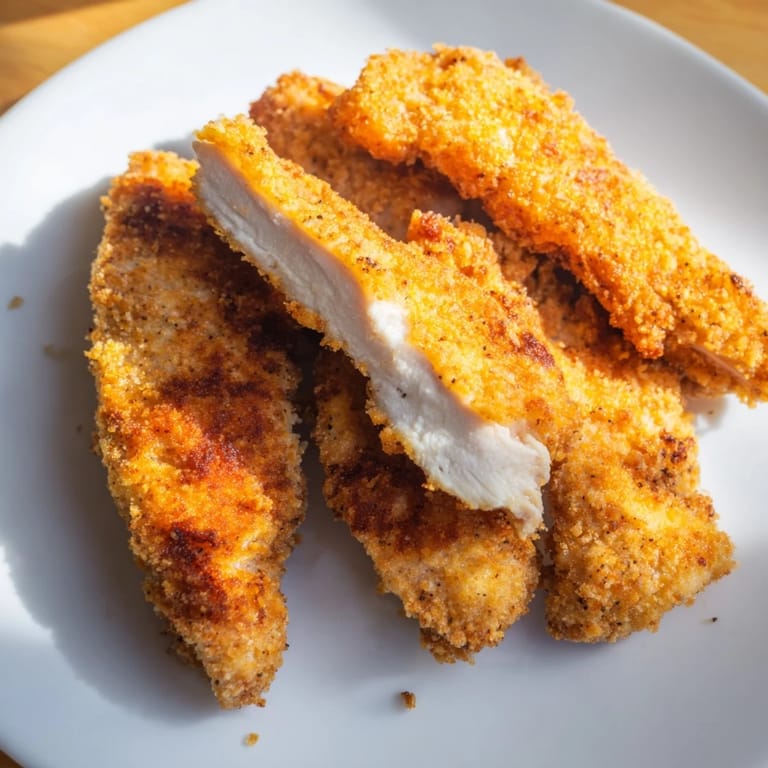
Pin These tenders have become the thing I make when I want to feel like I know what I'm doing in the kitchen, and they never disappoint. There's real magic in the simplicity of it, and that's exactly why it keeps getting made.
Recipe Questions
- → How does buttermilk affect the chicken?
Buttermilk tenderizes the chicken, making it juicier and adding a subtle tang to the flavor.
- → What is the best oil for frying?
Vegetable oil with a high smoke point is ideal for frying to achieve a crispy, golden coating without burning.
- → Can I make the coating extra crunchy?
Yes, double dipping the chicken in buttermilk and flour before frying enhances the crunchiness of the coating.
- → How do I know when the chicken is cooked through?
Fry until the coating is golden and the internal temperature reaches 165°F (74°C) for safe and juicy results.
- → Can I adjust the spice level?
Increasing cayenne pepper in the marinade or adding hot sauce can add a spicy kick to the flavor profile.