 Pin
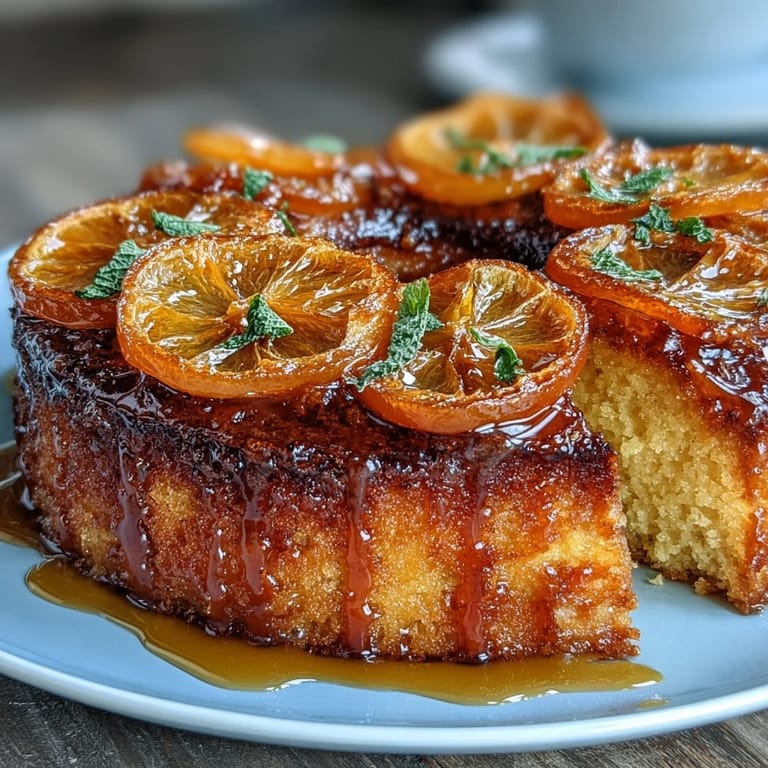
Pin There's something almost meditative about watching orange slices turn glassy and golden in a bubbling syrup—that's when I knew this cake needed to exist. I'd been experimenting with olive oil cakes for years, but it wasn't until a friend brought candied citrus to a dinner party that everything clicked into place. The brightness, the chew, the way those sticky-sweet rounds caught the light—I went home and started thinking about how to build a cake around them. What emerged was something that tastes like a Mediterranean afternoon: moist, fragrant, and quietly showing off without trying too hard.
I made this for my mom's birthday tea last spring, and watching her take that first bite—the way her eyes got a little brighter when she hit a piece of candied orange—that's when I knew this recipe had crossed from experiment into something worth keeping. She asked for the recipe before she even finished her slice, and now it shows up on every occasion where we need something that feels special.
Ingredients
- Medium oranges (2), thinly sliced: The stars of the show—look for ones that feel heavy for their size, which means they're juicy and flavorful.
- Granulated sugar (1 cup for candying): This melts into the orange slices, drawing out their moisture and creating that translucent, tender texture.
- Water (1 cup): The foundation of your syrup—it keeps the oranges submerged and cooking evenly.
- All-purpose flour (2 cups): Standard flour works beautifully here; no fancy techniques needed.
- Baking powder (1 1/2 teaspoons) and baking soda (1/2 teaspoon): This combination gives you a tender crumb with just enough lift to keep things light.
- Salt (1/2 teaspoon): Don't skip it—salt amplifies sweetness and keeps the cake from tasting flat.
- Granulated sugar (1 cup for cake): Rubbed with orange zest, this becomes the flavor foundation that reminds you with every bite why citrus matters.
- Orange zest (from 1 orange): Microplane it fresh, not from a jar—the oils are what make this cake sing.
- Large eggs (3), room temperature: Room temperature eggs incorporate more smoothly and create a silkier batter.
- Extra virgin olive oil (3/4 cup): Use something you'd actually taste on its own—quality makes a real difference in the final flavor.
- Whole milk (3/4 cup), room temperature: The milk balances the richness of the olive oil and keeps things tender.
- Vanilla extract (1 teaspoon): A whisper in the background that makes everything taste more like itself.
- Powdered sugar (1 cup for glaze): Sifted means no lumps in your smooth, pourable finish.
- Fresh orange juice (2–3 tablespoons) and lemon juice (1 tablespoon): Fresh citrus only—bottled won't give you that sharp, bright finish that makes the glaze sing.
Tired of Takeout? 🥡
Get 10 meals you can make faster than delivery arrives. Seriously.
One email. No spam. Unsubscribe anytime.
Instructions
- Candy your oranges first:
- Combine sugar and water in a skillet and let it come to a gentle simmer, stirring until the sugar dissolves completely. The mixture should look clear and smell sweet. Add your orange slices in a single layer—they should be mostly submerged but it's okay if a few edges peek above the syrup.
- Let them transform slowly:
- Keep the heat at a gentle bubble for 20–25 minutes, flipping the slices halfway through so they cook evenly. You're looking for that magical moment when they go from opaque to almost translucent and glassy. Transfer them to parchment to cool while you get the oven ready.
- Get your oven and pan ready:
- Heat to 350°F (175°C) and grease a 9-inch round cake pan, then line it with parchment paper. The parchment on the sides helps you see the cake rise evenly.
- Build your dry mixture:
- In a medium bowl, whisk flour, baking powder, baking soda, and salt together. The whisking distributes the leavening agents so you don't get any surprise lumps of baking soda in a bite.
- Create your flavor base with zest:
- In your largest mixing bowl, combine sugar with the orange zest and rub them together with your fingertips for about a minute. This breaks down the tiny oils in the zest and distributes them throughout the sugar before anything else gets added. It smells incredible.
- Whisk in eggs until pale:
- Add eggs one at a time, whisking after each addition until the mixture looks lighter and slightly thickened. This usually takes a few minutes of steady whisking.
- Stream in your olive oil slowly:
- Pour the oil in a thin stream while whisking constantly—this prevents the mixture from breaking and creates an emulsified, silky batter. It takes a little longer than you'd think, but it matters.
- Alternate wet and dry ingredients:
- Add half your dry mixture, then half your milk (with the vanilla added in), then the rest of the dry mixture, then the rest of the milk. Stir gently between each addition just until combined—overmixing creates a tough cake.
- Layer and pour:
- Arrange your candied orange slices on the bottom of the prepared pan in whatever pattern makes you happy. Pour the batter gently over top and smooth it so the oranges stay put.
- Bake until golden:
- Slide it into the oven for 45–50 minutes until a toothpick inserted in the center comes out with just a few moist crumbs clinging to it. The top should be deep golden and the kitchen should smell like an orange grove.
- Cool with patience:
- Let it sit in the pan for 15 minutes—this firms things up enough that the cake won't fall apart when you flip it. Turn it out onto a wire rack and let it cool completely before glazing.
- Finish with brightness:
- Whisk together powdered sugar, fresh orange juice, and lemon juice until smooth and pourable. Drizzle it over the cooled cake and let it pool in the cracks and crevices. Top with reserved candied oranges if you saved some.
 Pin
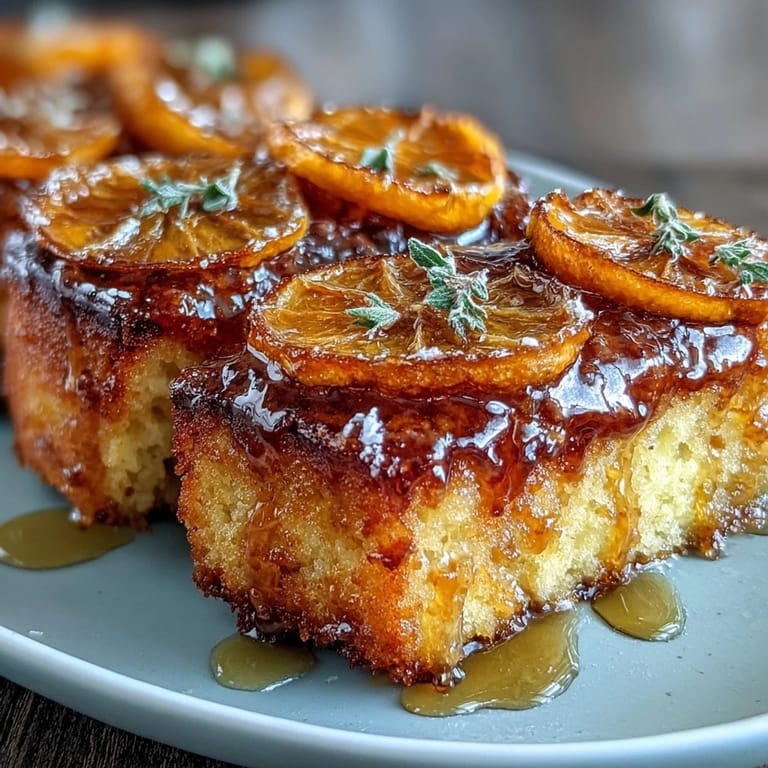
Pin This cake has become my go-to for moments when I want to show someone I care without making a big production out of it. There's something about a slice with tea or alongside a friend that just feels right.
The Magic of Candied Citrus
The candying process is where this cake gets its soul. When you watch those orange slices slowly transform from opaque and bitter to glassy and tender, you're witnessing something that takes patience but rewards it generously. I learned the hard way that rushing this step—cranking up the heat to finish faster—just makes the slices tough and tastes almost medicinal. Low and slow is the only way. The slower syrup also becomes more concentrated, which means you can drizzle it over ice cream, yogurt, or even into cocktails on nights when the cake is long gone.
Why Olive Oil Changes Everything
Using olive oil instead of butter in a cake feels unconventional until you taste it—then it feels obvious. The oil creates a crumb that stays moist for days without tasting heavy or greasy. It also carries flavor differently than butter does, so the citrus and vanilla come through more clearly. I use a good extra virgin oil because you can actually taste it; a generic one won't do justice to the orange. The day after baking, this cake is often even better than fresh, which is a rare gift.
Serving and Storage Wisdom
This cake is at its best at room temperature, which makes it perfect for entertaining because you can bake it the day before. The flavor deepens and the crumb settles into a more tender texture overnight. Pair it with afternoon tea, Moscato d'Asti, or Earl Grey depending on your mood. If you want to get fancy, a dollop of whipped cream or crème fraîche alongside a slice pushes things into special-occasion territory without feeling overdone.
- Wrap leftovers airtight in parchment and plastic wrap; they'll keep perfectly for three days.
- Taste it cold straight from the fridge on mornings when you need a quiet moment.
- The candied orange slices are the showpiece—save a few extras to arrange on top just before serving for maximum visual impact.
 Pin
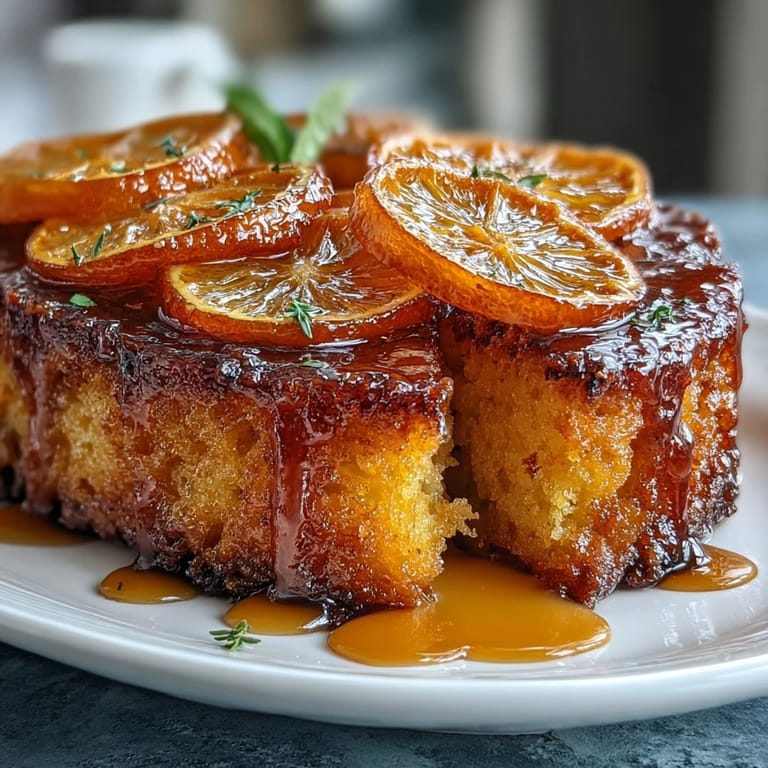
Pin This is the kind of cake that makes people ask for the recipe, and when you hand it over, they'll understand why it matters. Bake it for someone you want to remember.
Recipe Questions
- → How are the candied oranges prepared?
Orange slices are simmered gently in a mixture of sugar and water until translucent and tender, then cooled on parchment to preserve their glossy texture.
- → What gives the cake its moist texture?
The combination of extra virgin olive oil, whole milk, and eggs creates a rich, tender crumb with a moist consistency.
- → Can I substitute ingredients for different flavors?
Yes, using blood oranges adds a dramatic color and depth, while swapping milk for Greek yogurt results in a tangier crumb.
- → How is the citrus glaze made?
The glaze blends powdered sugar with fresh orange and lemon juices, whisked until smooth and drizzled over the cooled cake for a bright, tangy finish.
- → What are some suggested pairings?
This cake pairs wonderfully with Moscato d'Asti or Earl Grey tea, enhancing the citrus notes and offering a balanced tasting experience.
- → How should leftovers be stored?
Store the cake airtight at room temperature for up to three days to maintain freshness and moisture.