 Pin
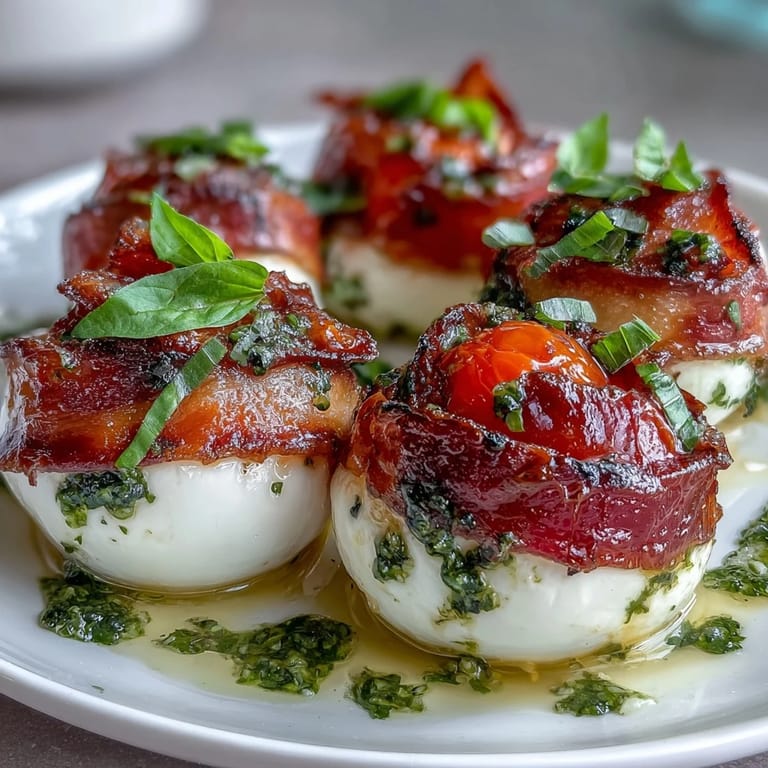
Pin My neighbor burst through the kitchen door one July afternoon with a basket of cherry tomatoes so perfect they looked fake, and suddenly I had to do something worthy of them. I'd been eyeing those tiny mozzarella balls at the market for weeks, and this was the moment—something that required almost no cooking, just assembly and a whisper of pesto. Within minutes, these skewers became the thing everyone asked about, not because they were complicated, but because they tasted like summer itself had been threaded onto a stick.
I made these for a potluck once and watched someone eat three in a row without saying anything, just nodding with their eyes closed. That's when I knew this recipe had crossed from "nice appetizer" to "people will remember this." The beauty is how the cool mozzarella contrasts with the warmth of the basil and garlic in the pesto—it's the kind of detail that makes you feel smarter in the kitchen than you actually are.
Ingredients
- Cherry tomatoes: Look for ones that feel heavy for their size and smell faintly sweet at the stem end; they should give just slightly when you squeeze gently.
- Mini mozzarella balls (bocconcini): Buy them the day you plan to serve, since they're best when they haven't spent too long sitting around—they lose that delicate texture.
- Fresh basil leaves: Tear gently rather than chop to keep the oils intact and the flavor brighter; purple basil works beautifully if you want to be fancy.
- Wooden or bamboo skewers: Soak them for thirty minutes before assembling so they don't splinter when you thread things onto them.
- Fresh basil leaves for pesto: Use the tender leaves from the center of the bunch, not the older, tougher ones near the bottom.
- Pine nuts: Toast them lightly in a dry pan for two minutes before using—this wakes up their flavor in a way that makes everything taste more interesting.
- Garlic clove: One small clove is plenty; you want it to support the basil, not overpower it.
- Grated Parmesan cheese: Use real Parmigiano-Reggiano if you can; the pre-shredded stuff has anti-caking agents that make the pesto feel grainy.
- Extra virgin olive oil: The better your oil, the better your pesto will taste—this is worth splurging on.
- Salt and freshly ground black pepper: Taste as you go, because pesto can get overly salty if you're not paying attention.
Tired of Takeout? 🥡
Get 10 meals you can make faster than delivery arrives. Seriously.
One email. No spam. Unsubscribe anytime.
Instructions
- Toast the pine nuts:
- Heat a dry skillet over medium heat and toss the pine nuts in for about two minutes, shaking the pan occasionally until they smell fragrant and turn golden. This takes no time, but it transforms everything.
- Build your skewers:
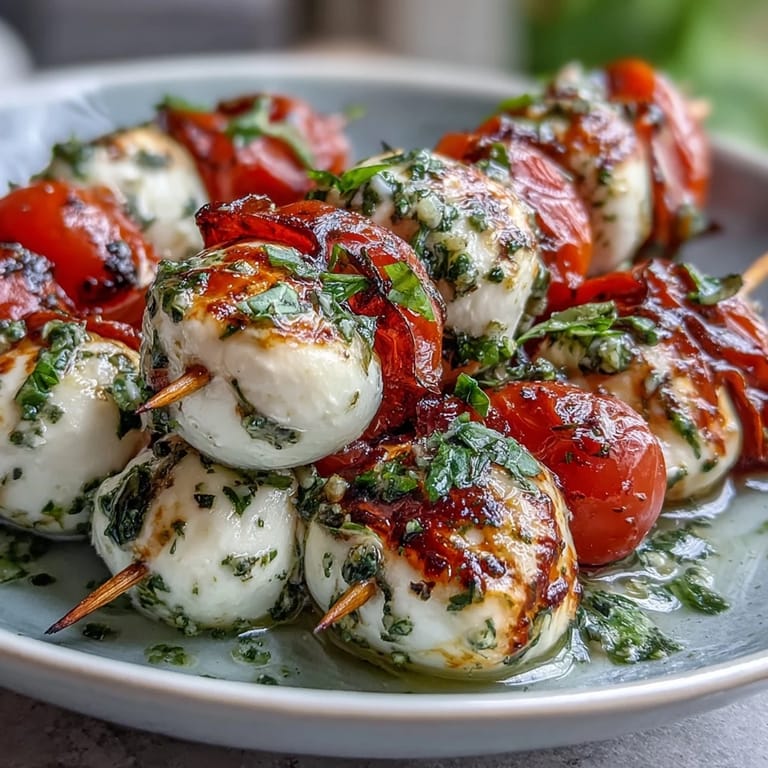
- Thread a cherry tomato, then a mozzarella ball, then a fresh basil leaf onto each skewer in that order, which keeps the basil from getting lost between the heavier ingredients. Arrange them on a platter as you go so they look intentional and appetizing.
- Make the pesto:
- Combine the basil for pesto, your toasted pine nuts, garlic, and Parmesan in a food processor and pulse until everything is roughly chopped—you want texture, not a smooth paste. The sound of the processor slowing down is your cue to stop.
- Emulsify with oil:
- With the processor running, pour the olive oil in slowly through the feed tube while watching the mixture turn from rough to silky. It'll take about a minute and the transformation is oddly satisfying to watch.
- Season to taste:
- Add salt and pepper in small pinches, tasting between each addition because pesto forgives almost nothing if you oversalt it. This is the step where your palate makes the recipe.
- Drizzle just before serving:
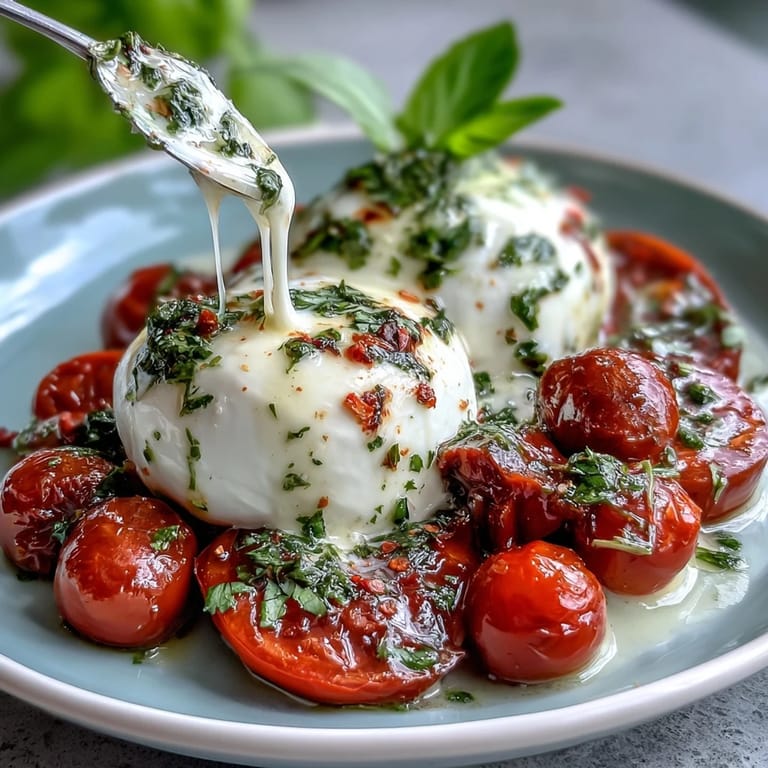
- Keep the pesto separate until the last possible moment, then give each skewer a generous drizzle across the top. This prevents the basil from oxidizing and keeps everything bright and fresh-tasting.
 Pin
Pin There was a moment at a garden party when someone asked if I'd made these professionally, and I had to laugh because I'd assembled them standing at the counter listening to a podcast. That's when it hit me—the best recipes aren't the complicated ones, they're the ones that let you shine while barely trying. These skewers have a way of making you look like you know what you're doing, even if you're just following your instincts.
Why Fresh Basil Makes All the Difference
Basil is one of those ingredients that seems simple until you realize dried basil tastes nothing like the fresh version, and that's when you understand why some people are obsessed with growing it on their windowsills. When you crush it between your fingers before using it, you can smell the exact moment its oils release, and that scent is what makes people's faces light up when they taste these skewers. There's a reason Italian cooking centers around basil—it's not snobbery, it's just that the herb is so alive and bright that everything becomes better around it.
The Tomato Test
I used to pick tomatoes based on how they looked, until someone showed me to smell them instead—to seek out the ones with that sweet, grassy scent that tells you they were actually allowed to ripen on the vine. A perfect cherry tomato bursts between your teeth and tastes like concentrate of summer, and that's worth the extra minute it takes to choose well at the market. Store them stem-side down on your counter, never in the fridge, because cold kills their flavor faster than anything else.
Make-Ahead Magic and Timing
The skewers themselves are completely forgiving and actually taste better if you assemble them a few hours ahead, which gives the flavors a chance to know each other. The pesto, on the other hand, should be made fresh and added at the last moment—it's the only rule this recipe takes seriously. Think of it like getting dressed; the outfit can be ready, but the perfume goes on just before you walk out the door.
- You can thread the skewers up to four hours ahead and refrigerate them covered with plastic wrap.
- Make the pesto no more than two hours before serving, and keep it in a small container with plastic wrap pressed directly onto the surface to prevent browning.
- If you're doing this for a crowd, keep the pesto in a squeeze bottle or small pitcher so you can drizzle elegantly without overthinking it.
 Pin
Pin These skewers have become my go-to when someone asks me to bring something to a gathering because they're proof that delicious doesn't require drama. They remind me that cooking is sometimes just about respecting good ingredients and putting them together with intention.
Recipe Questions
- → What ingredients create the pesto drizzle?
The pesto drizzle combines fresh basil leaves, pine nuts, garlic, grated Parmesan cheese, and extra virgin olive oil, seasoned with salt and pepper.
- → Can I prepare the skewers in advance?
Yes, the skewers can be assembled up to 4 hours ahead and refrigerated; add the pesto drizzle just before serving for freshness.
- → Are there nut-free options for the pesto?
For a nut-free version, substitute sunflower seeds in place of pine nuts while making the pesto.
- → What kind of skewers should be used?
Small wooden or bamboo skewers work best for threading the tomatoes, mozzarella, and basil leaves.
- → How can I enhance the flavor of the skewers?
Adding a drizzle of aged balsamic vinegar before serving can deepen and balance the flavors.