 Pin
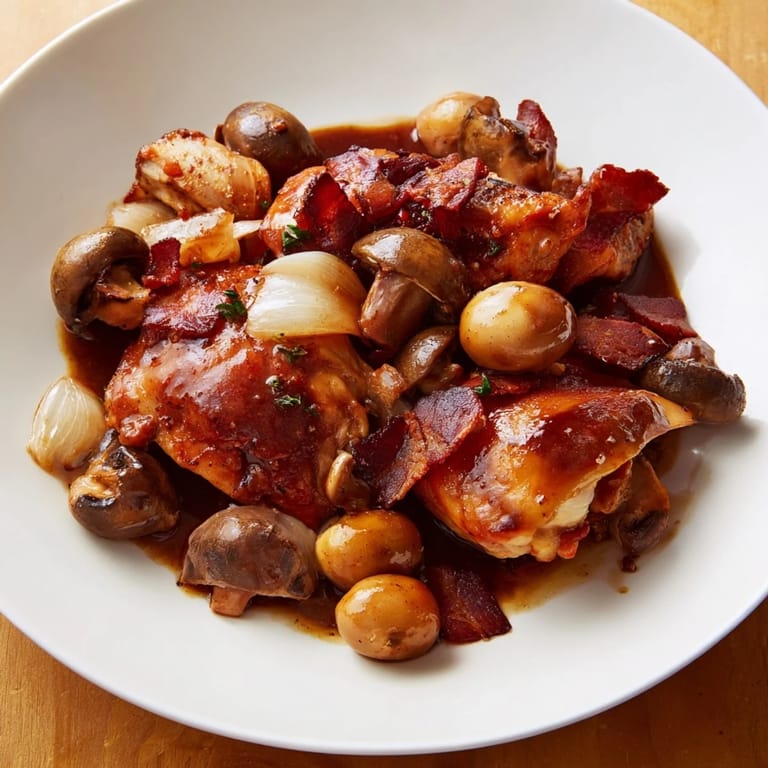
Pin The first time I made coq au vin, I was intimidated by the French name alone. But standing in my kitchen with a bottle of Burgundy and a whole chicken waiting to be transformed, I realized this wasn't restaurant magic—it was just patience and good ingredients doing what they do best. The aroma that filled my apartment over those two hours was so intoxicating that my neighbor actually knocked on the door thinking something was wrong. That's when I knew I'd found something special.
I made this for my partner on a cold October evening when we were both exhausted from work, and somehow the simple act of serving it in a warm bowl at the table turned the whole night around. We ate slowly, tearing pieces of crusty bread to soak up every drop of sauce, not saying much but somehow saying everything that mattered. That's the power of a dish like this—it doesn't need to perform; it just needs to be honest and good.
Ingredients
- 1 whole chicken (about 1.5 kg), cut into 8 pieces: Ask your butcher to do this if you're not confident, but honestly, once you've done it once, you'll find it oddly satisfying.
- 150 g smoked bacon or pancetta, diced: This is your secret weapon—the smoke and salt build the whole flavor foundation before anything else even gets started.
- 200 g pearl onions, peeled: Yes, peeling these is tedious, but they stay whole and beautiful in the braise, worth every second.
- 250 g cremini or button mushrooms, cleaned and quartered: Save them for late in the cooking—they stay firmer and absorb the wine sauce like a dream.
- 2 medium carrots, sliced: They'll soften completely and add natural sweetness that balances the wine.
- 2 garlic cloves, minced: Just a whisper of garlic so the wine and meat stay the stars.
- 750 ml dry red wine (e.g., Burgundy or Pinot Noir): Don't use something you wouldn't drink—the wine is the sauce, so it has to be good enough to taste on its own.
- 250 ml chicken stock: This lightens the wine slightly so it's rich but not overwhelming.
- 2 tbsp tomato paste: A small amount adds complexity without making it taste like tomatoes.
- 2 tbsp all-purpose flour: This creates a silky sauce that clings to everything.
- 2 tbsp olive oil: For the initial browning and mushroom sauté.
- 2 tbsp unsalted butter: Added at the end for the mushroom sauté—butter and oil together give them perfect color.
- 2 bay leaves and 4 sprigs fresh thyme: These steep the whole dish with herbal depth.
- Salt and freshly ground black pepper: Season confidently at the end; the long cook mellows flavors, so you'll need more than you think.
Tired of Takeout? 🥡
Get 10 meals you can make faster than delivery arrives. Seriously.
One email. No spam. Unsubscribe anytime.
Instructions
- Get your chicken ready:
- Pat each piece completely dry with paper towels—this is how you get golden skin instead of steam. Season generously with salt and pepper on all sides and let it sit for a few minutes while you heat your pot.
- Render the bacon:
- Heat olive oil in a large Dutch oven over medium heat, then add your diced bacon. Listen for it to sizzle and pop, and let it get dark and crispy, about 5-7 minutes. This is the flavor base of everything, so don't rush it.
- Brown the chicken:
- Remove the bacon and increase heat slightly. Working in batches so you don't crowd the pot, brown each piece of chicken on all sides until the skin is golden and the meat underneath is sealed. This takes about 3-4 minutes per batch and makes an enormous difference in flavor.
- Build your vegetable layer:
- Add the carrots, pearl onions, and minced garlic to the pot. Stir everything together and let it sit for about 5 minutes, allowing the vegetables to pick up some color and the garlic to stop being harsh.
- Make the paste:
- Stir in the tomato paste and flour, coating everything evenly. Cook for 1 minute while stirring—you'll smell it get a bit richer and deeper.
- Bring it together:
- Return the chicken and bacon to the pot. Pour in the wine and chicken stock, add bay leaves and thyme sprigs, then scrape up every brown bit stuck to the bottom with your wooden spoon. This is where all the flavor is hiding.
- The long braise:
- Bring everything to a simmer, then cover and turn heat to low. Let it cook for 1.5 hours without peeking too much. The chicken will go from firm to fork-tender, and the wine will taste less sharp and more like a real sauce.
- Meanwhile, sauté the mushrooms:
- About halfway through, heat a skillet over medium-high heat with butter and oil. Add your mushrooms in a single layer and let them brown without stirring for a few minutes. They'll develop a deep, nutty crust before you turn them to finish cooking.
- Finish and taste:
- Remove the lid for the last 15 minutes of cooking so the sauce concentrates slightly. Stir in the mushrooms, then taste and add more salt and pepper until it makes you happy.
- Final touches:
- Fish out the bay leaves and thyme sprigs with a small spoon. Pour everything into a serving dish and let it rest for 5 minutes so the flavors settle.
 Pin
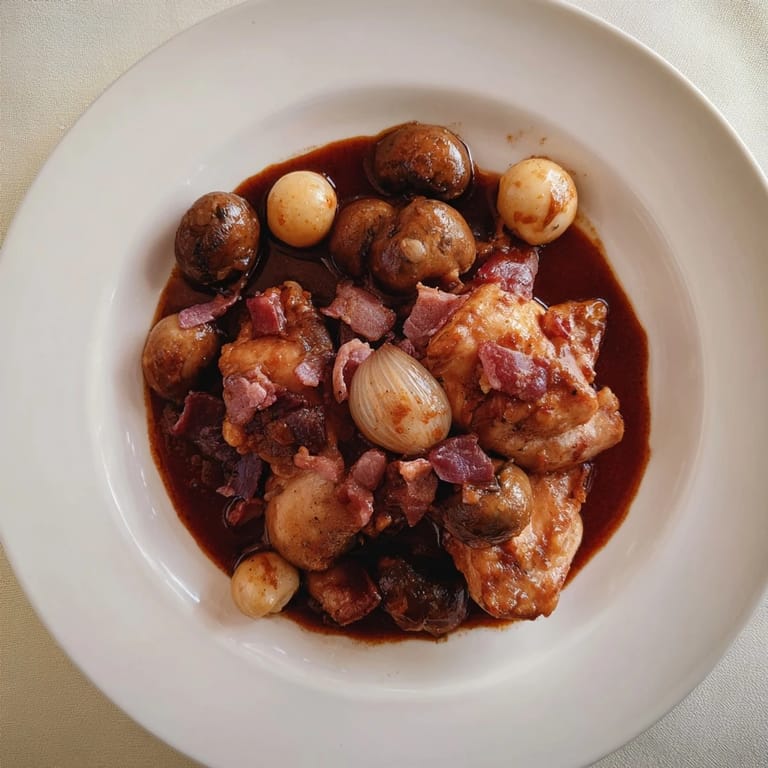
Pin My sister brought her new boyfriend to dinner the first time I made this, and I was nervous about impressing him with something 'fancy.' But watching him eat quietly, completely absorbed in his bowl, and then ask for the recipe—that's when I understood that coq au vin isn't fancy because it sounds French. It's fancy because it tastes like someone cared enough to spend time with their food.
Why This Dish Works
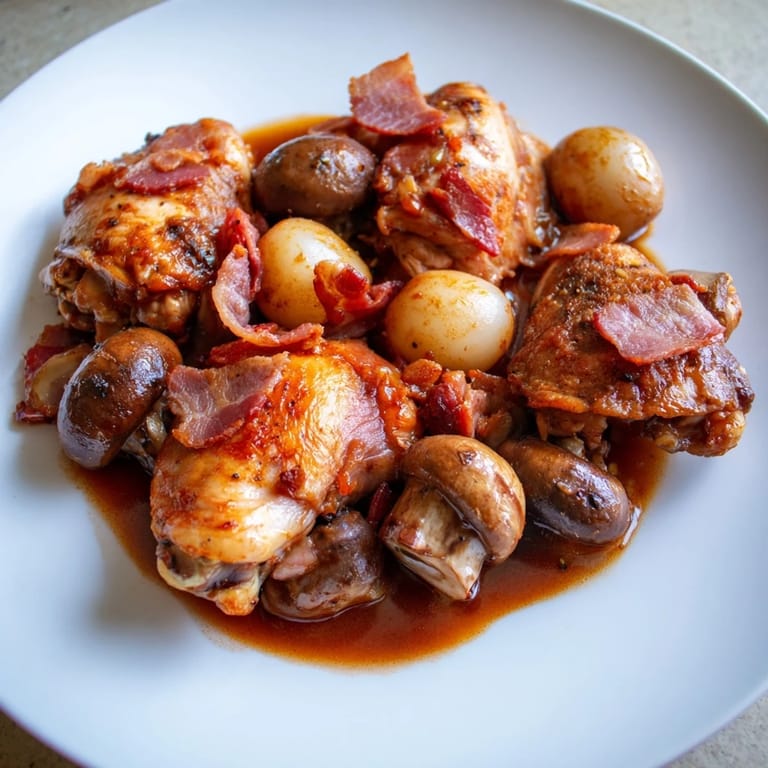
There's a reason this dish has been made the same way for generations—because it's almost impossible to get wrong. The long, slow braise does most of the work for you, making tough cuts of chicken completely tender and allowing flavors to build and deepen in ways that quick cooking never could. You're not fighting against time; you're working with it. The wine starts out sharp and alcoholic, then gradually mellows and becomes part of a rich, complex sauce that coats each piece of meat. Every element—the smoky bacon, the sweet carrots, the earthy mushrooms, the herbal thyme—adds its own layer without ever overpowering the others.
What to Serve It With
I've served this with buttered egg noodles, mashed potatoes, crusty bread, and even just on its own, and it's good with all of them. The sauce is really the star here, so you want something to soak it up—something soft and absorbent that won't compete. Egg noodles are probably the most traditional, but there's something lovely about mashed potatoes that makes the whole meal feel more comforting. If you're not in the mood to cook two things, thick slices of bread from a good bakery are honestly all you need.
Making It Your Own
Once you make this a few times, you'll start seeing where you can play. Some people add a splash of brandy or cognac when sautéing the mushrooms for extra richness—I do this when I'm feeling fancy or when I have a bottle open. Others swap chicken thighs for the whole bird because thighs stay juicier and more forgiving than breast meat. You could add pearl barley or potatoes to make it more of a one-pot situation, or skip the flour and let it reduce longer for a thinner, winier sauce. The basic method is so solid that it can handle your adjustments.
- If using all thighs, reduce cooking time to 1 hour since they're smaller and cook faster than a whole bird broken down.
- Red wine isn't negotiable, but you can use white wine and call it coq au vin blanc—it'll be lighter and brighter instead of deep and rich.
- Fresh thyme is better than dried, but if you only have dried, use half the amount since it's more concentrated.
 Pin
Pin There's something almost meditative about making coq au vin, knowing that all you have to do is get everything in the pot and then trust the process. It's the kind of dish that makes your home smell incredible and tastes even better than it smells.
Recipe Questions
- → What cut of chicken is best for Coq au Vin?
Using a whole chicken cut into pieces or thighs provides ideal tenderness and flavor during slow braising.
- → Can different types of wine be used?
Dry red wines like Burgundy or Pinot Noir are preferred to enhance the dish's depth and aroma.
- → How do pearl onions contribute to the dish?
Pearl onions add a sweet, mild flavor and delicate texture that balances the rich sauce and savory elements.
- → Why is bacon included in this preparation?
Smoky bacon adds a savory, slightly crisp texture and imparts a smoky undertone to the braised chicken.
- → What herbs are essential for authentic flavor?
Fresh thyme and bay leaves are key, providing aromatic notes that infuse the sauce during cooking.
- → How can the sauce be thickened naturally?
A mix of tomato paste and flour creates a velvety texture that clings well to the chicken and vegetables.