 Pin
Pin There's something about the smell of soffritto hitting hot olive oil that makes you pause whatever you're doing. My neighbor Maria taught me minestrone on a gray October afternoon when my kitchen felt too quiet, and she arrived with a cloth bag of vegetables from her garden like she was sharing something sacred. She didn't measure anything that day, just moved with the confidence of someone who'd made this soup a hundred times, letting her hands remember what her mind didn't need to. What struck me most wasn't the recipe itself but how she kept tasting, adjusting, talking about how soup changes depending on the season and your mood. Now whenever I make it, I think about that afternoon and how a simple pot of vegetables became a conversation.
I served this to my sister's book club on a night when I was honestly just cooking to have something to do with my hands, and three people asked for the recipe before dessert was even cleared. The conversation shifted from whatever they'd been discussing into stories about their own kitchens, their mothers, the soups they remembered. That's when I realized minestrone isn't really about the ingredients at all—it's about creating space for people to gather and remember why they love eating together.
Ingredients
- Olive oil: Use a quality one you actually like tasting because it's not hidden under heavy cream or spice—it's a foundational flavor.
- Yellow onion, carrots, celery: This trio is the holy trinity of Italian cooking, and their sweetness builds the base that makes everything else sing.
- Garlic: Two cloves is humble, and that's the point; you want it whisper-soft, not shouting.
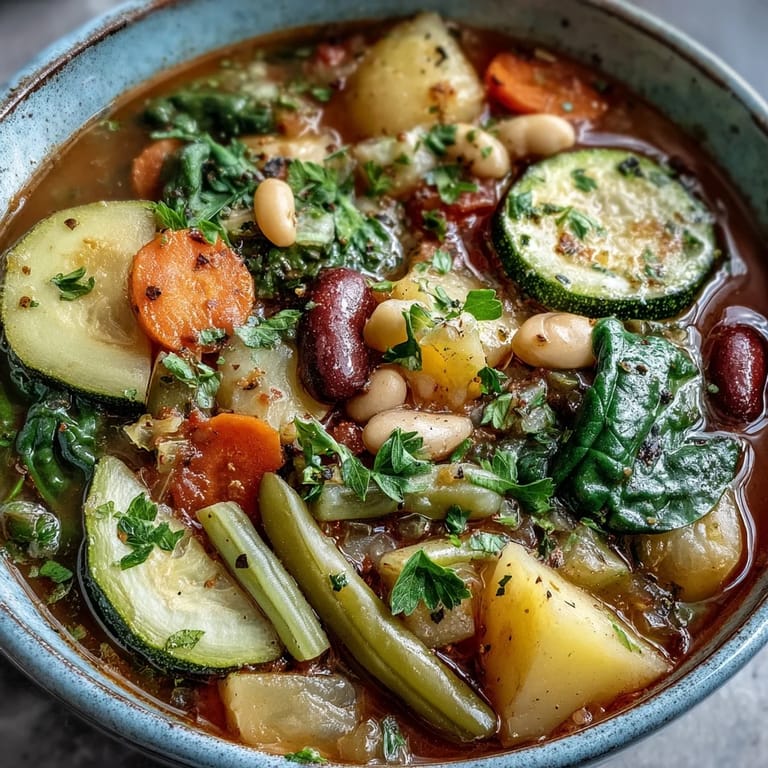
- Zucchini, potato, green beans: Each brings its own texture—the zucchini softens to tenderness, the potato thickens the broth, the green beans stay slightly snappy if you time it right.
- Diced tomatoes: The canned ones are actually better than fresh here because they're cooked and concentrated, lending that subtle acidity that ties everything together.
- Cannellini beans: Creamy, gentle beans that almost melt into the broth and add protein without any pretense.
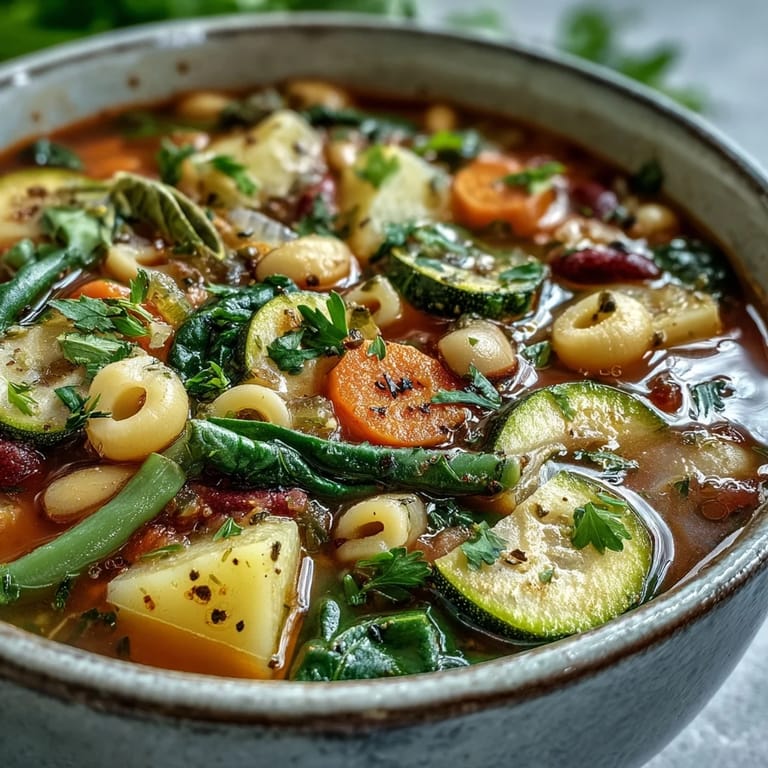
- Small pasta (ditalini or elbow): Small shapes get lost in the soup rather than dominating it, which is exactly where they belong.
- Vegetable broth: Don't use the harsh, salty kind; find one you'd actually drink on its own, because it's doing half the work here.
- Dried Italian herbs: A blend is fine, though fresh basil at the end whispers something special if you have it.
- Bay leaf: It sounds old-fashioned but tastes like wisdom—removes it, though, or your guests will find it like a tiny treasure they don't want.
- Baby spinach or kale: Added at the very end so it stays bright and present rather than surrendering completely to the heat.
- Fresh parsley: The garnish that says you cared enough to finish what you started.
- Parmesan cheese: Optional but honestly, a sprinkle transforms a good bowl into something people remember.
Tired of Takeout? 🥡
Get 10 meals you can make faster than delivery arrives. Seriously.
One email. No spam. Unsubscribe anytime.
Instructions
- Start with the aromatics:
- Heat your olive oil in a large pot until it's shimmering and smells almost nutty, then add the onion, carrots, and celery. Let them soften for about five minutes, stirring occasionally so they don't stick to the bottom—you're building flavor, not rushing.
- Layer in the harder vegetables:
- Add the garlic, zucchini, potato, and green beans, cooking for another three minutes until the garlic releases its fragrance and everything starts talking to each other.
- Build your broth:
- Tip in the diced tomatoes, drained beans, vegetable broth, dried herbs, and bay leaf, then let it all come to a boil. The moment the surface starts dancing, you know something good is happening.
- Let time do its work:
- Lower the heat, cover the pot, and simmer for twenty minutes so the vegetables become tender and their flavors migrate into the broth. Resist the urge to fidget with it—soup rewards patience.
- Add the pasta:
- Stir in your small pasta and leave it uncovered, stirring occasionally, for eight to ten minutes until the pasta is tender and has absorbed some of the broth's personality.
- Finish with freshness:
- Remove the bay leaf, add your spinach or kale, and cook just until it softens and turns a deeper green, usually about two minutes. This is when the soup goes from warm and hearty to alive.
- Taste and adjust:
- Season with salt and pepper, but go slowly—the broth already carries salt, and you want to hear all the vegetables singing, not just salt dominating the chorus.
- Serve with intention:
- Ladle into bowls with a little extra care, then top with fresh parsley and a drift of Parmesan if you're using it. The presentation doesn't have to be fancy, just thoughtful.
 Pin
Pin My six-year-old nephew once told me this soup tasted like my hands, which I took as the highest compliment before realizing he just meant it tasted like someone made it on purpose, with care. There's an honesty in minestrone that fancier dishes can't touch—it doesn't pretend to be something it's not, just a warm bowl of vegetables and time and the knowledge that good food doesn't need to be complicated to matter.
The Rhythm of Chopping
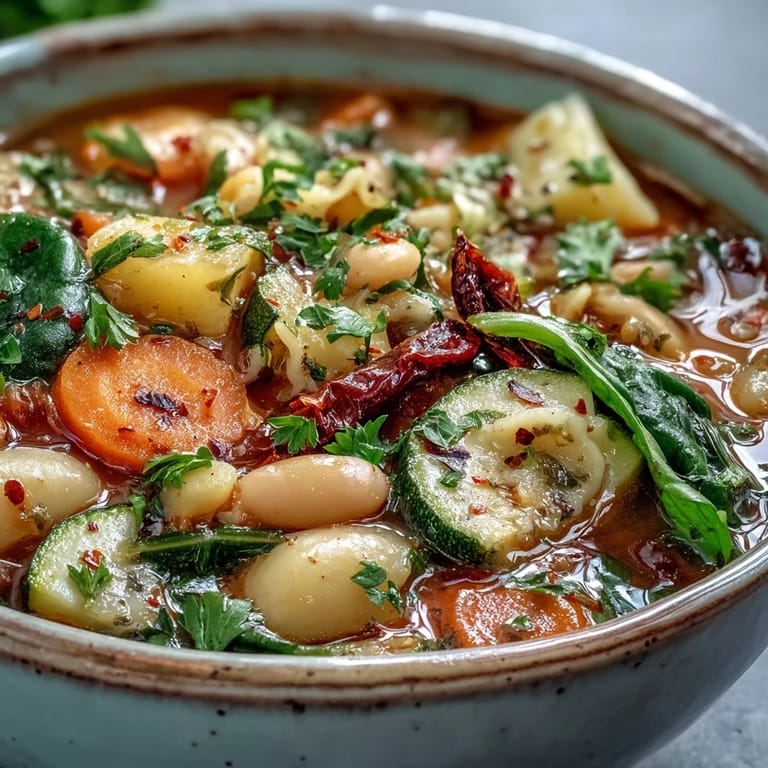
There's a meditation that happens when you're prepping vegetables for soup, a steady rhythm of knife against board that somehow quiets your mind. I always dice my vegetables roughly the same size so they cook evenly and look intentional in the bowl, but the real lesson came from watching how the color of each vegetable changes as it softens—the carrots brighten before they surrender, the zucchini goes from pale to almost golden, the green beans turn a deeper forest shade. That's how you know your soup is actually developing flavor, not just time passing in hot water.
Timing and Temperature
Minestrone doesn't rush, and neither should you. The soffritto takes five minutes because it needs to, and the vegetable simmering takes twenty minutes because that's when everything becomes tender enough to eat but sturdy enough to hold its shape. I learned the hard way that pasta cooks faster in broth than in salted water—something about the other flavors racing toward it—so those eight to ten minutes at the end is precise timing, not a suggestion. The smell at this point is your best timer: when it smells so good you can barely stand to wait, that's when you add the spinach and know you're close to something wonderful.
Making It Your Own
This is the soup that forgives substitutions, the one that actually gets better when you make it personal. I've added cabbage when I had it, stirred in peas near the end for sweetness, and once threw in a Parmesan rind that I'd been saving specifically for this moment—it softened in the broth and made everything taste like I'd been planning this all along. The point is to start with respect for the bones of the recipe, then trust your instincts about what your particular kitchen and your particular moment needs.
- Seasonal vegetables like pumpkin in fall or fresh peas in spring transform the soup without breaking it.
- A Parmesan rind simmered in the broth adds depth that you can't quite name but absolutely taste, so keep those rinds in a freezer bag.
- If you're serving gluten-free friends, the swap is easy and no one notices the difference if you use a good gluten-free pasta.
 Pin
Pin Minestrone is proof that the best meals don't have to be complicated, just made with attention and a genuine desire to feed people well. Every time you make it, you're continuing a tradition that goes back further than you can trace, which is a quiet kind of magic.
Recipe Questions
- → What vegetables go in minestrone?
Traditional minestrone includes onions, carrots, celery, zucchini, potatoes, green beans, and tomatoes. You can adapt based on seasonality, adding cabbage, peas, or Swiss chard when available.
- → What pasta works best in minestrone?
Small pasta shapes like ditalini, elbow macaroni, shells, or tubetti work beautifully. They cook evenly and fit perfectly on a spoon. For gluten-free versions, use rice or corn-based small pasta.
- → Can I make minestrone ahead of time?
Absolutely. Minestrone actually tastes better the next day as flavors meld. Store refrigerated for up to 4 days. If making ahead, cook pasta separately and add when reheating to prevent it from becoming mushy.
- → Is minestrone freezer-friendly?
Yes, freeze for up to 3 months. For best results, omit pasta when freezing. Cook fresh pasta when reheating, or freeze fully assembled knowing the pasta will soften slightly.
- → How do I make minestrone more flavorful?
Add a Parmesan rind while simmering for umami depth. Use high-quality vegetable broth. Finish with a splash of balsamic vinegar or fresh lemon juice to brighten flavors before serving.
- → Can minestrone be made vegan?
Easily. Use vegetable broth, skip the Parmesan garnish or use nutritional yeast instead. The soup is naturally hearty and satisfying without any dairy or animal products.