 Pin
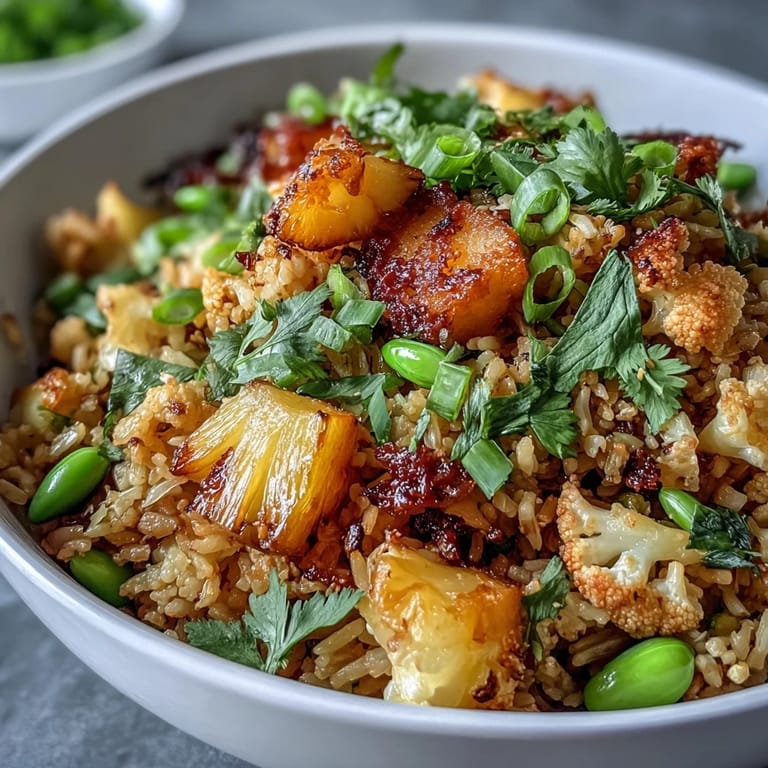
Pin My friend texted me at 4 PM on a Thursday asking if I could whip up something vibrant and healthy for dinner, and this vegan pineapple fried rice popped into my head immediately. What started as a quick solution became something I actually crave now—the way the sweetness of pineapple plays against the umami of tamari, how the cauliflower rice stays light instead of heavy, and that moment when the whole pan comes together with one good toss. It's the kind of dish that feels like a celebration but comes together faster than you'd think.
I made this for my partner on a Sunday afternoon when we were both tired of takeout, and watching them go back for seconds while sitting on the kitchen counter was the quiet win I needed that day. There's something about the bright yellow pineapple chunks and green edamame scattered throughout that made the whole meal feel more like an event than just dinner.
Ingredients
- Riced cauliflower (about 5 cups): This is the backbone of the dish, and the texture matters—pulsing it in a food processor gives you control over the grain size, keeping it from turning into mush when it hits the heat.
- Pineapple, diced (1 cup, fresh or canned): If using canned, drain it really well or the whole pan will get watery and sad; fresh pineapple adds a brightness that carries the whole dish.
- Edamame, shelled (1 cup, thawed): These little pods are your protein anchor and add a slight sweetness and pop of texture that keeps things interesting.
- Red bell pepper (1, diced): The sweetness complements the pineapple, and the color makes the whole pan look alive.
- Green onions (4, thinly sliced): Use the white and light green parts for the sauté, then save the dark green tops for garnish at the end when they're crisp.
- Garlic and ginger (2 cloves and 1 teaspoon): These two create that aromatic foundation that makes people walk into your kitchen and ask what smells so good.
- Carrot (1 medium, diced): A little sweetness, a little crunch, and it rounds out the vegetable spectrum.
- Peas (1/2 cup): Frozen ones work perfectly fine and honestly, they don't need to be thawed—the hot pan does that work for you.
- Tamari or soy sauce (3 tablespoons): This is your umami hit, the thing that makes it taste intentional rather than just a pan of stir-fried vegetables.
- Toasted sesame oil (1 tablespoon): Don't use regular sesame oil here; the toasted version has a deeper flavor that matters, and a little goes a long way.
- Rice vinegar (1 tablespoon): This brightness at the end ties everything together and keeps the dish from tasting flat.
- Sriracha or chili-garlic sauce (1 teaspoon, optional): If you like heat, add it to the sauce mixture; if you don't, skip it entirely and the dish is still completely satisfying.
- Cashews or peanuts (2 tablespoons, roughly chopped): The crunch here is non-negotiable, so don't skip the garnish step.
- Fresh cilantro or basil (2 tablespoons, chopped): Cilantro is traditional, but fresh basil adds an unexpected twist if you're in the mood to break from convention.
- Lime wedges: These are what make people squeeze them over their bowl and suddenly taste all the flavors sharper and brighter.
Tired of Takeout? 🥡
Get 10 meals you can make faster than delivery arrives. Seriously.
One email. No spam. Unsubscribe anytime.
Instructions
- Rice the cauliflower:
- Cut your cauliflower head into florets, pulse them in a food processor until they resemble rice grains—some pieces will be smaller, some bigger, and that's exactly what you want. If you don't have a food processor, a box grater works too, though your knuckles will appreciate the processor more.
- Get your pan hot and aromatic:
- Heat the sesame oil in a large nonstick skillet or wok over medium-high heat until it's shimmering, then add the garlic, ginger, and white parts of the green onions. Let them sizzle for about a minute—you'll smell when they're ready, that nutty, fragrant moment when you know the foundation is set.
- Start with the slower-cooking vegetables:
- Toss in the diced carrot and bell pepper, stirring constantly for about two to three minutes until they just start to soften but still have some resistance. You're not trying to cook them all the way through yet; that happens later when everything comes together.
- Add the cauliflower and build texture:
- Dump in all your riced cauliflower and stir really well, making sure it's coated in that oil and touching the hot pan. Cook for four to five minutes, stirring frequently, until the cauliflower is tender but not mushy—this is the moment where attention matters because burnt cauliflower tastes bitter and nobody wants that.
- Bring everything together:
- Add the peas, edamame, and pineapple, stirring gently so the pineapple chunks don't break apart. Cook for two to three minutes just until everything is heated through and the pineapple releases its juices slightly into the pan.
- Season it into submission:
- Pour in the tamari, rice vinegar, and sriracha if you're using it, then toss everything with a spatula to coat evenly. Taste it now and adjust the salt and pepper—this is your moment to make it sing according to your preferences.
- Finish with the bright parts:
- Remove from heat and stir in the dark green parts of the green onions and half your cilantro. That's when it stops being just a stir-fry and becomes something with personality.
- Plate and celebrate:
- Serve it hot in bowls or, if you're feeling fancy, in hollowed-out pineapple halves, then top with your chopped nuts, remaining cilantro, and lime wedges on the side. Let people squeeze the lime over their own portion so they can control the brightness.
 Pin
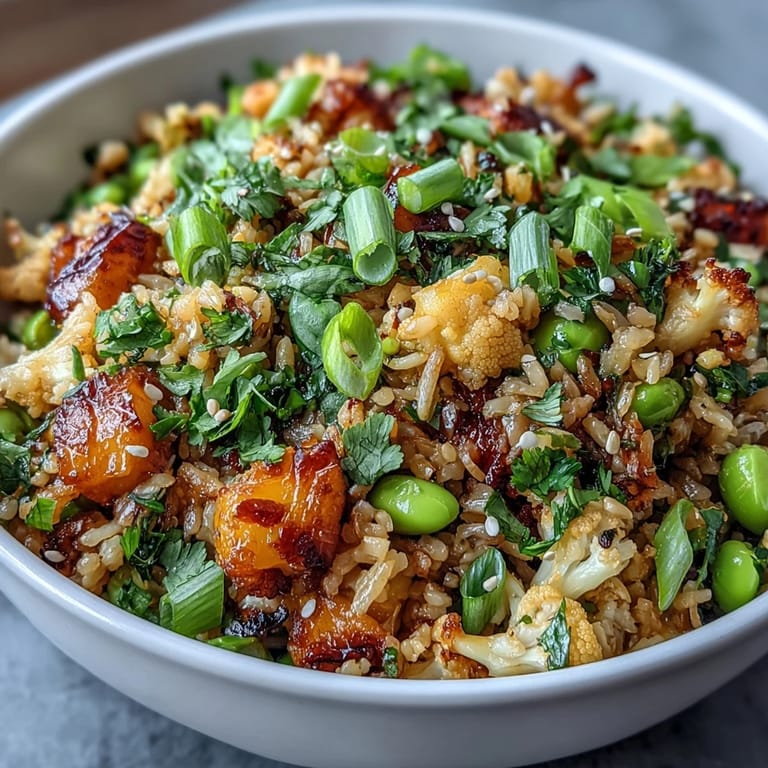
Pin My mom tried this dish skeptically—she's a rice person and was unsure about cauliflower—and then quietly ate most of the leftover container straight from the fridge the next day. That's when I knew it had crossed over from being healthy food to just being food that happens to be good for you.
Why Cauliflower Rice Changed Everything
For years I thought cauliflower rice was a sad substitute for real rice, until I stopped comparing them and started treating it as its own thing. It's lighter, it cooks faster, and because it doesn't absorb liquid the way rice does, your pan stays intentional and flavorful rather than turning into a mushy heap. Plus, it takes on the seasonings more readily, which means you get more flavor in fewer calories.
The Sweet and Savory Balance
The genius of this dish is how it plays with contrast—the pineapple's sweetness against the tamari's saltiness, the edamame's slight earthiness against the ginger's brightness. I learned this balance the hard way by making overly sweet versions and underseasoned versions, and now I know that each element has a job, and respecting that job is what makes it work. It's not fusion cooking pretending to be something it's not; it's a genuine conversation between flavors.
Make It Your Own
This recipe is a framework, not a law, so once you understand how it works, you can riff on it confidently. Swap in different vegetables based on what's in your crisper, use tofu instead of edamame if soy isn't your thing, or add a handful of cashew cream at the end for richness. I've made it with snap peas instead of carrots, added diced water chestnuts for crunch, and once threw in leftover roasted broccoli just because it was there. The dish stays balanced as long as you keep the ratio of vegetables to sauce roughly the same and remember that the pineapple is doing the heavy lifting flavor-wise.
- Fresh is always better than frozen for pineapple if you can find it ripe and fragrant.
- A squeeze of fresh lime right before eating brings out flavors you didn't know were there.
- Leftovers actually taste better after sitting overnight when all the flavors have had time to become friends with each other.
 Pin
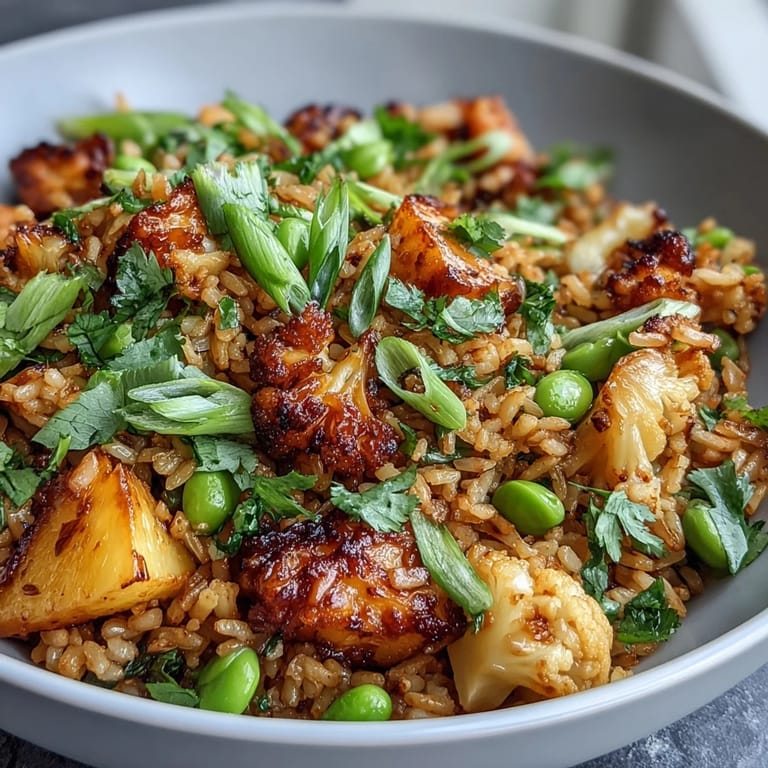
Pin This is the kind of dish that proves you don't need to sacrifice flavor for health, and once you've made it once, you'll find yourself reaching for it on busy weeks when your brain is fried but your appetite is wide awake. It's become my go-to proof that cooking plant-forward doesn't mean boring.
Recipe Questions
- → Can I substitute edamame with another protein?
Yes, tofu cubes make a great alternative to edamame, providing a similar protein boost that complements the dish.
- → Is fresh pineapple necessary or can canned be used?
Both fresh and drained canned pineapple work well, though fresh offers a brighter, juicier flavor.
- → How do I rice cauliflower without a food processor?
You can grate cauliflower using a box grater to achieve rice-sized pieces manually.
- → What is the best way to add heat to this dish?
Adding sriracha or chili-garlic sauce during cooking provides a balanced spicy kick without overpowering the other flavors.
- → Can this dish be prepared ahead of time?
Yes, leftovers keep well refrigerated for up to 3 days and taste great when reheated gently.