 Pin
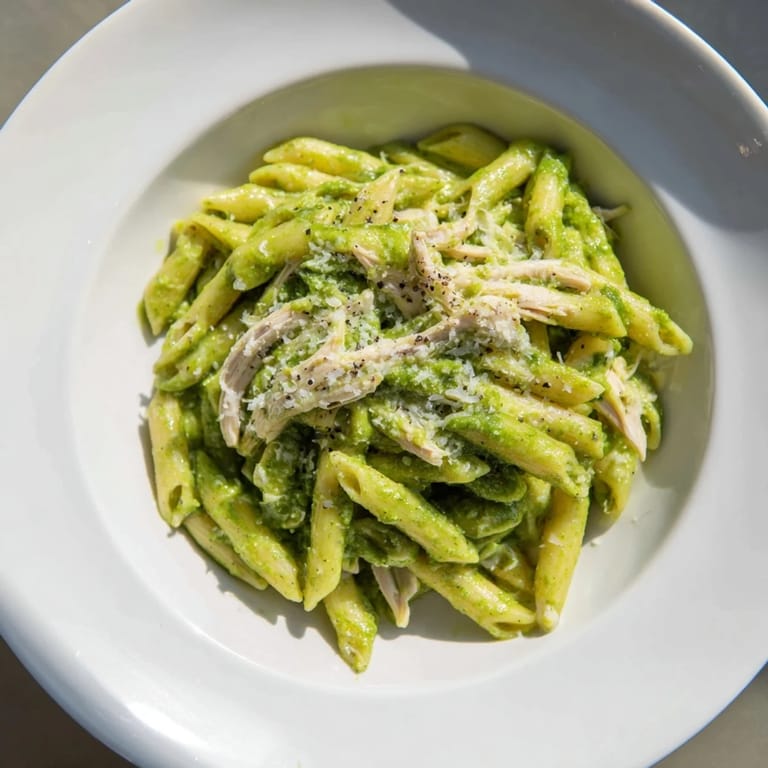
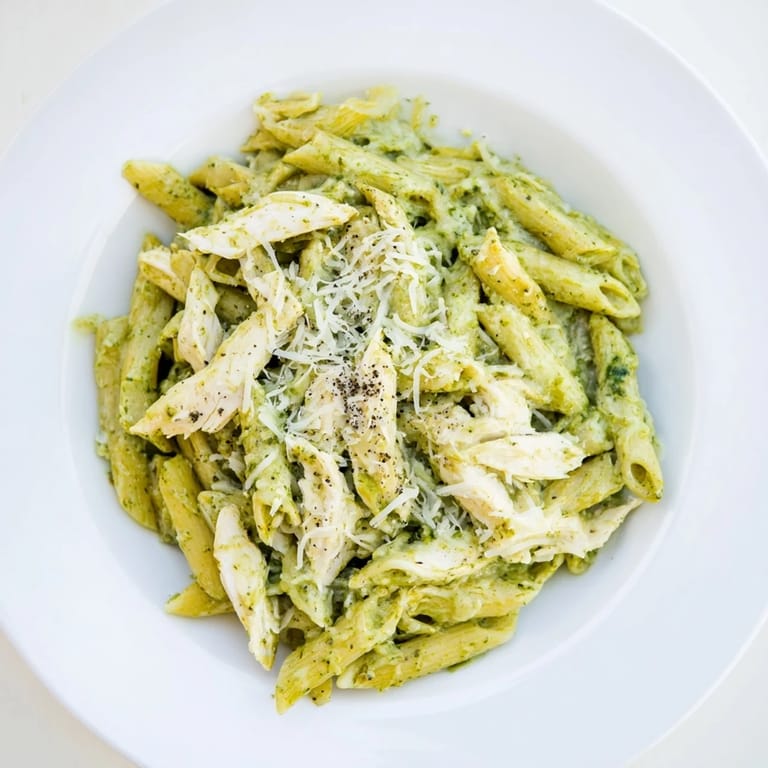
Pin There's something almost magical about those nights when you open the fridge and realize you can pull together something restaurant-worthy in the time it takes to boil water. I discovered this particular combination on a Tuesday when I was staring at a rotisserie chicken, a jar of pesto, and the desperate hope that dinner wouldn't involve ordering takeout again. Ten minutes later, I had a plate of silky pasta coated in vibrant green sauce with tender chicken scattered throughout, and honestly, it tasted like I'd been planning it all week.
I made this for a friend who was convinced she didn't have time to cook anymore, and watching her face light up when she realized how simple the whole thing was reminded me why I love quick meals. It's not about cutting corners; it's about knowing exactly where to invest your effort and where to let good ingredients do the work for you.
Ingredients
- Dried short pasta (340 g or 12 oz): Penne, fusilli, or farfalle all work beautifully here; the shapes catch and hold the pesto sauce, so avoid long, thin pastas that just slip through.
- Salt: Don't be shy with this in the pasta water—it's your only chance to season the pasta itself properly.
- Rotisserie chicken (2 cups, about 250 g): This is your secret weapon for speed; quality matters here since it's the star alongside the pesto.
- High-quality store-bought pesto (120 g or 1/2 cup): This is not the time to apologize for using jarred pesto—a good one is brighter and more aromatic than most homemade versions can be in 10 minutes.
- Extra-virgin olive oil (2 tbsp): This adds silkiness and helps distribute the pesto evenly across the warm pasta.
- Grated Parmesan cheese (40 g or 1/4 cup, plus more for serving): Fresh grating matters; pre-grated loses its character fast and won't melt into the sauce as gracefully.
- Freshly ground black pepper: A generous crack right at the end brightens everything without overwhelming the delicate pesto flavor.
- Fresh basil leaves (1/2 cup or about 12 g, optional): If you have it, tear it in at the very end for a grassy freshness that jarred pesto sometimes misses.
- Lemon zest (from 1 lemon, optional): A small amount of this wakes up the whole dish and prevents it from feeling too heavy or one-dimensional.
Tired of Takeout? 🥡
Get 10 meals you can make faster than delivery arrives. Seriously.
One email. No spam. Unsubscribe anytime.
Instructions
- Boil the pasta water:
- Fill a large pot with water, add a generous pinch of salt, and bring it to a rolling boil—you're looking for it to smell almost like the sea. This is happening while you tackle everything else, so it's your invisible time-saver.
- Cook the pasta:
- Add the pasta and stir it once or twice so nothing sticks together. Set a timer for whatever the package says minus about 30 seconds, and when the pasta is al dente (tender but still with a tiny bite), fish out a measuring cup of that starchy water before you drain the pot.
- Prepare the chicken:
- While the pasta finishes, pull the meat from your rotisserie chicken—shred it with two forks if you want a more rustic texture, or chop it into bite-sized pieces if you prefer. Either way, this should take about 60 seconds and can happen while you're watching the pot.
- Build the sauce:
- Return the hot, drained pasta to the pot and set it over low heat. Add the olive oil, pesto, and a splash of that reserved pasta water—start with about 2 to 3 tablespoons, then add more as needed. Stir everything together gently until the heat starts to coax the pesto into every curve and twist of the pasta, which should take maybe a minute of stirring.
- Add the chicken and cheese:
- Scatter the chicken over the pasta and sprinkle in the Parmesan, then toss until the chicken is warmed through and the cheese starts to melt into the sauce, creating a creamy, luxurious coating. If things look a bit dry, add another splash of pasta water—the starch in that liquid is what transforms everything from separate ingredients into a cohesive dish.
- Season and finish:
- Crack fresh pepper over the top to your liking, then taste and adjust. If you're using fresh basil and lemon zest, tear in the basil and scatter the zest right now so they maintain their brightness.
- Serve:
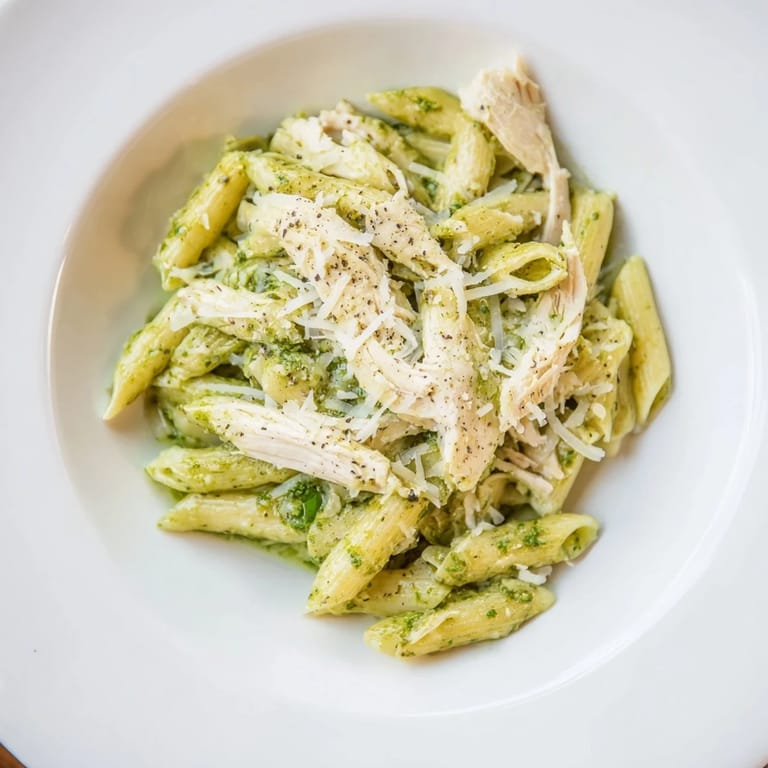
- Transfer to bowls or plates immediately and finish with a shower of extra Parmesan—the contrast of cold cheese on warm pasta is one of those small pleasures that elevates a quick meal into something special.
 Pin
Pin There's a quiet satisfaction in plating this dish and realizing you're nowhere near stressed, there's barely a dish in the sink, and you're about to eat something genuinely delicious. That's when I understood that the best recipes aren't always the most complicated ones—they're the ones that respect your time and still deliver on flavor.
The Beauty of Store-Bought Pesto
I used to feel guilty about using jarred pesto until I actually tasted several side by side and realized that quality jarred versions are often fresher and brighter than what I could make in my actual kitchen in 10 minutes. The best ones list basil, garlic, pine nuts, Parmesan, and olive oil as their main ingredients—nothing mysterious or overstabilized. There's no shame in choosing speed here; you're being smart about where your effort goes.
Variations Worth Trying
Once you understand how this works, you can swap almost anything in without losing the magic. Sun-dried tomato pesto gives you a deeper, slightly tangier version that feels less spring-like. Arugula pesto brings a peppery edge that works beautifully with the chicken. If you want to skip the rotisserie chicken, sautéed zucchini, cherry tomatoes, or even just extra Parmesan and fresh basil creates a lovely vegetarian version that's just as satisfying. The framework stays the same: quality pasta, good pesto, heat, pasta water, and something to add substance.
Serving and Pairing Ideas
This pasta is bright and aromatic, so it pairs naturally with crisp white wines like Pinot Grigio or Vermentino—the acidity cuts through the richness of the pesto and keeps your palate fresh. A simple side salad with a sharp vinaigrette works too, or just serve it as is with crusty bread to soak up every drop of sauce from the bowl.
- Add a handful of toasted pine nuts or almonds on top for a crunchy contrast if you have them in your pantry.
- If fresh basil is available at your market, it's worth grabbing just for the final flourish—it transforms the dish.
- Make this on nights when you need dinner to happen fast but you still want to feel proud of what you've made.
 Pin
Pin This is the kind of meal that proves you don't need hours in the kitchen or a list of ingredients as long as your arm to eat something wonderful on a weeknight. Sometimes the best cooking is knowing when to let good ingredients shine.
Recipe Questions
- → Can I use fresh chicken instead of rotisserie chicken?
Yes, cooked shredded chicken works well; simply cook it thoroughly before mixing into the pasta.
- → How do I keep the pasta from drying out when mixing with pesto?
Reserve some pasta cooking water and add it gradually to the sauce to achieve a silky, well-coated texture.
- → What pasta shapes work best with pesto and chicken?
Short pasta shapes like penne, fusilli, or farfalle hold the sauce nicely and complement the shredded chicken texture.
- → Can I add vegetables for more variety?
Absolutely, sautéed zucchini, cherry tomatoes, or spinach make delicious additions that enhance flavor and nutrition.
- → Is it possible to make this dish gluten-free?
Yes, substitute regular pasta with gluten-free varieties while maintaining similar cooking times for best results.