 Pin
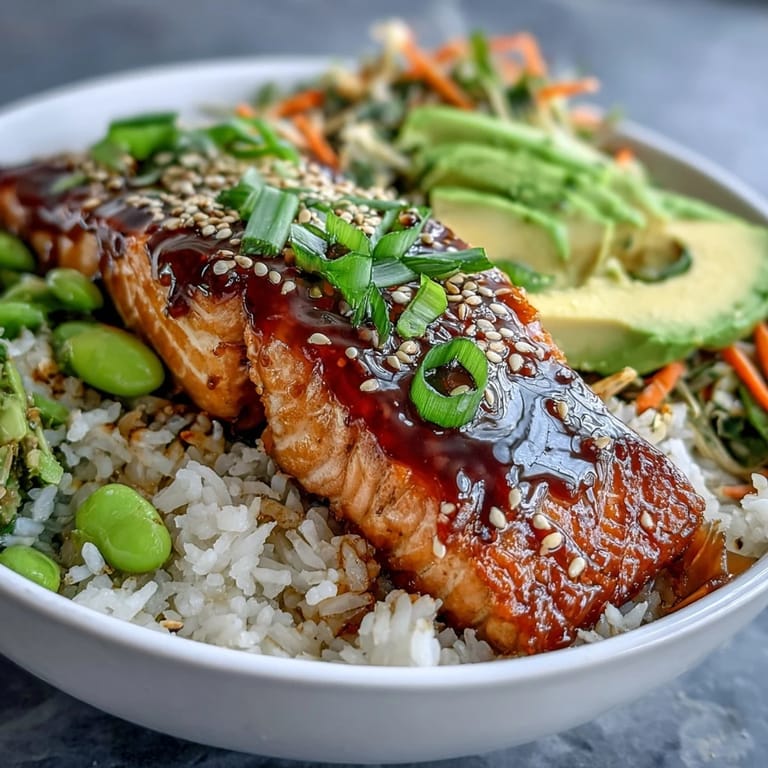
Pin My neighbor knocked on the door one Tuesday evening holding a bag of fresh salmon from the market, asking if I knew what to do with it. I did, sort of. We ended up in my kitchen with ginger, soy sauce, and whatever vegetables I had left in the crisper drawer. That improvised dinner turned into this bowl, which I now make at least twice a month.
I brought this to a potluck once, assembled in individual containers with the salmon still warm and the avocado sliced at the last second. People kept asking if I ordered it from somewhere. One friend texted me the next day asking for the recipe, which felt better than any compliment. It is one of those meals that makes you look more skilled than you actually are.
Ingredients
- Salmon fillets: Look for bright, firm flesh without a strong fishy smell, and do not worry too much about skin-on versus skinless, both work perfectly here.
- Soy sauce: Low sodium is your friend because the marinade reduces and concentrates, and you do not want it to taste like pure salt.
- Fresh ginger: Grate it finely so it melts into the marinade instead of leaving fibrous bits, and use the edge of a spoon to peel it quickly.
- Honey or maple syrup: This adds just enough sweetness to balance the salty soy and create that glossy glaze on the fish.
- Rice vinegar: A tiny splash brightens everything and keeps the marinade from feeling one-note.
- Sesame oil: Toasted sesame oil has a nutty, almost smoky flavor that makes the whole bowl smell incredible.
- Sriracha or chili paste: Optional, but a little heat wakes up your palate and makes each bite more interesting.
- Jasmine or sushi rice: These varieties are slightly sticky and fragrant, perfect for soaking up the glaze and juices.
- Edamame: Adds protein and a pop of green, and you can use frozen ones straight from the bag.
- Shredded carrots and bell pepper: They add crunch and color, and they cook fast enough to stay crisp-tender.
- Baby bok choy or snap peas: Either one works, and both bring a fresh, slightly bitter contrast to the sweet glaze.
- Avocado: Creamy, rich, and it cools down any spice while adding healthy fats.
- Sesame seeds and green onions: These little garnishes make the bowl look polished and add texture you did not know you needed.
Tired of Takeout? 🥡
Get 10 meals you can make faster than delivery arrives. Seriously.
One email. No spam. Unsubscribe anytime.
Instructions
- Mix the marinade:
- Whisk together soy sauce, honey, ginger, garlic, rice vinegar, sesame oil, and sriracha in a bowl until the honey dissolves completely. Set aside 2 tablespoons in a small dish for drizzling at the end so you are not using marinade that touched raw fish.
- Marinate the salmon:
- Place the salmon fillets in a shallow dish or resealable bag and pour the marinade over them, turning to coat every side. Let them sit in the fridge for 15 to 30 minutes, and do not go much longer or the acid will start to cook the fish.
- Cook the rice:
- Rinse jasmine or sushi rice under cold water until the water runs clear, then combine it with water and a pinch of salt in a saucepan. Bring it to a boil, reduce the heat to low, cover tightly, and let it simmer for 15 minutes until all the water is absorbed, then let it rest off the heat for 5 minutes before fluffing.
- Stir-fry the vegetables:
- Heat a tablespoon of sesame oil in a large nonstick skillet over medium-high heat and toss in the edamame, carrots, bell pepper, and bok choy or snap peas. Stir-fry for 3 to 4 minutes until they are crisp-tender and bright, then transfer them to a plate.
- Sear the salmon:
- Remove the salmon from the marinade and discard the used marinade, then add a splash of oil to the same skillet if needed and sear the fillets for 3 to 4 minutes per side over medium-high heat until they are caramelized, cooked through, and glazed. Sprinkle sesame seeds on top during the last minute.
- Assemble the bowls:
- Divide the cooked rice among four bowls, then top each with stir-fried vegetables, a salmon fillet, avocado slices, and sliced green onions. Drizzle with the reserved marinade and serve with lime wedges on the side for squeezing.
 Pin
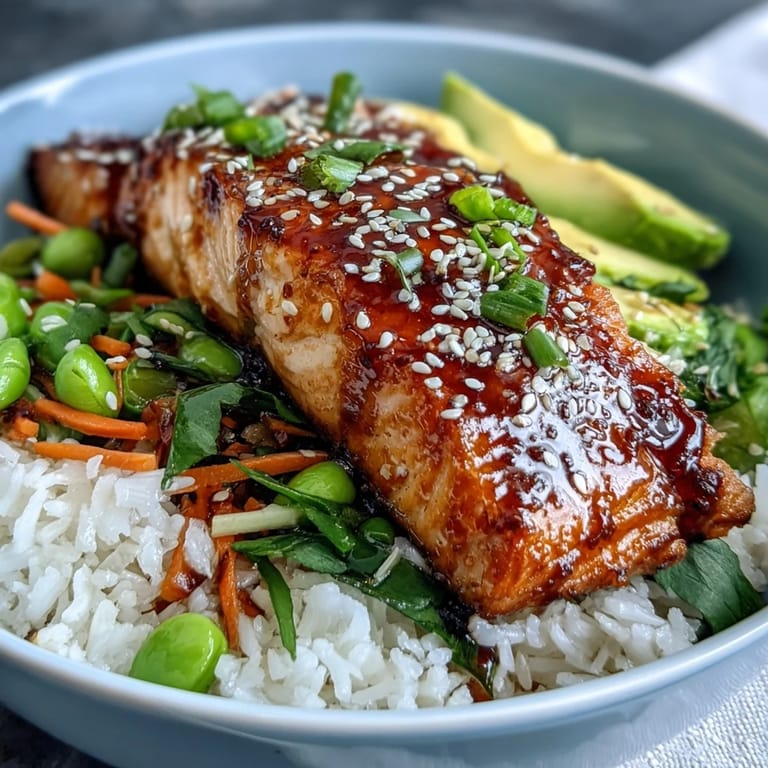
Pin One night I made this for my sister after a long week, and she sat at my kitchen counter eating it slowly, not saying much. When she finished, she looked up and said it tasted like a hug. I have thought about that ever since. Sometimes food does not need to be complicated to feel like care.
How to Choose Salmon
Fresh salmon should smell like the ocean, not fishy or sour. The flesh should be firm and bounce back when you press it gently. If you are buying frozen, look for individually vacuum-sealed fillets and thaw them in the fridge overnight, never at room temperature. Wild-caught salmon has a deeper flavor, but farmed salmon works just fine and is usually more affordable.
Vegetable Swaps That Work
I have made this bowl with zucchini, asparagus, sugar snap peas, and even roasted broccoli when that is what I had on hand. The key is to keep at least one crunchy vegetable and one that adds color. Frozen stir-fry vegetable blends are also a lifesaver on busy nights, and nobody will judge you for taking the shortcut. Just make sure to pat them dry before tossing them in the hot pan so they do not steam.
Storing and Reheating
Store the components separately if you can: rice in one container, salmon in another, and vegetables in a third. The salmon reheats gently in a skillet over low heat or in the microwave at half power for about a minute. Rice can be microwaved with a damp paper towel over it to keep it from drying out. Assemble fresh bowls as you need them, and add avocado and garnishes right before serving.
- Leftover salmon is incredible flaked over a green salad the next day.
- If the rice gets hard in the fridge, sprinkle a little water over it before reheating.
- Assembled bowls will keep for up to 3 days, but the avocado will brown so add it fresh each time.
 Pin
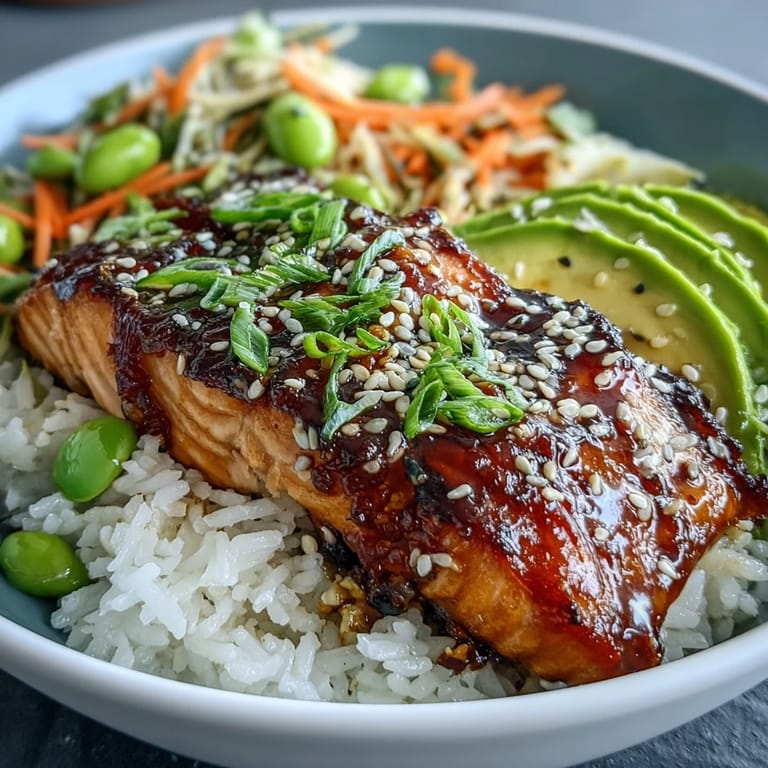
Pin This bowl has become my answer to What should I make for dinner when I want something that feels special but I do not have a lot of time. It works every time, and it never gets old.
Recipe Questions
- → How long should I marinate the salmon?
Marinate the salmon for 15 to 30 minutes in the refrigerator. This allows the flavors to penetrate the fish without breaking down the texture. Longer marinating isn't necessary and can make the salmon too salty.
- → Can I make this bowl gluten-free?
Yes, simply substitute tamari for the soy sauce. Tamari provides a similar savory flavor without gluten. All other ingredients naturally fit a gluten-free diet.
- → What rice alternatives work well?
Brown rice adds nutty flavor and extra fiber. For fewer carbohydrates, try cauliflower rice or quinoa. Both maintain the bowl's structure while offering different nutritional profiles.
- → How do I know when the salmon is cooked?
The salmon is done when it flakes easily with a fork and reaches an internal temperature of 145°F (63°C). The flesh should appear opaque throughout, and the glaze should be caramelized and sticky.
- → Can I meal prep this bowl?
Yes, store components separately in airtight containers. Rice keeps for 4-5 days, salmon for 3 days, and vegetables for 3-4 days. Reheat gently and add fresh garnishes before serving.
- → What vegetables can I substitute?
Snap peas, snow peas, shredded cabbage, or sliced radishes work beautifully. For leafy greens, try spinach or Swiss chard added during the last minute of stir-frying.