 Pin
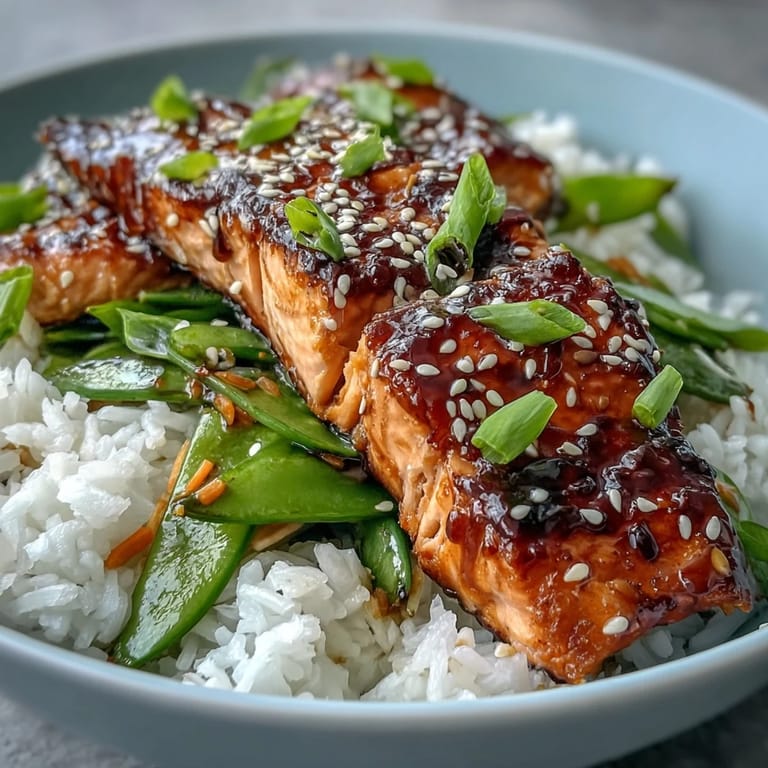
Pin My sister called me once from her tiny apartment kitchen, panicking because she'd invited coworkers over and needed something that looked impressive but wouldn't leave her scrubbing pans until midnight. I talked her through this teriyaki salmon bowl, and she later admitted three people asked for the recipe. It's one of those dishes that feels restaurant-special but comes together so intuitively that you barely need to think. The sauce bubbles up glossy and fragrant, the vegetables stay bright and snappy, and the salmon flakes apart with just a fork.
I made this for a friend who swore she hated fish, and she cleaned her bowl without a word, then looked up sheepishly and asked if there was more salmon. That's the magic of a good teriyaki glaze: it coaxes out the richness of the fish without masking it, and the caramelized edges add just enough sweetness to win over skeptics. We sat on her balcony with our bowls, the spring onions wilting slightly into the warm rice, and she admitted maybe she'd been wrong about salmon all along.
Ingredients
- Salmon fillets: I prefer skin-on because it crisps up beautifully, but skinless works if you're not a fan; look for bright, firm flesh that doesn't smell overly fishy.
- Soy sauce: This is the salty backbone of the teriyaki, so use a good quality one; low-sodium works too if you want more control over the saltiness.
- Mirin: A sweet rice wine that adds depth and a subtle tang; if you can't find it, use a tablespoon of sugar mixed with a tablespoon of water and a splash of rice vinegar.
- Brown sugar: It melts into the sauce and gives that glossy, caramelized coating; white sugar works in a pinch, but brown adds a hint of molasses warmth.
- Rice vinegar: Just a tablespoon brightens the whole sauce and keeps it from tasting flat or too sweet.
- Sesame oil: A little goes a long way; it adds a nutty, toasted aroma that makes the sauce smell like your favorite Japanese restaurant.
- Garlic and ginger: Freshly minced and grated are best; they bloom in the sauce and fill your kitchen with the kind of smell that makes people wander in asking what's for dinner.
- Cornstarch slurry: This thickens the sauce so it clings to the salmon instead of pooling at the bottom of the bowl; don't skip this step or you'll have a thin, watery glaze.
- Bell pepper, carrot, broccoli, sugar snap peas: A colorful mix that stays crisp and sweet; feel free to swap in whatever vegetables look good at the market.
- Jasmine or sushi rice: Jasmine is fragrant and fluffy, sushi rice is stickier and holds the sauce better; both work beautifully, so use what you have.
- Sesame seeds and spring onions: Optional but highly recommended; they add crunch, color, and a fresh bite that balances the rich salmon.
Tired of Takeout? 🥡
Get 10 meals you can make faster than delivery arrives. Seriously.
One email. No spam. Unsubscribe anytime.
Instructions
- Cook the rice:
- Rinse the rice under cold water until it runs clear to remove excess starch, then combine with water in a saucepan. Bring to a boil, reduce to a simmer, cover tightly, and let it steam for 15 minutes before removing from heat and resting for 5 more.
- Make the teriyaki sauce:
- In a small saucepan, whisk together soy sauce, mirin, brown sugar, rice vinegar, sesame oil, garlic, and ginger, then bring to a gentle simmer. Stir in the cornstarch slurry and cook for 1 to 2 minutes until the sauce thickens and turns glossy.
- Sear the salmon:
- Season the fillets with salt and pepper, then sear them in a hot nonstick skillet with a little oil, skin-side down if using skin-on, for 3 to 4 minutes. Flip and cook another 2 to 3 minutes until just cooked through, then brush generously with teriyaki sauce and let it caramelize for a final minute.
- Stir-fry the vegetables:
- Heat vegetable oil in a wok or large skillet over high heat, then toss in the bell pepper, carrot, broccoli, and sugar snap peas. Stir-fry for 3 to 4 minutes until they're tender but still have a satisfying crunch.
- Assemble the bowls:
- Divide the fluffy rice between four bowls, top with the stir-fried vegetables and a piece of glazed salmon, then drizzle extra teriyaki sauce over everything. Finish with a sprinkle of sesame seeds and spring onions if you like.
 Pin
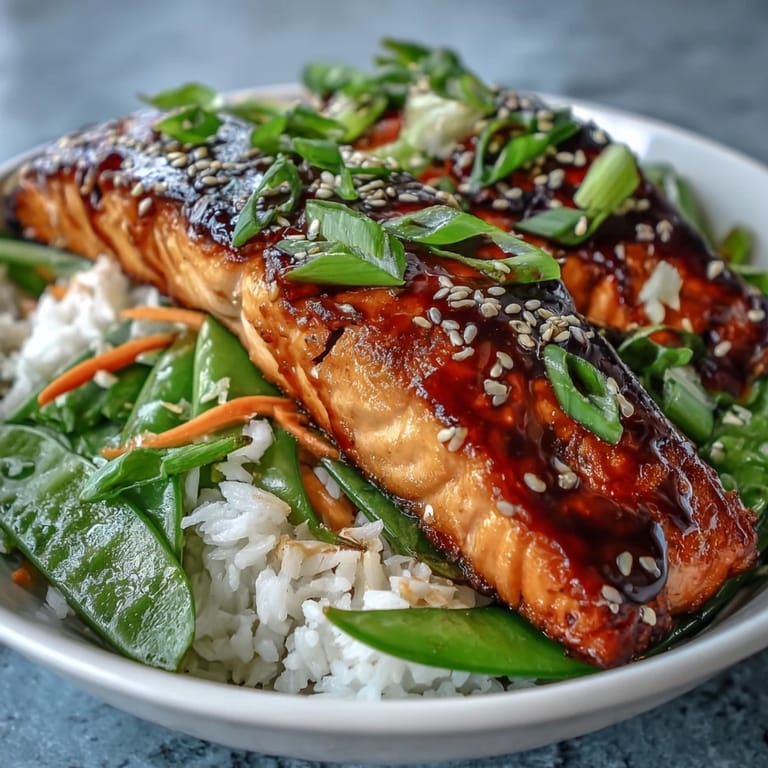
Pin The first time I made this for a weeknight dinner, I was exhausted from work and tempted to order in. But I had salmon in the fridge and rice in the cupboard, and something about the process of whisking the sauce and watching it thicken felt almost meditative. By the time I sat down with my bowl, the kitchen smelled like garlic and sesame, and I remembered why I love cooking even on tired nights.
Choosing Your Salmon
I've tried this with both farmed and wild salmon, and honestly, both work well as long as the fish is fresh. Wild salmon has a firmer texture and deeper color, while farmed is richer and more forgiving if you accidentally overcook it by a minute. If you're buying frozen, let it thaw slowly in the fridge overnight rather than rushing it under warm water, which can make the texture mushy. The teriyaki glaze is forgiving enough that even a less-than-perfect piece of salmon will taste delicious.
Vegetable Variations
I've made this bowl with whatever vegetables were lurking in my crisper drawer, and it's always turned out well. Zucchini, mushrooms, baby corn, and bok choy all work beautifully, and in the fall I sometimes add thinly sliced sweet potato that I roast separately. The key is to keep the pieces roughly the same size so they cook evenly, and to not crowd the pan or they'll steam instead of getting that nice sear. If you're feeding picky eaters, you can skip the vegetables entirely and just serve the salmon over rice with extra sauce.
Storing and Reheating
Leftovers keep well in the fridge for up to three days, though I like to store the components separately so the rice doesn't get soggy. The salmon reheats gently in a low oven or even cold on top of fresh greens for a quick lunch salad. The teriyaki sauce thickens as it cools, so you might need to thin it with a splash of water when reheating.
- Reheat rice with a damp paper towel over it in the microwave to restore moisture.
- Warm the salmon in a covered skillet over low heat to avoid drying it out.
- Stir-fried vegetables are best enjoyed fresh, but they'll keep for a day or two if you don't mind a softer texture.
 Pin
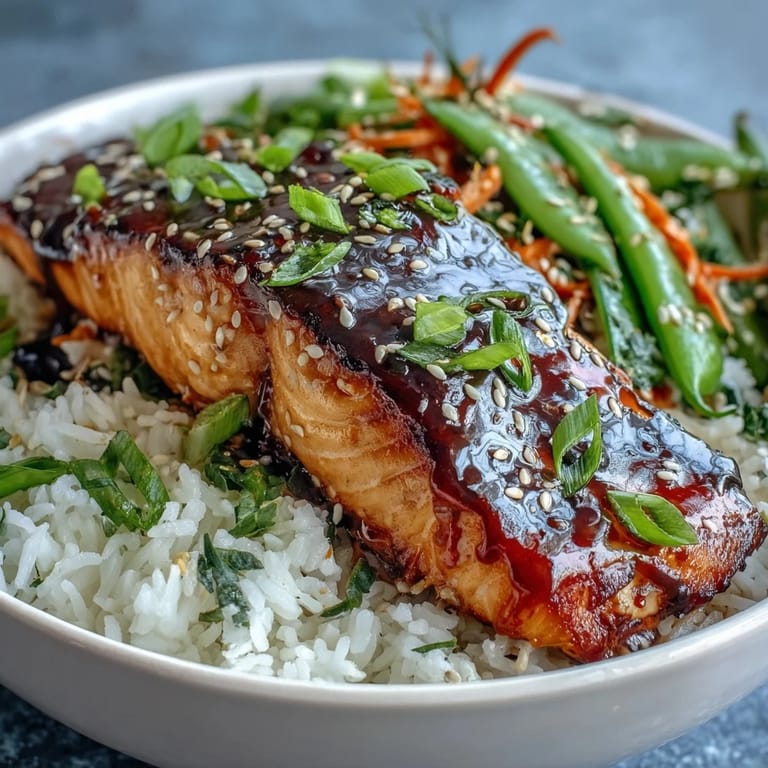
Pin This bowl has become my answer to the question of what to make when I want something nourishing but not fussy, impressive but not stressful. I hope it becomes that for you too.
Recipe Questions
- → Can I use other types of fish?
Yes, you can substitute salmon with other firm fish like cod, halibut, or sea bass. Adjust cooking time based on thickness, as these varieties may cook slightly faster than salmon.
- → How do I store leftovers?
Store components separately in airtight containers in the refrigerator for up to 3 days. Keep rice, salmon, vegetables, and sauce in separate containers. Reheat gently to maintain texture.
- → Can I make the teriyaki sauce ahead?
Absolutely. Prepare the teriyaki sauce up to 1 week in advance and store it in an airtight container in the refrigerator. Gently reheat before using, adding a splash of water if it becomes too thick.
- → Is this suitable for meal prep?
This bowl is excellent for meal prep. Cook all components and portion them into containers. When reheating, add a splash of water to the rice and microwave for 2-3 minutes, then heat the salmon and vegetables separately.
- → Can I make this gluten-free?
Use gluten-free soy sauce or tamari in place of regular soy sauce. Double-check that all other ingredients, including the condiments, are certified gluten-free to ensure the dish meets your dietary needs.
- → What vegetables work best in this bowl?
The recipe suggests bell peppers, carrots, broccoli, and sugar snap peas, but you can easily substitute with zucchini, mushrooms, baby corn, green beans, or bok choy based on seasonal availability and personal preference.