 Pin
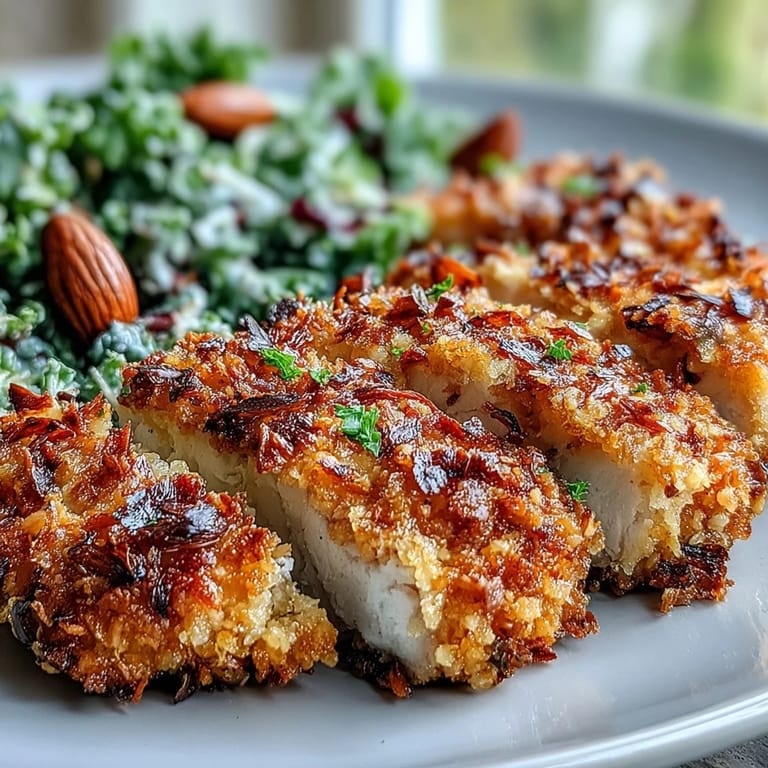
Pin There's a particular Tuesday afternoon that comes to mind whenever I make this dish—I was standing in my kitchen listening to rain tap against the window, feeling stuck between wanting something crispy and something bright, something that felt both indulgent and clean. That's when the almond crust clicked into place, golden and shattering under my fork, while the kale with its tart sumac punch seemed to balance everything out. It's become the meal I turn to when I want to feel like I've actually cooked something, without spending half my evening in front of the stove.
I made this for my sister last spring when she was visiting, and watching her eyes light up when she bit into that crust made me realize how much drama four ingredients and proper technique can create on a plate. She kept asking if it was restaurant food, which felt like the highest compliment I could get standing in my own kitchen in yesterday's apron.
Ingredients
- Boneless, skinless chicken breasts: Pound them gently to an even thickness so they cook at the same pace, preventing the edges from drying out while the center catches up.
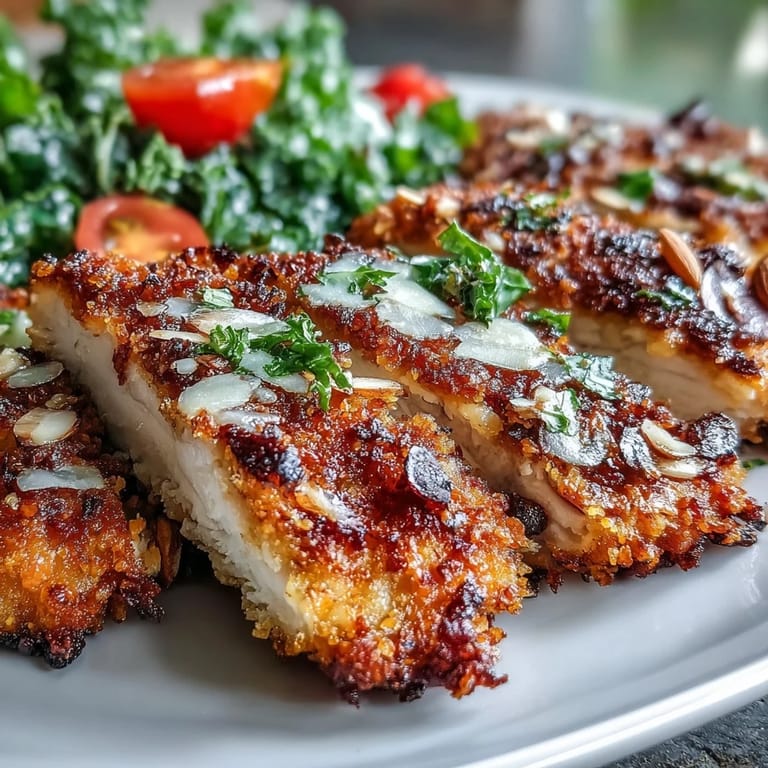
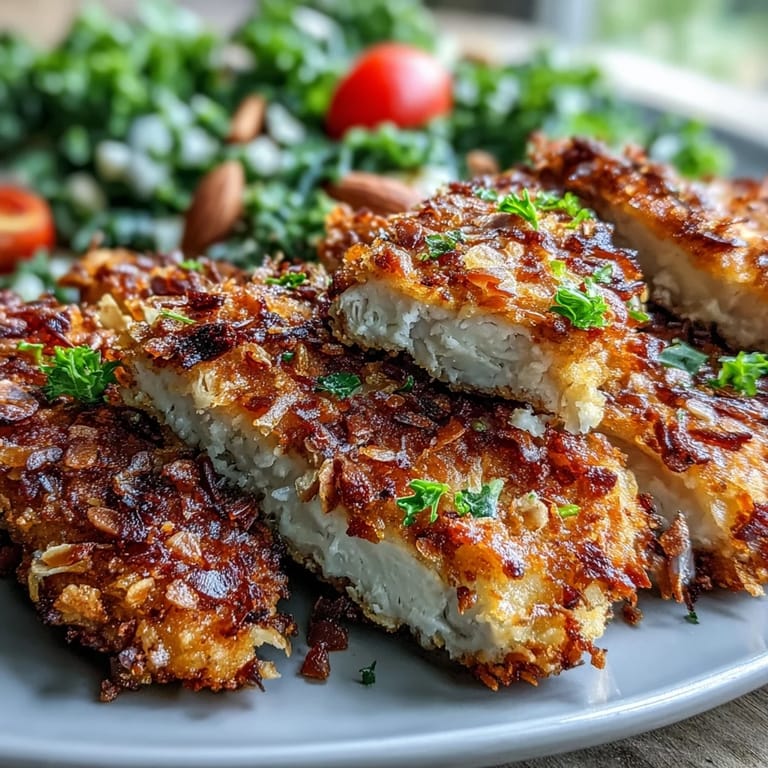
- Almond meal or finely ground almonds: This is the star—it creates that satisfying crunch and toasts beautifully, bringing nuttiness that breadcrumbs can't match.
- Grated Parmesan cheese: Adds savory depth and helps the crust brown evenly, creating little crispy spots that catch the light.
- Garlic powder, smoked paprika, salt, and black pepper: These seasonings should be measured carefully into your coating; too heavy-handed and they overpower the delicate chicken.
- Eggs: Use them as your binding agent, beaten smooth so the coating adheres without clumpy bits.
- Olive oil for frying: Medium heat is your friend here—too hot and the coating burns before the chicken cooks through.
- Kale: Tear it into bite-sized pieces rather than chopping, which keeps the leaves intact and gives better texture when massaged.
- Lemon juice and olive oil for marinating: The acid softens the kale's fibers while the oil carries the flavors deeper into each leaf.
- Red onion: Thinly slice it, and if it feels too sharp, let it sit in the lemon juice for a minute to soften its bite.
- Cherry tomatoes: Halving them prevents them from rolling around on your plate and releasing juice everywhere.
- Fresh parsley and sumac: Parsley adds color and freshness; sumac provides that unexpected tangy note that makes people ask what just happened to their taste buds.
- Toasted slivered almonds: Toast these yourself if you can—store-bought toasted almonds are convenient, but the ones you toast taste brighter and fresher.
Tired of Takeout? 🥡
Get 10 meals you can make faster than delivery arrives. Seriously.
One email. No spam. Unsubscribe anytime.
Instructions
- Set up your stations:
- Preheat your oven to 375°F and line a baking sheet with parchment paper—this prevents sticking and makes cleanup feel like an afterthought. Mixing your dry coating and beating your eggs beforehand means you're never standing around waiting mid-cook.
- Build the almond coating:
- Combine almond meal, Parmesan, garlic powder, smoked paprika, salt, and pepper in a shallow bowl, stirring until everything is evenly distributed. This moment of prep work pays dividends because you'll have everything ready to move quickly once the chicken hits the pan.
- Prepare the chicken for coating:
- Pat your chicken breasts completely dry—any moisture will prevent the coating from sticking properly and create steam instead of a golden crust. Dip each breast into the beaten eggs first, then press it firmly into the almond mixture, coating all sides and making sure nothing bare spots remain.
- Sear the chicken:
- Heat olive oil in a large skillet over medium heat and listen for that gentle sizzle when the chicken touches the pan. Sear for 2-3 minutes per side until the coating turns golden brown, which creates a barrier that keeps the interior tender.
- Finish cooking in the oven:
- Transfer the seared chicken to your prepared baking sheet and slide it into the oven for 12-15 minutes until the internal temperature reaches 165°F. The oven's gentle heat finishes cooking the chicken through without burning the almond crust that you worked to build.
- Massage and build the salad:
- While the chicken bakes, tear your kale into bite-sized pieces and place it in a large bowl with olive oil, lemon juice, and salt. Use your hands to massage the kale for about 2 minutes—you'll feel it transform from tough and waxy to tender and pliable, and that's exactly what you want.
- Toss in the remaining vegetables:
- Add your thinly sliced red onion, halved cherry tomatoes, chopped parsley, and sumac to the kale and toss everything together until the colors seem to glow. The sumac's lemony tang should jump out at you in the most pleasant way.
- Finish and serve:
- Top the salad with toasted slivered almonds just before serving—this keeps them crunchy and prevents them from absorbing the salad's moisture. Plate the almond-crusted chicken alongside the marinated kale salad and listen for the quiet satisfaction of people eating something delicious.
 Pin
Pin There was an evening when my neighbor brought her daughter over for dinner, and the kid—who normally eats only beige foods—asked for seconds of the salad because of the sumac, which she decided tasted like "lemon magic." Moments like that remind me why cooking for people matters, why taking twenty minutes to do something properly creates something worth remembering.
The Almond Crust Secret
The magic of using almond meal instead of breadcrumbs isn't just about avoiding gluten—it's about texture and flavor working together. Almonds brown faster and more completely than breadcrumbs, and they stay crunchy longer because they contain fat that repels moisture. The first time I made this switch, I expected a subtle difference; what I got was a completely different eating experience.
Why This Salad Actually Gets Eaten
Raw kale can be so aggressively tough that people push it around their plates like they're doing you a favor. Massaging it changes that entire dynamic—the salt and lemon juice break down the cell walls, making the leaves soft enough to enjoy while keeping them substantial enough to stand up to the chicken. Add sumac and suddenly kale transforms from something healthy that tastes like penance into something you'd actually choose to eat again.
Making This Meal Your Own
The beauty of this dish is how willing it is to accommodate what you have on hand or what you're craving. The fundamental technique stays the same—crispy protein, bright salad—but the details can shift with the seasons and your preferences. I've made it with different nuts, added pomegranate seeds when they're in season, and swapped the kale for arugula on nights when I'm feeling restless.
- Pomegranate seeds or thinly sliced radishes add a juicy crunch that cuts through the richness beautifully.
- Turkey cutlets work wonderfully if you're looking for variation or want something slightly leaner than chicken.
- A crisp Sauvignon Blanc or light Pinot Noir pairs perfectly alongside this meal, though honestly, cold water works just fine too.
 Pin
Pin This is the meal I make when I want to feel accomplished without feeling exhausted, when I want food that tastes like it took hours but didn't steal my whole evening. It's become part of how I cook.
Recipe Questions
- → Can I prepare the chicken coating ahead of time?
Yes, you can mix the almond meal, Parmesan, and seasonings up to 2 days in advance and store in an airtight container. Coat the chicken just before cooking for the crispiest results.
- → How do I know when the chicken is fully cooked?
Use a meat thermometer to check that the internal temperature reaches 165°F (74°C) at the thickest part of the breast. The juices should run clear when pierced.
- → Can I substitute another green for kale?
Yes, Swiss chard, collard greens, or even spinach work well. Heartier greens benefit from massaging, while tender spinach can be dressed without massaging.
- → What can I use instead of sumac?
Substitute with lemon zest combined with a pinch of salt for a similar tangy, citrusy flavor. Za'atar seasoning also works as an alternative with different flavor notes.
- → How should I store leftovers?
Store chicken and salad separately in airtight containers in the refrigerator for up to 3 days. Reheat chicken in a 350°F oven for 10 minutes to maintain crispness. Dress salad fresh before serving.
- → Can I make this dairy-free?
Replace Parmesan with nutritional yeast or dairy-free Parmesan alternative. The coating will still be flavorful and crispy with this substitution.