 Pin
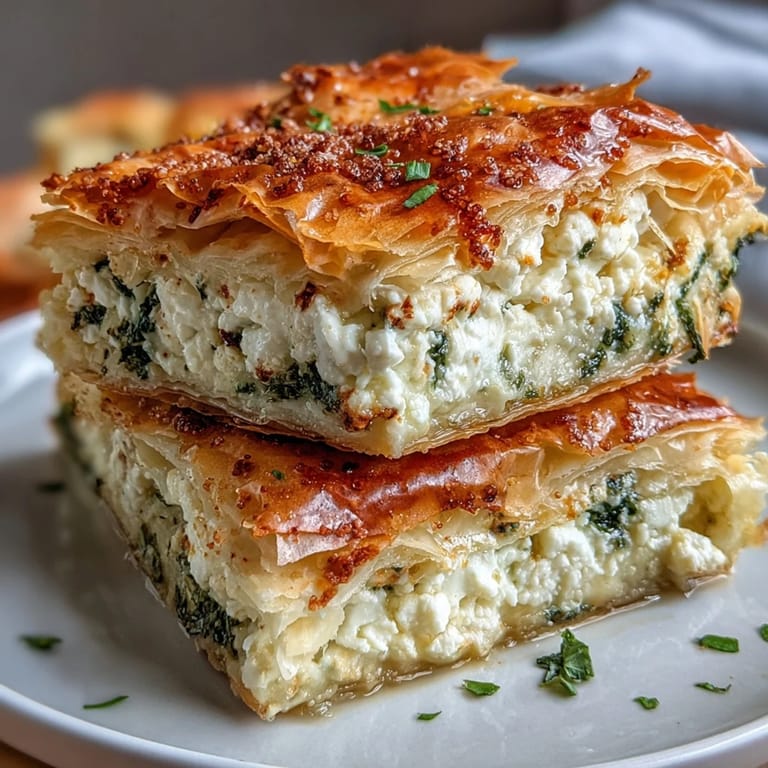
Pin My neighbor Elena handed me a warm slice of börek through her kitchen window one autumn afternoon, and I was completely won over by the shattering crispness of the pastry against the creamy, salty filling inside. She'd learned to make it from her grandmother's kitchen in Istanbul, where the smell of filo brushed with olive oil would drift through the streets every Friday morning. That one taste made me determined to recreate it, though I'll admit my first attempt was a soggy disappointment—until I learned the secrets that changed everything. Now this golden, flaky tart sits at the center of nearly every gathering at my table, and somehow it never lasts long enough to photograph.
I made this for my book club one winter evening, and three people asked for the recipe before they'd even finished eating—one of them pulled out her phone mid-bite to take notes. What struck me most was watching everyone slow down and actually taste it, the kind of pause that happens when food surprises you with its simplicity and refinement. It became our unofficial signature dish, the one someone always volunteers to bring now.
Ingredients
- Fresh kale, 250 g: Remove the tough stems first—they'll never soften enough to enjoy—and chop the leaves into bite-sized pieces so they distribute evenly and cook down quickly.
- Medium onion, 1: Finely chop it so it melts into the filling and adds sweetness without texture, which keeps the börek silky rather than chunky.
- Garlic, 2 cloves: Mince it small and add it after the onion softens, so it releases its flavor into the oil without turning bitter.
- Feta cheese, 200 g: Crumble it by hand just before using—pre-crumbled feta often contains starches that make the filling grainy.
- Ricotta cheese, 100 g: This cream-forward cheese softens the saltiness of feta and makes the filling luxurious without being heavy.
- Filo pastry, 8 sheets: Keep the unused sheets covered with a damp towel while you work, or they'll dry out and shatter before you can layer them.
- Large eggs, 3: These bind everything together and create a silky custard base that holds the filling intact when you slice.
- Whole milk, 100 ml: The egg-milk mixture is what transforms this from a dry filling to something creamy that tastes baked through rather than assembled.
- Olive oil, 50 ml plus extra for brushing: Use your best olive oil here—the pastry needs enough oil to become golden and crisp, and cheap oil won't give you that flavor depth.
- Black pepper, nutmeg, dill, and sea salt: The nutmeg adds warmth that echoes through the whole dish, while dill gives it a bright, almost Scandinavian note that balances the richness.
Tired of Takeout? 🥡
Get 10 meals you can make faster than delivery arrives. Seriously.
One email. No spam. Unsubscribe anytime.
Instructions
- Set the stage:
- Preheat your oven to 180°C and lightly oil a 23 cm tart dish—this temperature is crucial because it lets the pastry brown without burning before the filling sets. Work slowly and deliberately here; rushing this step shows later.
- Soften the vegetables:
- Heat olive oil in a large skillet over medium heat and let the onion turn translucent and sweet, about 4 minutes, before adding the garlic. Once you add the kale, you're watching for that moment when it goes from rigid and dark to silky and soft, which takes just 3-5 minutes, and you'll know by how it feels against your wooden spoon.
- Cool and compose the custard:
- Let the kale cool slightly so it doesn't scramble the eggs when you fold it in, then whisk together eggs, milk, and olive oil until they're pale and slightly frothy. Add the cheeses and seasonings, then fold in the kale gently—you want streaks of green visible, not a uniform paste.
- Layer the foundation:
- Lay one filo sheet in your dish, let the edges overhang generously, and brush it lightly with olive oil until it's just glistening, not saturated. Repeat with three more sheets, rotating each one slightly so the layers don't all tear in the same direction—this is the difference between a tart that shatters beautifully and one that cracks unevenly.
- Fill and seal:
- Spoon the filling evenly over your filo base, then top with the remaining four sheets, brushing each one carefully and tucking the edges down to create a sealed envelope. If you want to score the top into portions before baking, use a sharp knife and cut gently—you're just marking the surface, not cutting all the way through.
- Bake until golden:
- Bake for 30-35 minutes, watching for that moment when the top shifts from pale cream to deep golden brown, which signals that everything underneath has set properly. The pastry should sound crisp when you tap it, not soft.
- Rest and serve:
- Let it cool for 10 minutes—this allows the filling to set so slices hold together instead of spilling out onto the plate. Serve warm or at room temperature, and watch people's faces light up when they taste that first flakey, creamy bite.
 Pin
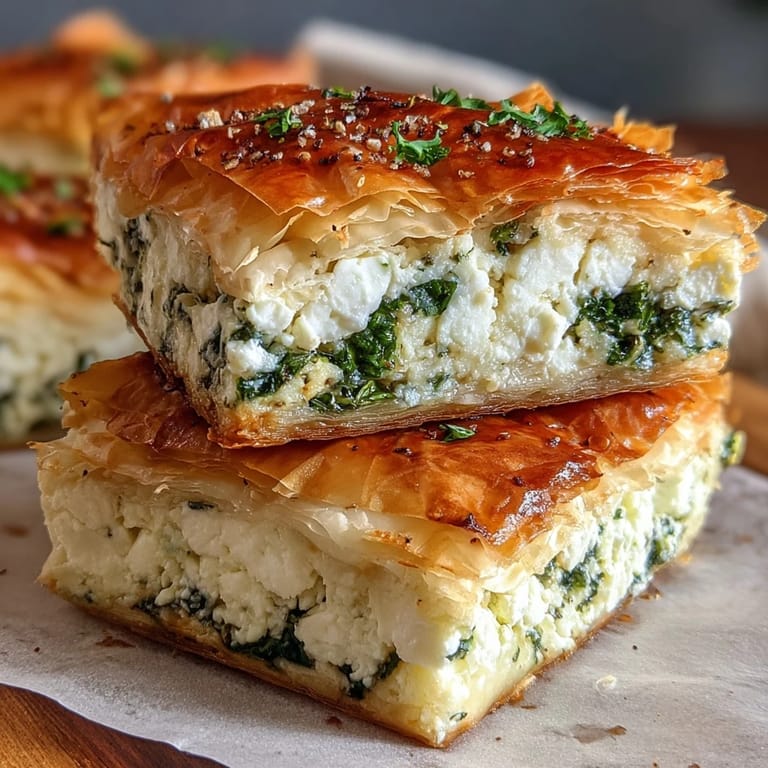
Pin There's a moment near the end of baking when your kitchen fills with the smell of toasted olive oil and just-wilted greens, and somehow that aroma tells you everything is working. My sister called it the smell of restaurant food, which made me laugh until I realized she was right—this dish tastes like someone spent hours fussing with it, even though it takes less than an hour from start to table.
Why This Came Together So Perfectly
The genius of a börek is that it respects every ingredient and lets them speak individually—the briny feta, the earthy kale, the nutmeg's warmth, the ricotta's softness—and somehow they create something bigger than the sum of their parts. I learned this by accident when I ran out of ricotta and tried using all feta, and the result was so aggressively salty and crumbly that I had to start over. That failure taught me that balance is everything in this dish, and now I understand why Elena's grandmother used these exact proportions.
Making It Your Own
The filling is forgiving enough to swap in spinach or Swiss chard if that's what you have, though each green brings its own character—spinach is milder and more delicate, while chard has an almost mineral quality that pairs beautifully with the cheese. I've also played with adding fresh mint instead of dill, which makes it taste suddenly spring-like, and once I added a tiny pinch of red pepper flakes that made people ask what that mysterious warmth was. The beauty of this recipe is that it's a framework rather than a strict formula, so trust your instincts and your pantry.
Storage and Serving Wisdom
This börek is absolutely wonderful served warm from the oven, but it's equally delicious at room temperature, which means it travels well to potlucks and picnics without losing its appeal. You can assemble it completely in the morning and bake it in the evening, or even bake it a day ahead and reheat it gently at 150°C for about 10 minutes to restore some of the pastry's crispness.
- Pair it with a sharp green salad and crisp white wine like Sauvignon Blanc, which cuts through the richness and makes the meal feel sophisticated.
- Leftover slices keep in the refrigerator for three days and taste just as good cold the next day for lunch, which is my favorite kind of recipe.
- If you're cooking for guests, cut it into six generous wedges before serving so everyone gets an equal share of the golden, flaky pastry edge.
 Pin
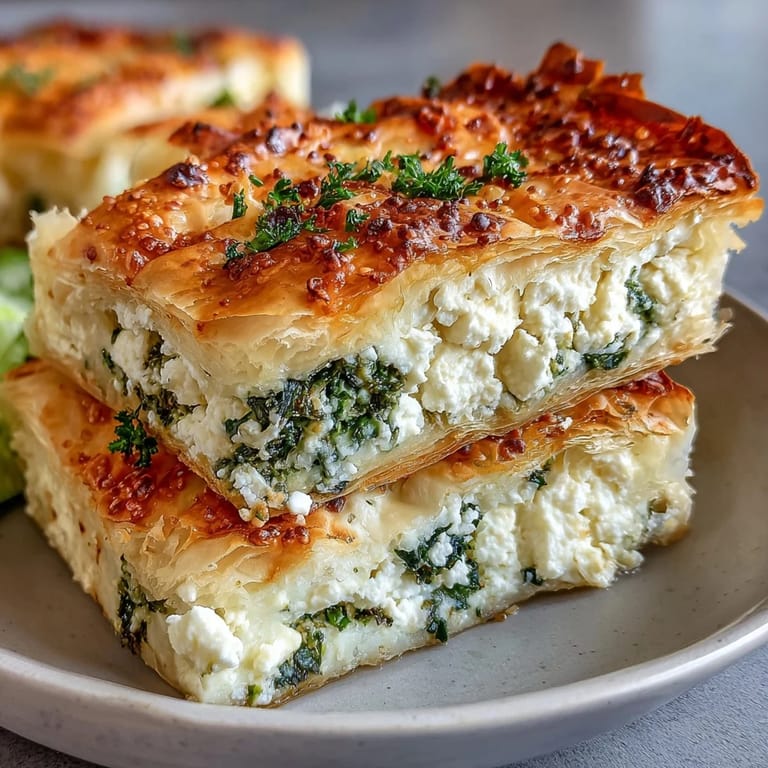
Pin This börek has become my go-to dish for the moments when I want to feed people something that feels special without actually spending the evening cooking. It's the kind of food that reminds everyone why gathering around a table together matters.
Recipe Questions
- → Can I substitute the kale with other greens?
Yes, spinach or Swiss chard work wonderfully in place of kale. Simply wilt them the same way and ensure excess moisture is squeezed out before mixing with the cheese filling.
- → How do I prevent the filo pastry from drying out?
Keep unused filo sheets covered with a slightly damp kitchen towel while you work. Brush each layer generously with olive oil to keep them pliable and ensure a crisp, golden finish.
- → Can I make this börek ahead of time?
Absolutely. Assemble the börek up to 24 hours in advance, cover tightly, and refrigerate. Bake just before serving for the crispiest results. You can also freeze the unbaked börek for up to 2 months.
- → What can I serve alongside this dish?
A fresh green salad with lemon vinaigrette, roasted vegetables, or a simple tomato and cucumber salad complement the rich, savory flavors beautifully. A glass of Sauvignon Blanc or a light rosé pairs perfectly.
- → How do I store leftovers?
Store leftover börek in an airtight container in the refrigerator for up to 3 days. Reheat in a preheated oven at 180°C for 10-15 minutes to restore the pastry's crispness.
- → Can I add other ingredients to the filling?
Certainly! Try adding sautéed mushrooms, sun-dried tomatoes, or crumbled cooked sausage for extra flavor. Fresh herbs like parsley or mint also add a lovely brightness to the filling.