 Pin
Pin There's something about the smell of lentils simmering with cumin that fills a kitchen with purpose. Years ago, a friend who seemed to have her life figured out made this soup on a gray Tuesday, and I watched her move through the chopping with such ease that I finally understood why people become the type who always has something warm on the stove. Now, when I make it, I'm not trying to replicate her calm—I'm just grateful for the lesson that good food doesn't require drama, only attention.
My sister called me during a particularly hectic work week and said she'd been eating the same sad sandwich for three days straight. I made this soup and left it on her porch, and she texted later that she'd eaten it straight from the pot while standing in her kitchen. Sometimes the most meaningful meals are the unplanned ones, the ones that arrive when someone needs to remember they're worth feeding.
Ingredients
- Dried brown or green lentils (1 cup): Brown lentils hold their shape beautifully, while green ones have a slightly peppery bite—pick whichever speaks to you, or mix them if you're feeling adventurous.
- Onion, carrots, and celery (1 medium onion, 2 carrots, 2 stalks): This holy trinity is your foundation, and taking five minutes to actually dice them properly sets the entire tone for what follows.
- Garlic (2 cloves, minced): Don't skip the mincing step even if you're tired—whole pieces clatter around annoying, but minced garlic melts into the oil and becomes the backbone of flavor.
- Zucchini (1 medium, diced): Added partway through so it stays tender and bright instead of dissolving into mush.
- Tomatoes (1 cup, fresh or canned): Canned works just as well and honestly saves you the question of whether summer tomatoes are worth buying in January.
- Spinach or kale (2 cups, chopped): Add this at the very end so the chlorophyll stays vibrant green instead of turning that sad grayish-brown.
- Vegetable broth (6 cups): The gentle background voice in this soup—pick one you'd actually drink on its own, because you'll taste it.
- Olive oil (2 tbsp): Use one you like, because good oil carries flavor in a way that cheap oil simply doesn't bother to attempt.
- Cumin, smoked paprika, thyme, and bay leaf: These four create a warmth that lingers, like being wrapped in something soft on a cold evening.
- Salt and black pepper: Season at the end rather than the beginning—lentils taste different as they cook, and you'll want to taste before committing.
- Fresh parsley and lemon wedges (optional garnish): The parsley adds brightness that feels almost celebratory, and lemon cuts through the richness in the way only citrus knows how.
Tired of Takeout? 🥡
Get 10 meals you can make faster than delivery arrives. Seriously.
One email. No spam. Unsubscribe anytime.
Instructions
- Get your vegetables ready:
- Rinse your lentils first—you'll feel the tiny pebbles sometimes hiding in there, which is its own small lesson in attention. Dice everything into pieces roughly the same size so they cook evenly.
- Build the base:
- Heat olive oil in a large pot over medium heat, then add onion, carrots, and celery. Let them soften for five minutes, stirring occasionally—you want them tender but not brown, like they're blushing instead of cooking hard.
- Wake up the spices:
- Add minced garlic and let it perfume the oil for a minute, then sprinkle in cumin, smoked paprika, and thyme. The pot will smell suddenly alive, and this moment is why you came here.
- Bring everything together:
- Add lentils, tomatoes, vegetable broth, and bay leaf. Stir once and let it come to a boil—don't just walk away, because boiling soup sounds different and it's nice to mark that moment.
- Let it simmer:
- Lower the heat, cover the pot, and let it bubble gently for twenty minutes. This is when you can finally sit down with a cup of tea and not feel guilty about it.
- Add the zucchini:
- After twenty minutes, stir in the diced zucchini and simmer uncovered for another ten minutes until both lentils and vegetables are tender. You should be able to mash a lentil against the side of the pot with a spoon, but not so far that they've disappeared entirely.
- Finish with the greens:
- Stir in spinach or kale and cook for just two to three minutes until wilted—longer and you lose that green brightness you worked to preserve. Remove the bay leaf with a spoon and feel briefly satisfied that you remembered it was in there.
- Taste and adjust:
- This is the moment you become the cook instead of following instructions. Add salt and black pepper in small amounts, taste between each addition, and keep adjusting until it tastes like something you'd want to eat again tomorrow.
- Serve with intention:
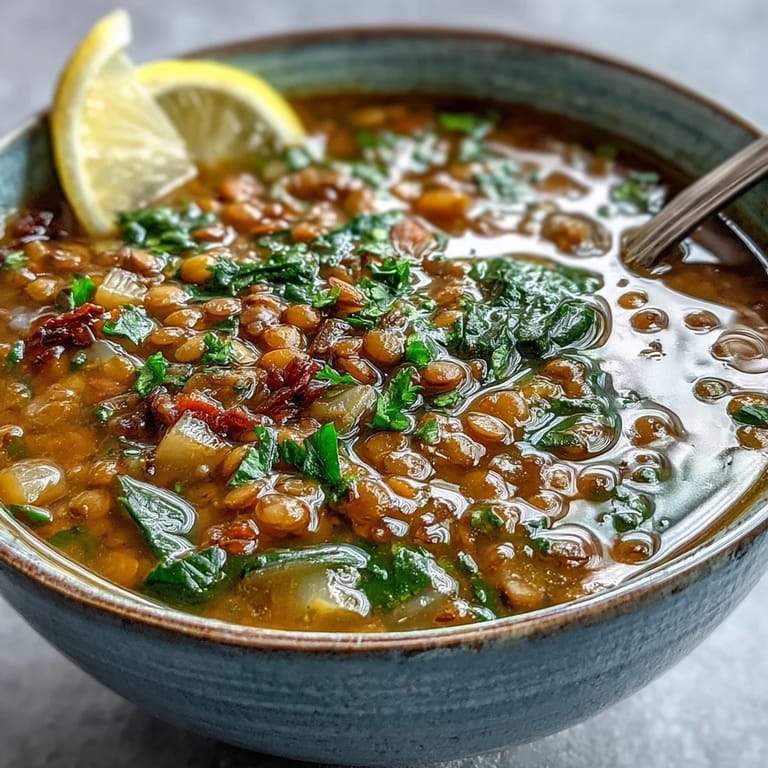
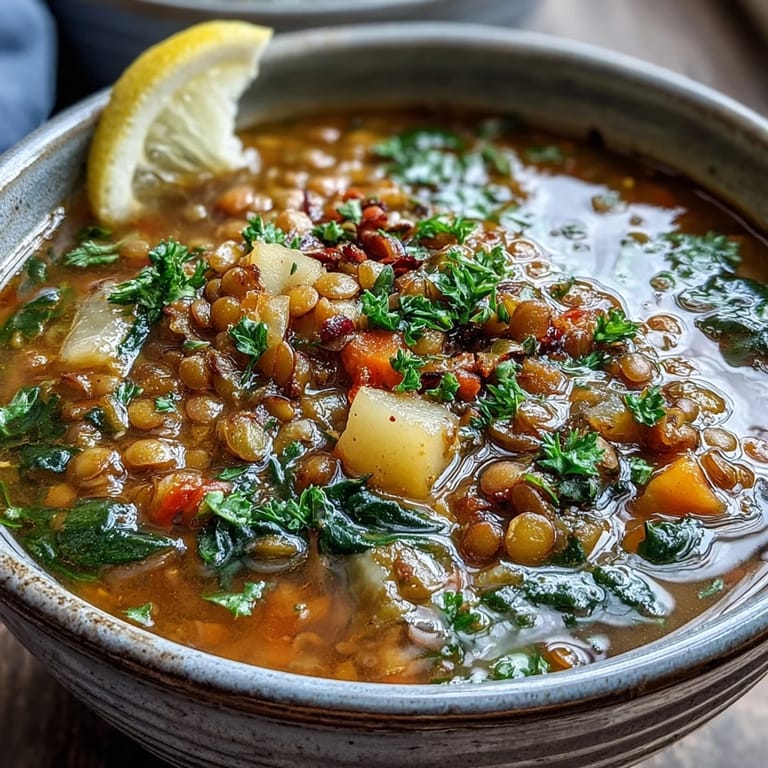
- Ladle into bowls, scatter parsley over the top if you have it, and pass the lemon wedges around so everyone can squeeze as much brightness as they need. This soup is best enjoyed hot, shared across a table where people linger longer than they expected.
 Pin
Pin My mother, who never cooks anymore, asked me once why I make this soup so often. I told her it's because it never disappoints, and she laughed and said that was the definition of love in food form. That might be the truest thing either of us has said about cooking.
When You Want to Make It Your Own
This soup is forgiving in the way the best recipes are, which means you can treat it like a canvas instead of a command. Try roasted sweet potatoes instead of regular carrots, or throw in bell peppers if they're what's sitting in your crisper drawer calling for attention. The spices are flexible too—if you love heat, add a pinch of cayenne; if you want it earthier, try adding a teaspoon of cumin instead of one, or introduce some ground coriander.
The Texture Question
Some people want their soup to be a clear broth scattered with individual vegetables, while others want it almost creamy and thick. If you fall into the second camp, use an immersion blender on about half the soup after the lentils are tender but before you add the greens—this breaks down some of the lentils and thickens everything without making it puree. Blend in short pulses and taste as you go, because there's a sweet spot between velvety and chunky that only your own spoon can find.
What Makes This Soup Actually Last
I've discovered that lentil soup is one of those rare dishes that genuinely improves after a day or two in the refrigerator, as if the spices have had time to become friends with each other. It keeps for four days in an airtight container, and it freezes beautifully for up to three months—though I rarely plan ahead that well. Reheat it gently on the stove with a splash of water if it's thickened too much, or eat it straight from the pot if no one's looking and you're having one of those mornings.
- Serve this with crusty bread if you want to turn a bowl into a meal that feels ceremonial instead of quick.
- A squeeze of lemon at the table transforms everything, so always offer it even if people think they don't need it.
- Leftovers are perfect for when you need something that tastes like care but requires no effort.
 Pin
Pin This soup has become my answer when someone asks what to make when you want to feel like you're taking care of yourself or someone else. It's honest food that doesn't pretend to be anything more complicated than it is.
Recipe Questions
- → What type of lentils work best for this soup?
Brown or green lentils are ideal because they hold their shape during cooking and provide a satisfying texture. Red lentils tend to break down and make the soup thicker, which can also be delicious if you prefer a creamier consistency.
- → Can I make this soup in advance?
Absolutely! This soup actually improves after sitting overnight as the flavors have time to meld together. Store in an airtight container in the refrigerator for up to 4 days. Reheat gently on the stovetop, adding a splash of broth if needed.
- → How can I make this soup creamy without dairy?
Use an immersion blender to partially blend about one-third of the soup right before adding the greens. This creates a creamy base while still leaving plenty of texture from the whole lentils and vegetables.
- → What vegetables can I substitute based on the season?
Sweet potatoes, butternut squash, bell peppers, or parsnips work wonderfully in place of zucchini. In spring, try adding fresh peas or asparagus. The base of onion, carrots, and celery provides a classic foundation that supports endless variations.
- → Is this soup freezer-friendly?
Yes, this soup freezes beautifully for up to 3 months. Cool completely before transferring to freezer-safe containers, leaving about an inch of space for expansion. Thaw overnight in the refrigerator before reheating.
- → What can I serve alongside this soup?
Crusty bread or garlic toast makes for a classic pairing. A simple green salad with vinaigrette provides a fresh contrast to the warm, earthy soup. For a protein boost, consider adding a dollop of Greek yogurt or serving with roasted chickpeas on the side.