 Pin
Pin There was a Tuesday evening when my kitchen smelled like a spice market had exploded in the best way possible, and I realized I'd been overthinking seafood all along. A friend had mentioned she made everything in one pot to avoid the post-dinner cleanup chaos, and something about that stuck with me. I pulled out a rusty Dutch oven, grabbed whatever white fish I had, and started layering flavors like I was building something from memory rather than a recipe. That first bite of tender cod swimming in this warm, aromatic sauce made me understand why she was onto something brilliant.
I made this for my sister last month when she was going through a rough patch, and she sat at my kitchen counter just watching the colors deepen as everything cooked down together. There's something comforting about handing someone a bowl of food that took minimal effort but tastes like you care, which in that moment, felt like the whole point. She asked for the recipe before she even finished eating, which told me everything I needed to know.
Ingredients
- Cod fillets: Look for thick, pale fillets that smell like the ocean, not fishy; thinner pieces will turn to mush if you're not watching.
- Onion and garlic: These are your flavor foundation, so don't rush them or skip the mincing step—texture matters here.
- Red and yellow bell peppers: They soften into something sweet and almost jammy; the colors also make this dish look like it took actual effort.
- Canned diced tomatoes: Use good quality if you can; they become the sauce that clings to every piece of fish.
- Baby spinach: It wilts away to nothing at the end, which means you're sneaking greens into something delicious.
- Lemon slices: They nestle on top of the fish and infuse everything with brightness; don't peel them, the rind adds character.
- Ground cumin, smoked paprika, coriander: This trio creates warmth without overpowering the delicate fish.
- Cayenne pepper: Optional heat that creeps up at the end if you want it.
- Olive oil: Use something you'd actually taste; it's one of the few ingredients that stands alone.
- Fish or vegetable stock: This becomes your cooking liquid and flavor carrier; homemade is lovely but store-bought works fine.
Tired of Takeout? 🥡
Get 10 meals you can make faster than delivery arrives. Seriously.
One email. No spam. Unsubscribe anytime.
Instructions
- Warm your oil and begin the aromatics:
- Heat oil over medium in your largest skillet or Dutch oven until it shimmers just slightly. Add the chopped onion and let it soften for about 3 to 4 minutes, stirring occasionally so it catches golden color in places but doesn't brown. This is when your kitchen starts to smell like something good is happening.
- Layer in the pepper and garlic:
- Stir in your minced garlic and both bell peppers, cooking for another 3 minutes until the peppers begin to soften. You'll notice the raw garlic smell start to mellow into something sweeter and deeper.
- Bloom the spices:
- Add all your spices at once and stir constantly for about 1 minute so they wake up and toast slightly in the hot oil. Your nose will tell you when this is done—that fragrant, almost peppery moment when you can smell each spice individually.
- Build your sauce:
- Pour in the diced tomatoes and stock, stirring gently to combine. Bring everything to a simmer, then cover and let it cook for 8 to 10 minutes until the vegetables are genuinely tender and the sauce begins to thicken slightly.
- Nestle in the fish:
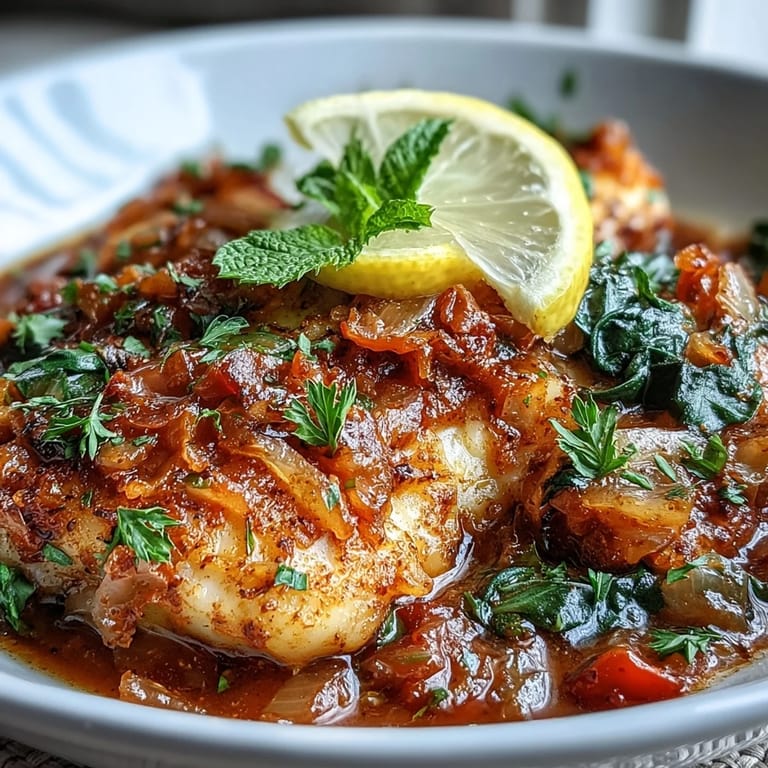
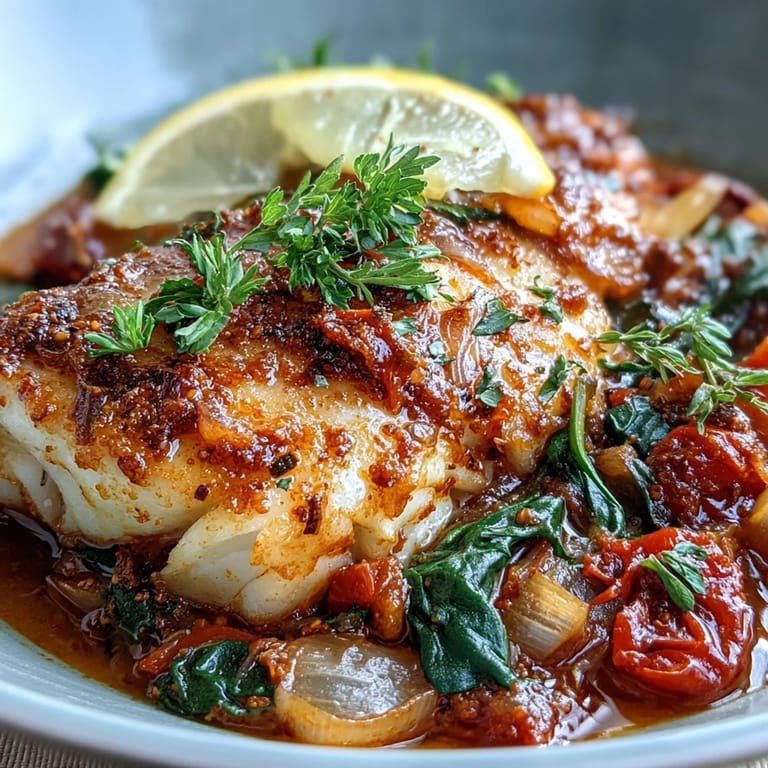
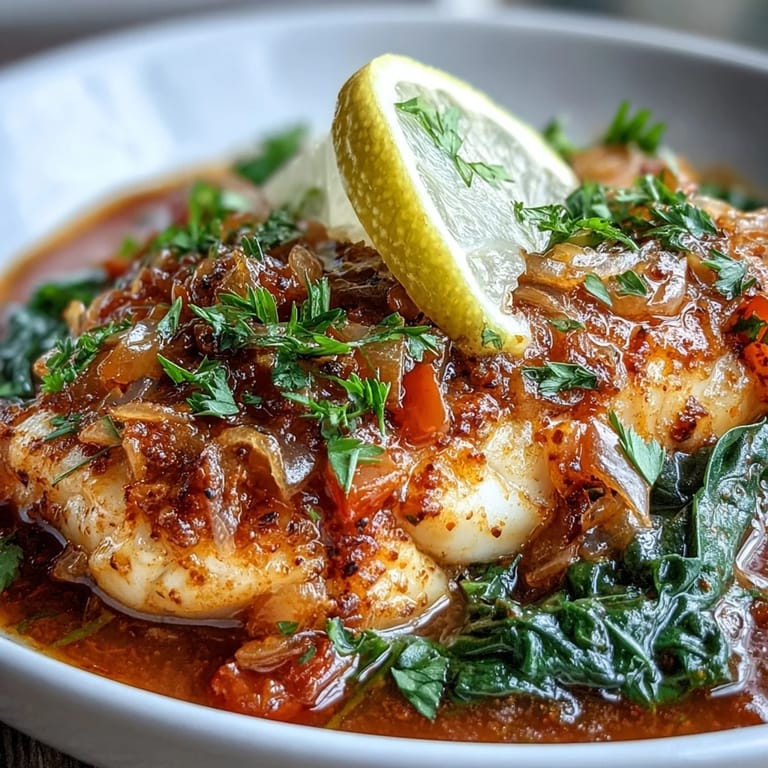
- Gently place your cod fillets into the simmering sauce, arranging them so they're mostly submerged, then top each one with a lemon slice. Cover the pot and simmer for 8 to 10 minutes until the fish is opaque and flakes apart with just the gentlest pressure from a fork—overcooked fish is dry fish, so watch this step carefully.
- Finish with greens:
- Scatter in the baby spinach and cook for just 2 more minutes until it's completely wilted. This final step adds both nutrition and a fresh note that balances all those warming spices.
- Serve immediately:
- Divide everything among bowls, making sure each person gets fish, sauce, and vegetables. Finish with fresh herbs and a squeeze of lemon wedge on the side.
 Pin
Pin My partner came home during the last few minutes of cooking and just stood in the doorway breathing in the aroma without saying anything, which made me realize this dish has a way of announcing itself before anyone even tastes it. Food that makes people pause like that, without trying to impress, is the kind worth learning to make well.
What Makes This Recipe Special
The magic here isn't hidden in complicated technique or rare ingredients; it's in the way everything cooks together in one vessel, flavors mingling and deepening while you're free to set the table or pour a drink. Most seafood recipes feel like they need babysitting, but this one gives you permission to step back and trust the pot. The spices warm the broth without overwhelming the delicate fish, and the vegetables soften into something almost gravy-like that you'll want to pour over bread.
Why One Pot Changes Everything
There's a practical reason one-pot cooking became trendy, but the real reason is how it tastes; every ingredient touches the same liquid and every vegetable picks up those toasted spices, so the flavors become more cohesive than if you'd cooked them separately. Less equipment also means you're actually willing to make this on a Tuesday instead of saving it for weekends. I've found that when dinner comes together in one place, the meal itself feels less formal and more like something you made because you wanted to, not because you were trying to impress someone.
Serving Suggestions & Variations
Crusty bread is non-negotiable if you want to catch every drop of that spiced tomato sauce; rice or couscous works beautifully too and turns this into something more substantial. If cod isn't available or doesn't appeal to you, haddock or any firm white fish swaps in without changing the cooking time. Some evenings I add a pinch of chili flakes or a whole dried chili for people who want heat, while others love it exactly as written.
- Make it your own by adding diced zucchini or green beans in step 3 if you have them on hand.
- A splash of white wine in place of some of the stock adds depth, though the recipe works beautifully without it.
- Serve with fresh cilantro if you have it, or parsley if you don't—both brighten the final dish.
 Pin
Pin This is the kind of recipe that sits quietly in your repertoire until you need it, and then you wonder why you don't make it every week. It's the sort of dish that feels both comforting and special, which is harder to pull off than it sounds.
Recipe Questions
- → Can I use frozen cod fillets for this dish?
Yes, but ensure they are completely thawed and patted dry before adding to the pot. Excess moisture can dilute the sauce and affect cooking time.
- → What other fish works well in this preparation?
Firm white fish like haddock, halibut, or sea bass are excellent alternatives. Avoid delicate fish that might fall apart during simmering.
- → How do I know when the cod is properly cooked?
The cod is done when it turns opaque white throughout and flakes easily when gently pressed with a fork. Internal temperature should reach 63°C (145°F).
- → Can I make this dish ahead of time?
The vegetable base can be prepared in advance and refrigerated. Add the fish just before serving to prevent overcooking and maintain its tender texture.
- → What can I serve alongside this one-pot dish?
Crusty bread, steamed basmati rice, couscous, or quinoa all pair wonderfully to soak up the flavorful tomato-based sauce.
- → How should I store leftovers?
Store in an airtight container in the refrigerator for up to 2 days. Reheat gently on the stovetop over low heat to prevent the fish from becoming tough.