 Pin
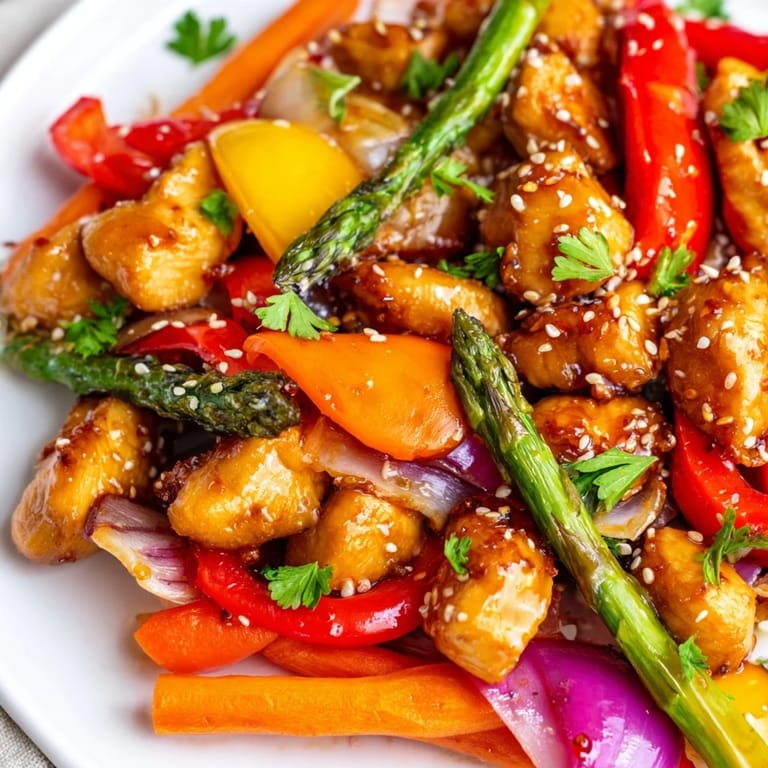
Pin There was a Tuesday night last spring when I opened the fridge to find a jumble of half-used vegetables and a pack of chicken thighs I'd forgotten about. I was too tired to think, so I tossed everything onto a sheet pan, drizzled it with whatever I could whisk together, and shoved it in the oven. Twenty minutes later, the kitchen smelled like a restaurant, and my kids were asking what special occasion I was celebrating. It wasn't special at all—just luck, hunger, and a sauce that turned out better than it had any right to be.
I've made this dish for friends who claim they don't like healthy food, and they've scraped the pan clean every time. One of them even texted me the next morning asking for the recipe, which felt like winning something. The secret isn't complicated—it's just that roasting everything together lets the flavors mingle and concentrate in a way that stovetop cooking never quite manages. I've started doubling the sauce and keeping extra in a jar, because it's good on almost anything.
Ingredients
- Boneless, skinless chicken breast or thighs (500 g): Thighs stay juicier and are more forgiving if you accidentally overcook them, but breasts work fine if you keep an eye on the timer.
- Red and yellow bell peppers: They turn sweet and slightly charred at the edges, adding color and a smoky undertone that balances the honey.
- Sugar snap peas (150 g): These stay crisp even after roasting, giving you a satisfying snap in every bite.
- Asparagus (150 g): Cut them into two-inch pieces so they cook evenly and don't turn mushy while the chicken finishes.
- Red onion: Wedges soften and caramelize, becoming almost jammy and adding a subtle sharpness that cuts through the sweetness.
- Baby carrots (200 g): Halve them lengthwise so they roast faster and develop those irresistible crispy edges.
- Honey (4 tbsp): This is what makes the sauce glossy and sticky, but don't skip the vinegar or it will taste one-dimensional.
- Low-sodium soy sauce (3 tbsp): It brings the savory depth, and using low-sodium means you control the saltiness instead of the bottle.
- Olive oil (2 tbsp): Helps everything brown and keeps the chicken from sticking to the pan.
- Garlic (3 cloves, minced): Fresh garlic toasts in the oven and perfumes the whole dish, so don't even think about using the pre-minced jar stuff.
- Rice vinegar or apple cider vinegar (1 tbsp): A splash of acid brightens the sauce and keeps it from tasting too sweet or heavy.
- Freshly grated ginger (1 tsp): It adds a warm, spicy note that makes the whole dish feel more complex than it actually is.
- Black pepper (½ tsp): Just enough to add a gentle kick without overwhelming the other flavors.
- Fresh parsley or cilantro: A handful of herbs at the end makes everything look and taste brighter, like you actually tried.
- Toasted sesame seeds (optional): They add a nutty crunch and make the dish look a little fancy, which is nice when you need a confidence boost.
Tired of Takeout? 🥡
Get 10 meals you can make faster than delivery arrives. Seriously.
One email. No spam. Unsubscribe anytime.
Instructions
- Preheat and Prep:
- Set your oven to 220°C (425°F) and line a large sheet pan with parchment paper or foil. This step saves you from scrubbing caramelized sauce off the pan later, which is a gift to your future self.
- Make the Sauce:
- In a medium bowl, whisk together the honey, soy sauce, olive oil, minced garlic, ginger, vinegar, and black pepper until it looks glossy and smells incredible. Taste it with a clean spoon—it should be sweet, salty, and just a little tangy all at once.
- Marinate the Chicken:
- Toss the chicken pieces in the sauce and let them sit for 10 minutes if you have time. Even a short marinate helps the flavors soak in, but if you're in a rush, just move on—it will still be delicious.
- Arrange Everything:
- Spread the chicken and all the vegetables in a single layer on the sheet pan, making sure nothing overlaps too much. Drizzle any leftover sauce over the top and give everything a gentle toss with your hands or a spatula so it's all coated.
- Roast:
- Slide the pan into the oven and roast for 20 to 25 minutes, stirring everything halfway through so it browns evenly. The chicken should be cooked through and the vegetables tender with crispy, caramelized edges.
- Garnish and Serve:
- Pull the pan out of the oven and scatter fresh parsley or cilantro and sesame seeds over the top. Serve it hot, straight from the pan or over a bowl of rice or quinoa.
 Pin
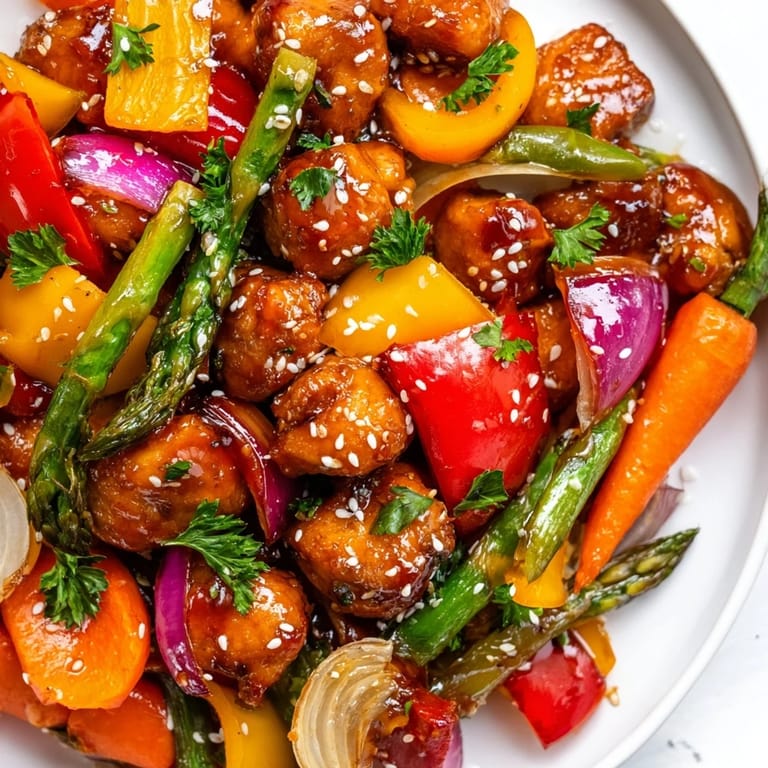
Pin The first time I served this to my neighbor, she asked if I'd taken a cooking class. I laughed and told her it was just a sheet pan and decent timing, but she didn't believe me. That's the magic of this recipe—it looks and tastes like you put in way more effort than you actually did. Now she makes it for her family every week, and every time I see her she tells me it saved dinnertime.
Storing and Reheating
Leftovers keep in an airtight container in the fridge for up to three days, and they reheat beautifully in a hot skillet or the microwave. I actually prefer reheating in a skillet with a tiny splash of water, because it brings back some of that caramelized texture without drying out the chicken. You can also chop up the leftovers and toss them into a wrap with some greens and a drizzle of sriracha, which is what I do when I'm too lazy to make lunch from scratch.
Swapping Vegetables
I've made this with zucchini, broccoli, green beans, and even Brussels sprouts, and it's worked every time. The key is cutting everything into similar-sized pieces so they roast at the same rate. In the winter, I use heartier vegetables like sweet potatoes and cauliflower, and in the summer, I throw in cherry tomatoes and eggplant. It's one of those recipes that bends to whatever season you're in, which is rare and worth celebrating.
Serving Suggestions
This dish is filling on its own, but it's even better spooned over a bowl of jasmine rice, quinoa, or even cauliflower rice if you're keeping things light. Sometimes I'll serve it with a side of quick-pickled cucumbers or a simple green salad to cut through the sweetness. If you want to stretch it for more people, double the vegetables and serve it family-style on a big platter—it always looks impressive and tastes like you spent hours in the kitchen.
- Add a pinch of chili flakes to the sauce if you like a little heat that sneaks up on you.
- For a gluten-free version, swap in tamari or certified gluten-free soy sauce without changing anything else.
- If you don't have rice vinegar, apple cider vinegar works just as well and adds a slightly fruity note.
 Pin
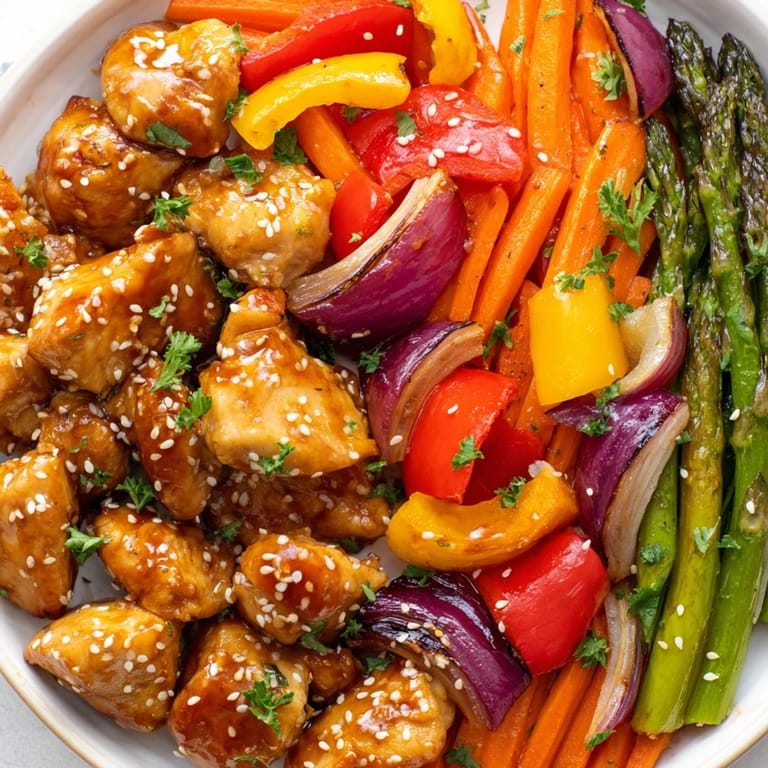
Pin This is the kind of recipe that makes you feel capable on nights when you're anything but. It's fast, it's flexible, and it fills your kitchen with the kind of smell that makes everyone wander in asking when dinner will be ready.
Recipe Questions
- → Can I use chicken thighs instead of breast?
Yes, boneless skinless chicken thighs work wonderfully and stay especially moist. They may need an extra 2-3 minutes cooking time, so check for doneness at the 25-minute mark.
- → What vegetables work best for this dish?
Bell peppers, snap peas, asparagus, carrots, and red onion are ideal. You can also substitute zucchini, broccoli, green beans, or mushrooms based on what's in season or your preferences.
- → How do I make this gluten-free?
Simply replace regular soy sauce with tamari or certified gluten-free soy sauce. All other ingredients are naturally gluten-free, making this a safe option for those with gluten sensitivity.
- → Can I prepare this ahead of time?
You can marinate the chicken in the honey garlic sauce for up to 4 hours in advance. Prepare and chop vegetables earlier in the day, then assemble everything on the pan just before roasting.
- → What should I serve with this meal?
Steamed rice or quinoa complement the honey garlic sauce perfectly. You can also serve over noodles, cauliflower rice, or simply with crusty bread to soak up the remaining sauce.
- → How do I prevent vegetables from drying out?
Toss everything together with the sauce before roasting and stir halfway through cooking. This ensures even coating and caramelization while keeping vegetables tender and moist.