 Pin
Pin There's something magical about watching a plain sheet pan transform into dinner without heating up the whole kitchen. Last summer, my neighbor mentioned she'd been avoiding fish because it intimidated her, so I invited her over and we made this together—watching her face light up when that crispy, golden crust cracked under her fork was worth every minute. Turns out, the secret to making fish feel fancy and foolproof is just three cheeses, some panko, and the right temperature. She's made it at least a dozen times since that afternoon, and now she swears by it for weeknight meals.
I remember a Tuesday evening when my kids asked why fish had to taste fishy, and I realized they'd only had frozen breaded sticks before. Making this taught me something unexpected: when you coat a delicate fillet with something crispy and flavorful, the fish becomes a supporting actor instead of the main event, and suddenly everyone at the table is asking for seconds. That simple shift—letting the crust do the talking—changed how we eat seafood in our house entirely.
Ingredients
- Cod fillets (4 fillets, about 150 g each): Choose thick, even pieces so they cook uniformly, and ask your fishmonger to remove any remaining pin bones with tweezers.
- Panko breadcrumbs (1/2 cup): The larger crumbs stay crunchier than regular breadcrumbs, creating that signature textured crust that doesn't go soggy.
- Parmesan cheese (1/3 cup grated): This adds a sharp, salty backbone that keeps the crust from tasting one-dimensional.
- Asiago cheese (1/3 cup grated): Slightly nuttier than Parmesan, it rounds out the flavor and helps the crust brown beautifully.
- Fresh parsley (2 tablespoons chopped): More than just decoration—it brightens the whole coating and reminds you this came from actual ingredients, not a box.
- Garlic powder, paprika, black pepper, and salt: These aren't afterthoughts; they're what makes the crust taste intentional rather than generic.
- Olive oil for the coating (2 tablespoons) and vegetables (1 tablespoon): The oil in the breadcrumb mixture makes it stick and toast; separate oil for vegetables lets them caramelize without competing flavors.
- Bell peppers, red and yellow (1 each, sliced): Their natural sugars concentrate when roasted, turning slightly jammy at the edges.
- Zucchini (1 medium, sliced into half-moons): Half-moons cook faster and more evenly than rounds, and they caramelize beautifully on both sides.
- Red onion (1 small, cut into wedges): The raw sharpness mellows into something almost sweet after 25 minutes in the oven.
- Cherry tomatoes (200 g, halved): Halving them exposes more surface area to heat, concentrating their flavor.
- Dried oregano (1/2 teaspoon): It ties the vegetables together with a gentle Mediterranean feel without overpowering the delicate fish.
Tired of Takeout? 🥡
Get 10 meals you can make faster than delivery arrives. Seriously.
One email. No spam. Unsubscribe anytime.
Instructions
- Set the stage right:
- Preheat your oven to 220°C (425°F) and line your sheet pan with parchment paper or give it a light oil coating—this prevents the fish from sticking and makes cleanup feel like a small victory. Have all your ingredients prepped and ready before you start; there's something calming about knowing you're organized when things move quickly.
- Build your crust mixture:
- In a bowl, combine panko, Parmesan, Asiago, parsley, garlic powder, paprika, pepper, and salt, then drizzle in 2 tablespoons of olive oil and mix with your fingers until it looks like wet sand. This step matters because the oil helps the mixture stick to the fish and toast evenly instead of turning dry and pale.
- Prepare the fish:
- Arrange cod fillets on one side of your sheet pan and pat them completely dry with paper towels—moisture is the enemy of a crispy crust. Brush the tops lightly with olive oil so the coating has something to grip onto.
- Coat with confidence:
- Press the cheese-panko mixture firmly onto each fillet, using about a quarter of the mixture per fillet and working gently so it adheres without breaking the delicate fish. The pressure matters here; you want the coating to stay put, not slide off mid-roast.
- Prepare the vegetables:
- Toss your sliced peppers, zucchini, onion, and halved tomatoes with 1 tablespoon olive oil, oregano, salt, and pepper in a large bowl until everything's evenly coated. This happens while the fish rests under its crust, so there's no real downtime.
- Arrange and roast:
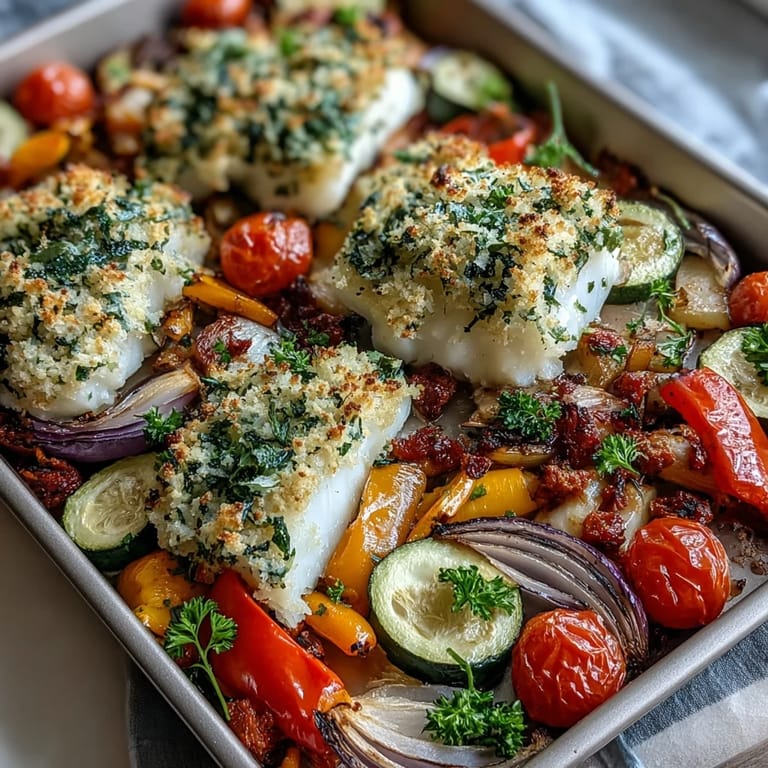
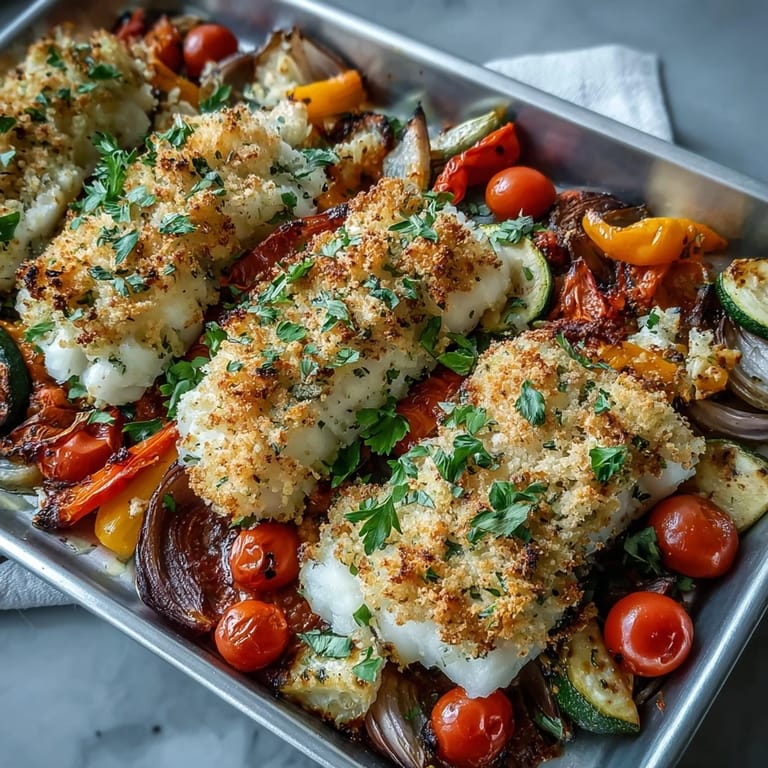
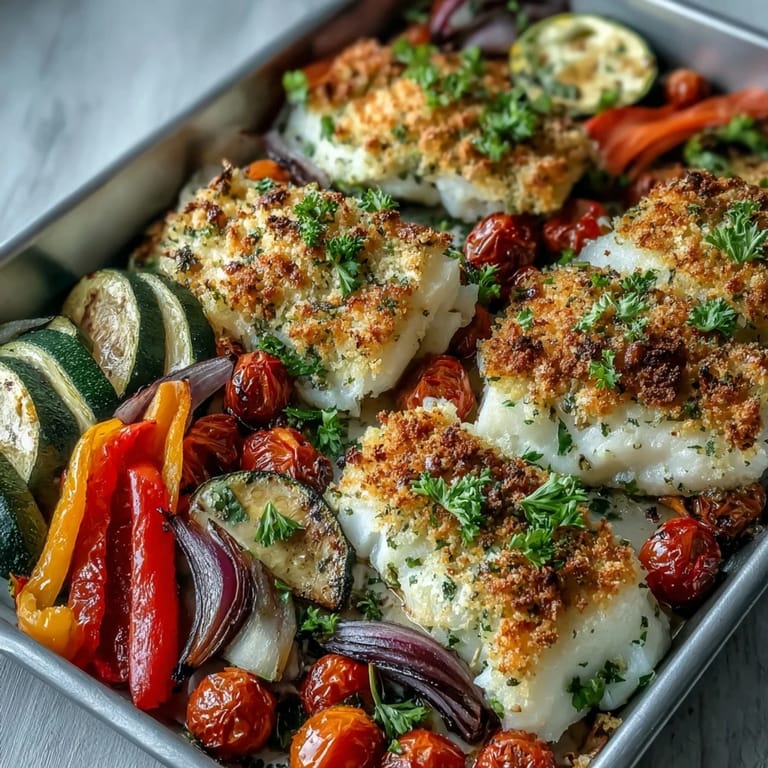
- Spread the vegetables on the empty side of the sheet pan in a single layer—they need room to caramelize, not steam—and slide everything into the hot oven for 20 to 25 minutes. The vegetables should look slightly shriveled at the edges and the fish should flake easily when you touch it with a fork; that's your signal that dinner is ready.
 Pin
Pin The night I made this for my partner's parents, something unexpected happened: his mother asked for the recipe and admitted she'd been too nervous to cook fish at home. Watching her realize that crispy coating was the permission slip she needed—that a little cheese and panko could make her feel like a confident cook—reminded me why I love feeding people. Food rarely exists in isolation; it's usually tied to someone's willingness to try something new.
Why This Becomes a Regular in Your Rotation
Once you understand how these components work together—the crispy contrast against tender fish, the natural sweetness of roasted vegetables, the savory anchor of melted cheese—you realize you can vary it endlessly without losing the soul of the dish. I've made it with haddock when cod wasn't available, added asparagus when bell peppers looked tired at the market, even swapped white wine for the oregano on nights when I wanted something brighter. The structure stays the same; the details dance around it.
The Art of Timing Everything at Once
The beauty of a sheet pan meal is that you're not juggling multiple pots or staggering cooking times—everything hits the oven at the same moment and emerges ready to eat together. I used to overthink whether 20 or 25 minutes was right, until I realized that oven variation and fillet thickness matter more than the exact number. The real tell is when the fish flakes easily with a fork and the vegetables have caramelized edges; that's when you know it's done, numbers or not.
Making It Your Own
This recipe is genuinely flexible in ways that feel rare for something this elegant. You can swap white fish for whatever looks fresh, add or subtract vegetables based on what's in your crisper, even adjust the cheese ratio if you want something more or less intense. The constants are simple: good fish, a flavorful coating, vegetables that roast well, and the understanding that simplicity doesn't mean boring.
- A squeeze of fresh lemon over everything at the table adds brightness that feels intentional rather than tacked on at the end.
- Serve with a crisp white wine like Pinot Grigio if you want something that echoes the herbs and cleanness of the dish.
- Leftovers are genuinely good the next day cold, making this one of those rare recipes that works for dinner and lunch without complaint.
 Pin
Pin This dish has become my answer to the question, 'What do you make when you want something that tastes like you spent hours in the kitchen but didn't?' It's proof that cooking well doesn't require complexity, just intention and a few ingredients you genuinely believe in.
Recipe Questions
- → Can I use different types of fish?
Yes, haddock or tilapia work well as substitutes for cod. Choose firm, white fish fillets that hold their shape during roasting for the best results.
- → How do I know when the fish is done?
The fish is ready when it flakes easily with a fork and the crust is golden brown. This typically takes 20-25 minutes at 220°C (425°F).
- → Can I make this gluten-free?
Absolutely. Replace the regular panko breadcrumbs with gluten-free panko or crushed cornflakes. Always check cheese packaging to ensure no gluten-containing additives.
- → What vegetables work best in this dish?
Bell peppers, zucchini, red onion, and cherry tomatoes roast beautifully together. You can also add broccoli florets, asparagus, or baby potatoes based on preference.
- → How can I prevent the crust from getting soggy?
Pat the cod fillets dry with paper towels before applying the coating. Ensure vegetables are arranged in a single layer so they roast rather than steam, maintaining good air circulation.