 Pin
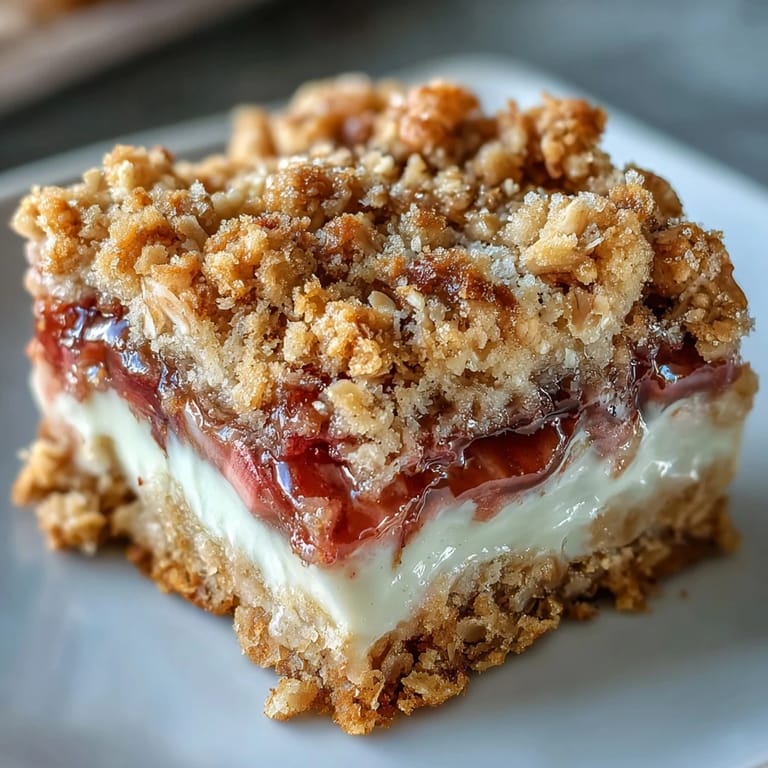
Pin My mum pulled a tray of these bars from the oven one April afternoon, and the kitchen filled with this peculiar sweet-tart perfume that made everyone pause mid-conversation. The rhubarb's sharp bite cutting through creamy custard, all cushioned by buttery crumble, felt like spring had decided to become edible. She'd been experimenting with layering for weeks, and this was the version that finally stuck around. Now whenever I make them, I'm transported back to that moment of pure kitchen magic, where three separate components somehow became greater than the sum of their parts.
I made these for my book club once, and halfway through eating them, someone asked if they were homemade or from a bakery. The question hung there for a second, and then everyone laughed because apparently, homemade was the higher compliment. That's when I realized these bars had crossed over from being a nice recipe into something that actually impressed people, which is different altogether.
Ingredients
- Fresh rhubarb, 400 g trimmed and chopped: Use the tender pink stalks if you can find them—they cook faster and taste slightly less aggressive than the redder ones.
- Granulated sugar, 75 g: This sweetens the rhubarb without masking its personality.
- Lemon juice, 1 tbsp: Brightens the rhubarb's flavour and prevents the whole thing from tasting one-dimensional.
- Cornstarch, 1 tbsp (for rhubarb) plus 2 tbsp (for custard): Each layer needs its own thickening agent to keep things from becoming a soggy mess.
- All-purpose flour, 250 g: The backbone of your crumble base—don't skip it thinking you can substitute with something trendy.
- Rolled oats, 100 g: These add texture and nuttiness that plain flour simply cannot deliver.
- Unsalted butter, 150 g cold and cubed: Cold butter is non-negotiable here; it creates those little pockets that make the crumble actually crumble.
- Light brown sugar, 100 g: The molasses notes complement both the oats and the rhubarb beautifully.
- Salt, 1/2 tsp: A small amount makes every other flavour sing without announcing itself.
- Whole milk, 300 ml: Full-fat milk creates a silky custard; don't use semi-skimmed unless you want something thin and disappointing.
- Egg yolks, 2 large: These are what make custard custard—they carry the richness.
- Vanilla extract, 1 tsp: A genuine vanilla extract is worth the extra pennies here.
Tired of Takeout? 🥡
Get 10 meals you can make faster than delivery arrives. Seriously.
One email. No spam. Unsubscribe anytime.
Instructions
- Prepare your pan and preheat:
- Set your oven to 180°C and line a square baking pan with parchment paper, leaving some overhang so you can lift the finished bars out cleanly. This step feels fiddly but saves you from ruining your creation at the very end.
- Make the rhubarb compote:
- Toss your chopped rhubarb with sugar, lemon juice, and cornstarch in a saucepan, then cook over medium heat while stirring. You'll know it's ready when the rhubarb falls apart and the mixture has thickened into something jam-like, usually around 8 to 10 minutes.
- Build the crumble mixture:
- Mix flour, oats, brown sugar, and salt in a large bowl, then rub in the cold butter using your fingertips or a pastry cutter until everything resembles coarse breadcrumbs. The texture should look rough and uneven, not smooth—that's what gives you the crumble.
- Create the base layer:
- Press two-thirds of your crumble mixture firmly into the bottom of the pan, keeping the rest aside for topping. Bake this for 15 minutes until it's pale gold, then remove and let it cool slightly.
- Prepare the custard:
- Heat your milk until it's steaming but definitely not boiling, while in another bowl you whisk together egg yolks, sugar, and cornstarch until smooth. Slowly pour the hot milk into the egg mixture while whisking constantly to avoid scrambled eggs, then return everything to the pan and stir over medium heat for 2 to 3 minutes until it coats the back of a spoon, finally adding vanilla.
- Layer everything:
- Spread your cooled rhubarb compote over the baked base, pour the warm custard over that, then scatter the reserved crumble mixture across the top. Bake for 30 minutes until the crumble has turned golden and the custard is just set but still slightly wobbly in the very centre.
- Cool and chill:
- Let the bars cool completely in the pan before chilling for at least 2 hours—this helps the custard fully set and makes cutting clean bars possible. Use the parchment paper overhang to lift the whole thing out, then slice into 16 pieces.
 Pin
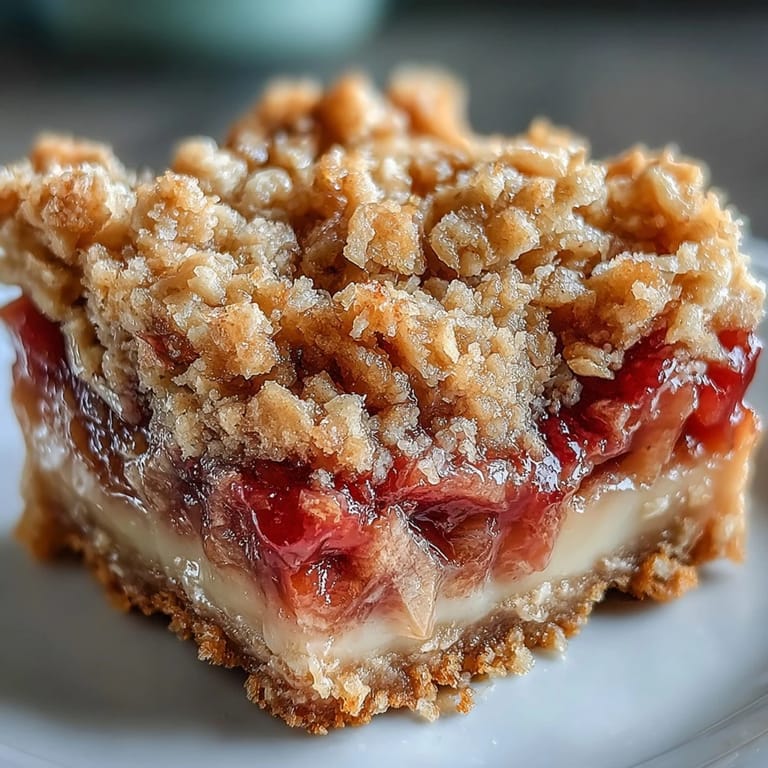
Pin There's something deeply satisfying about cutting through three distinct layers and having each one stay perfectly in place on your spatula. It feels accomplished, like you've solved an edible puzzle.
The Rhubarb Question
Rhubarb is notoriously divisive—people either love its aggressive tartness or they don't. Early spring rhubarb tends to be less harsh than the midsummer stalks, so timing matters. If you're cooking with summer rhubarb, add a touch more sugar or balance it by mixing in raspberries, which softens the edges. I've learned that a squeeze of lemon actually makes rhubarb taste more like itself rather than less sour, which seems backwards but works.
Why Layers Actually Matter Here
These bars work because each layer serves a purpose beyond just filling space. The crumble base provides structure and stops the custard from making everything soggy, the rhubarb adds acidity that prevents the whole thing from being cloying, and the custard brings richness and elegance. If you tried to skip a layer thinking you'd save time, you'd end up with something fundamentally different and honestly, less interesting. This is one of those recipes where the architecture is part of the magic.
Storage, Serving, and Small Improvements
These bars keep beautifully in the refrigerator for up to three days, which makes them perfect for meal-prepping teatime or having something impressive on hand for unexpected visitors. A dusting of powdered sugar just before serving adds elegance without much effort, and a scoop of vanilla ice cream transforms them into something that tastes like a proper dessert rather than just a bar. For a sharper, slightly more complex flavour, fold a handful of raspberries into the rhubarb layer before spreading it on the base—the fruit adds brightness and visual interest without needing any other changes.
- Cover them loosely with foil if storing in the fridge to prevent them from drying out.
- You can freeze these for up to a month; thaw overnight in the fridge before eating.
- Cut with a warm, damp knife for cleanest edges.
 Pin
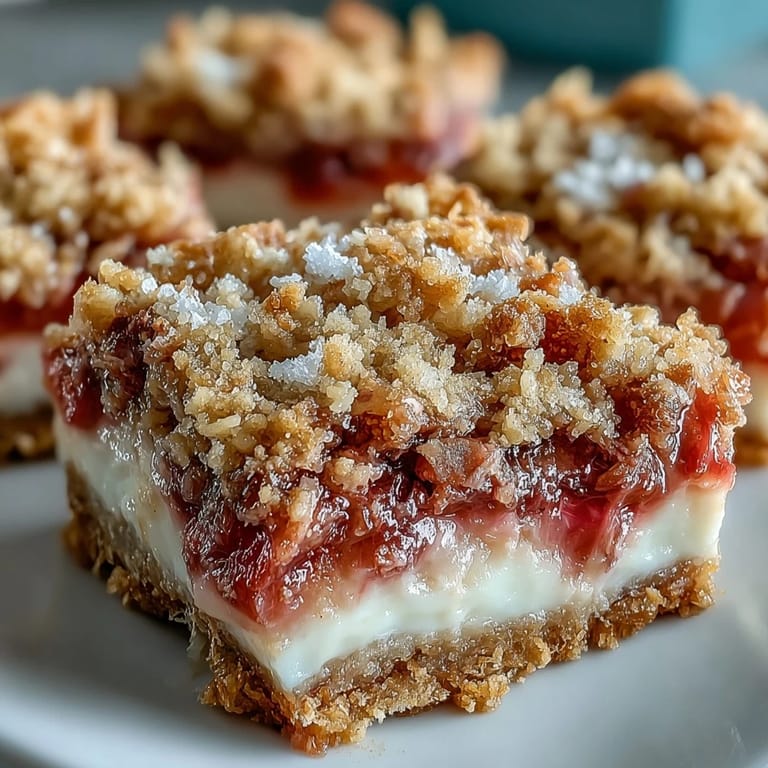
Pin These bars have taught me that good baking isn't always about complexity—it's about respecting each ingredient and letting them do their job. Serve them with tea on an ordinary Tuesday and watch how a simple bar becomes a small moment worth remembering.
Recipe Questions
- → Can I use frozen rhubarb instead of fresh?
Yes, frozen rhubarb works well. Thaw and drain excess liquid before cooking to prevent the bars from becoming too watery.
- → How do I know when the custard layer is properly set?
The custard should look slightly wobbly in the center when you remove it from the oven. It will firm up completely as it cools and chills in the refrigerator.
- → Can I make these bars ahead of time?
Absolutely. These bars actually taste better when made a day ahead, allowing the flavors to meld. Store covered in the refrigerator for up to 3 days.
- → What can I substitute for rhubarb?
Tart fruits like blackberries, raspberries, or sour cherries work wonderfully. Adjust sugar levels based on the sweetness of your chosen fruit.
- → Why do I need to chill the bars before cutting?
Chilling allows the custard to set firmly and makes cutting clean, neat squares much easier. Warm bars tend to be messy and fall apart.
- → Can I freeze these bars?
Yes, these bars freeze well for up to 2 months. Wrap individually in plastic wrap, then store in an airtight container. Thaw in the refrigerator before serving.