 Pin
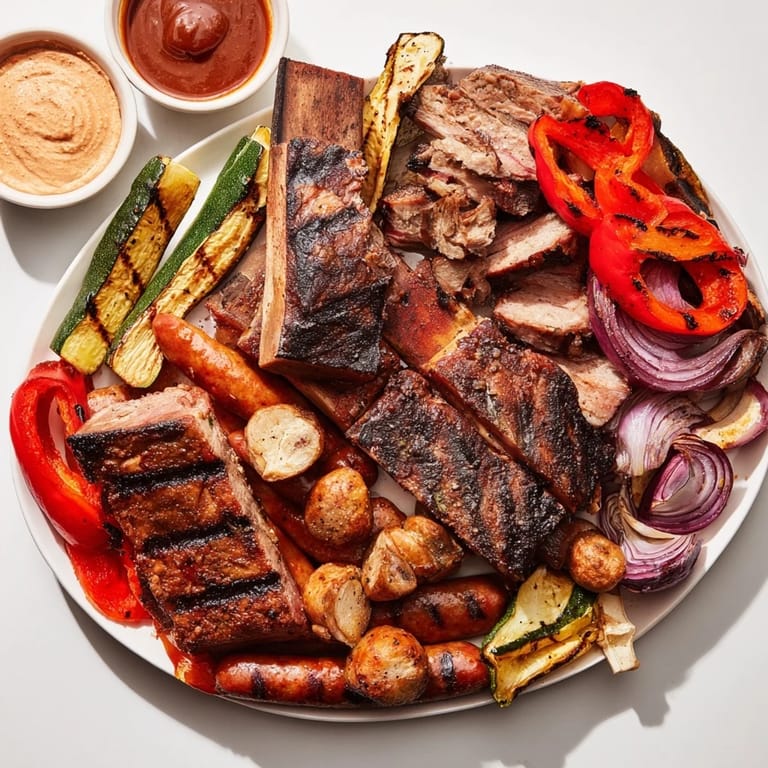
Pin I'll never forget the summer my neighbor invited us over and set down this magnificent grazing board on their patio table—piled high with charred vegetables and smoky grilled meats that seemed to glow in the golden afternoon light. It was the kind of meal that didn't need a dining room or formal plating, just an old wooden board, hungry friends, and the freedom to grab whatever called to you. That's when I realized: the best gatherings aren't about perfectly portioned plates. They're about abundance, choice, and the simple joy of eating outside with people you love.
There was this one Fourth of July when I made this for the first time and my brother-in-law—who insists he only eats meat—went back for thirds, mostly vegetables. He kept shaking his head, laughing, saying the eggplant tasted smoky and buttery, nothing like he expected. That's when I understood: a good board doesn't just feed people. It surprises them, opens their minds, and somehow makes everyone feel a little more connected.
Ingredients
- Bone-in beef short ribs (1.5 kg): The bones are your secret—they add deep, savory flavor and help the meat stay incredibly juicy during the long grilling process. Look for ribs with good marbling and ask your butcher to cut them to a consistent thickness
- Boneless chicken thighs (1 kg): I learned the hard way that breasts dry out on the grill, but thighs stay forgiving and flavorful. They're also more budget-friendly than breasts
- Large sausages, 4 links: Mix beef, pork, or plant-based—each brings its own character. They add heartiness and require almost no attention on the grill
- Olive oil (80 ml for basting): Good olive oil makes the difference between vegetables that taste oily and ones that taste rich. Don't use your fanciest bottle, but don't skimp either
- Apple cider vinegar (60 ml): The acid in the marinade cuts through the richness and helps tenderize the meat. I tried regular vinegar once and regretted it—there's something special about the apple sweetness
- Brown sugar, smoked paprika, garlic powder, onion powder: This flavor base is what makes your board taste like it came from a professional pit master's backyard. The smoked paprika especially is non-negotiable
- Red bell peppers (3 large): The heat transforms them into something almost sweet and jammy. Quarter them and watch them transform from crisp to caramelized
- Red onions (2 large): Slice them thick—thin slices will fall through the grates. Thick rounds stay intact and get wonderfully soft and tangy
- Zucchini and eggplant (2 each): Cut uniformly at 2 cm thickness so everything cooks at the same rate. This is where a sharp knife makes all the difference
- Portobello mushrooms (2 large): These are almost meaty themselves—remove the stems and they become little vessels for smoky flavor
- Corn (2 ears): Fresh corn in summer is a gift. Halve them lengthwise so they sit flat on the grill and caramelize beautifully
- Fresh rosemary and thyme: These herbs are what elevate simple grilled vegetables into something memorable. Fresh is absolutely worth it—dried loses the brightness
- Barbecue sauce, ranch dip, roasted garlic hummus: The trifecta of flavors. The BBQ brings smoke, the ranch brings comfort, and the hummus brings something unexpected and sophisticated
- Sourdough bread: The tang and sturdy crumb hold up to heavy toppings without falling apart. Cut it thick—thin slices feel insubstantial on a board like this
- Pickles, cherry tomatoes, baby carrots, radishes: These are your textural and flavor anchors. The acidity from pickles and the crunch from carrots and radishes cut through the richness
Tired of Takeout? 🥡
Get 10 meals you can make faster than delivery arrives. Seriously.
One email. No spam. Unsubscribe anytime.
Instructions
- Mix Your Flavor Base:
- In a large bowl, whisk together the olive oil, apple cider vinegar, brown sugar, smoked paprika, garlic powder, onion powder, kosher salt, black pepper, and chili flakes if you want a little heat. Whisk until it looks emulsified and glossy—this is your magic potion. The brown sugar should dissolve completely, and the spices should be fully distributed. This is the moment where your whole board's flavor profile comes together.
- Coat the Meats:
- Pat your beef short ribs and chicken thighs completely dry with paper towels—this is crucial, as any moisture will repel the marinade. Place everything into your flavor base and turn each piece over slowly, making sure every surface gets coated. The meat should look glossy and richly colored, like it's been treasured. Make sure nothing is left dry.
- Let Time Do Its Work:
- Cover everything with plastic wrap and slide it into the refrigerator for at least 1 hour, but overnight is even better. If you're marinating overnight, turn the meats halfway through if you remember—though honestly, gravity does most of the work. The longer it sits, the deeper the flavor penetrates and the more tender the meat becomes.
- Prepare Your Vegetables:
- While the meats marinate, wash and dry all your vegetables thoroughly. There's nothing worse than biting into a piece of grit. Cut your bell peppers into quarters, removing the seeds and white membranes—they'll be easier to handle on the grill. Slice your onions into thick rounds (about 1.5 cm) so they stay intact during cooking. Cut zucchini and eggplant into 2 cm thick rounds. Gently remove the stems from your portobello mushrooms, leaving the caps whole. Halve your corn lengthwise. Everything should feel firm and hold its shape when you handle it.
- Make Your Herb Basting Oil:
- In a small bowl, mix together olive oil, finely chopped fresh rosemary, fresh thyme, sea salt, and black pepper. This is your secret weapon for making the vegetables taste absolutely remarkable. The herbs will infuse the oil with their aromatic oils, and when that hits the hot grill, magic happens.
- Get Your Grill Ready:
- Prepare your grill for medium-high heat—around 200-230°C (400-450°F). If you're using charcoal, give it time to ash over completely. If you're using gas, light it and let it preheat for at least 15 minutes. Proper preheating is everything. Now, with a grill brush, scrub those grates clean, really getting into every groove. Then, carefully oil the grates using a folded paper towel dipped in vegetable oil, held with tongs. You want a light, even coating. Test the heat by holding your hand above the grill—you should only be able to hold it there for about 2-3 seconds. If a drop of water sizzles and evaporates immediately, you're ready.
- Grill the Beef Ribs with Patience:
- Remove your beef short ribs from the marinade, letting any excess drip back into the bowl—you don't want so much marinade on there that it causes flare-ups. Place them bone-side down on the grill and cover the grill. This is where patience becomes your greatest ingredient. Grill them for 35-45 minutes total, turning every 10 minutes or so, until they develop a deep, dark brown crust with just a hint of char. You're looking for an internal temperature of 90°C (195°F)—this slow, low approach renders the fat and makes them incredibly tender. The meat should look almost black in spots, and when you pierce it, the juices should run clear. Trust this process. Rush it, and you'll have tough, chewy ribs. The waiting is where the magic happens.
- Grill the Chicken and Sausages:
- Once your ribs have been grilling for about 25 minutes, add your chicken thighs and sausages to the grill. Grill the chicken for 6-8 minutes per side until the outside is golden brown and the internal temperature reaches 74°C (165°F). The skin should be crispy and the meat should release easily from the grill without sticking. For the sausages, turn them frequently—every 2-3 minutes—so they cook evenly and develop a deep, blistered exterior. They'll take about 10-12 minutes total. Don't press them with your spatula no matter how tempting it is—that squeezes out all the precious juices and leaves them dry. Just let them be.
- Rest Your Meats:
- As each piece of meat finishes, remove it from the grill and place it on a cutting board, loosely tented with aluminum foil. Let everything rest for 10-15 minutes. This is when the residual heat continues cooking the inside while the juices redistribute throughout the meat. It's the difference between juicy, tender bites and dry ones. Don't skip this step, even though it feels like you're just waiting.
- Grill the Vegetables:
- Brush each vegetable piece generously with your herb basting oil on both sides. Place them directly on the grill in a single layer—don't overcrowd, as this causes steaming instead of grilling. Work in batches if you need to. Bell peppers need 4-5 minutes per side and should get blistered, slightly blackened skins. Onion rounds need 4-6 minutes per side until they're soft and caramelized. Zucchini, eggplant, and mushrooms need 3-4 minutes per side—you're looking for deep grill marks and a slight softening, but they should still hold their shape. Corn needs about 5-7 minutes total, rotating every couple of minutes so it caramelizes evenly and the kernels get lightly charred. Everything should smell incredibly smoky and look visibly marked from the heat. The moment you can easily pierce a piece with a fork, it's done.
- Arrange Your Board:
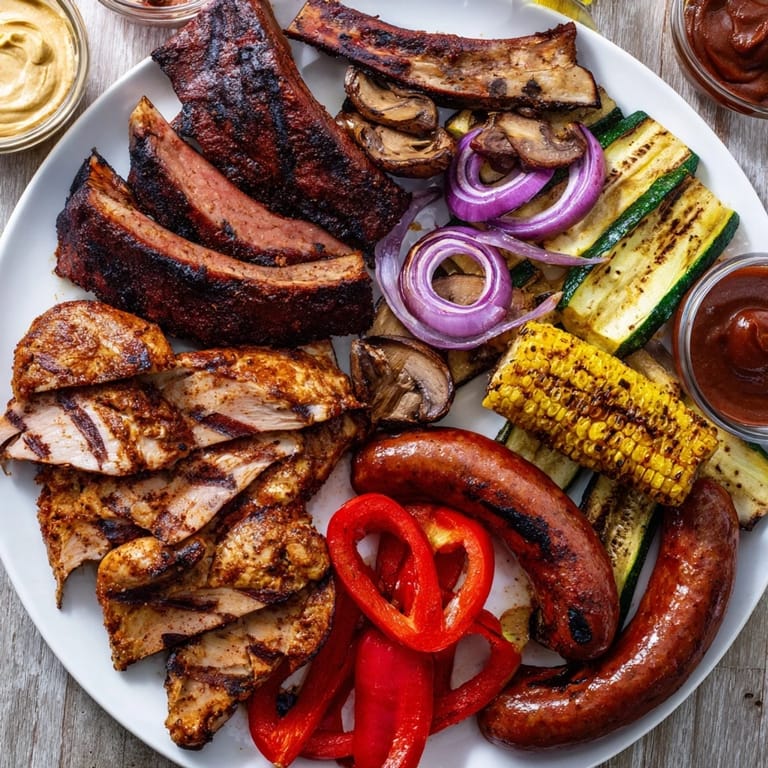
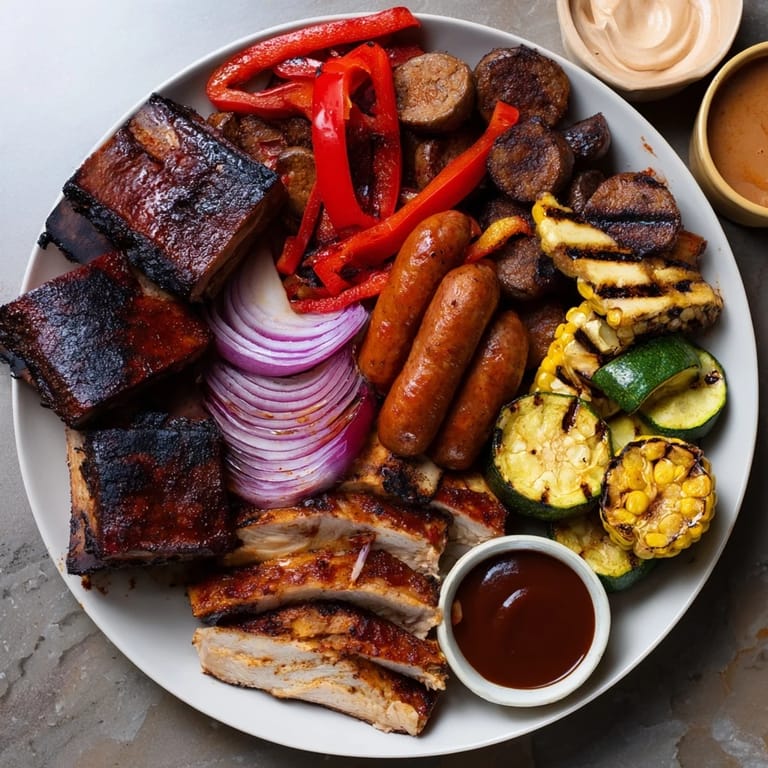
- This is the fun part. Find a large, sturdy wooden board or platter—something that feels substantial and can handle the weight. Start with your grilled meats, slicing the chicken thighs on a bias and cutting the sausages into diagonal pieces. Create generous, slightly overlapping piles in the center of the board. These piles should feel abundant, not sparse. Surround the meats with your grilled vegetables, grouping similar vegetables together—all the peppers in one area, onions in another, zucchini and eggplant together. This makes it easy for guests to identify what they're grabbing and creates a beautiful visual landscape. Place your three dips in small bowls and nestle them into the arrangement. Arrange your sourdough bread slices, pickles, cherry tomatoes, baby carrots, and radish halves in mounds around the outer edges. Step back and look at what you've created—it should look vibrant, abundant, and absolutely inviting.
- Serve with Joy:
- Bring the board straight out to your guests while everything is still warm. If you need to hold it for a few minutes, loosely tent the whole thing with foil. Encourage everyone to build their own plates, grabbing a piece of meat, some vegetables, a dip, some bread, and whatever else speaks to them. There's something about this style of eating that makes people linger, talk more, and enjoy themselves more fully. This is the heart of what makes a board like this special.
 Pin
Pin I remember standing in my backyard during that Fourth of July gathering, watching my eight-year-old nephew carefully construct his plate from the board—a tiny piece of charred eggplant, a strip of smoky chicken, a scoop of ranch for dipping. He looked up at me with this huge grin and said, 'This is fancy camping food.' That moment, I realized this board had become something beyond dinner. It was an experience, a gathering place, a memory being made.
The Art of Grilling Vegetables
Vegetables on a grill taught me something I didn't expect: heat transforms them into something almost unrecognizable. The eggplant, which I'd always found slightly bitter, becomes sweet and almost creamy. The bell peppers develop a subtle smoke and caramel. The onions, which raw can be sharp and aggressive, become mellow and slightly sweet. The secret is patience and thick cuts. Thin vegetable slices fall apart and dry out. Thick cuts can withstand the heat and actually benefit from it. Oil them well, give them space on the grill, and let the heat work without rushing. The moment you see deep grill marks, you've achieved something special.
Building the Perfect Grazing Board
The way you arrange a board matters more than people realize. When vegetables and proteins are scattered randomly, it feels chaotic. When they're organized by type and arranged in a generous, intentional way, it feels like someone cared. Start with your proteins in the center as an anchor, then build outward with vegetables grouped by type. The pickles, tomatoes, and radishes create visual and flavor contrast. The bread is there to anchor bites and act as a vehicle for dips. Small bowls for dips prevent double-dipping and make everything feel just a touch more refined. Your goal is to create visual abundance—piles should look generous, not skimpy. Guests should see so many options that they feel excited about what to choose.
Timing and Temperature Mastery
The most important tool you'll use isn't fancy—it's a meat thermometer. Using one transformed my grilling from guesswork to genuine confidence. Beef short ribs are done at 90°C (195°F) for fall-apart tenderness. Chicken thighs are safe at 74°C (165°F) and stay juicy all the way there. Sausages vary, but 71°C (160°F) is the standard for pork or beef. A meat thermometer takes the mystery out of doneness and removes the stress. No more cutting into meat to check if it's done. Just insert the probe, glance at the reading, and you know. This single habit elevates every grilled meal you make.
- Always use a reliable meat thermometer and check multiple pieces to ensure even cooking
- Bring meats to room temperature 30 minutes before grilling for more consistent doneness throughout
- If your grill has hot spots, mentally map them and move meat to cooler zones if it's browning too quickly
 Pin
Pin There's something deeply satisfying about a backyard gathering built around a board like this—everyone fed, everyone happy, everyone talking more than they eat. That's the real point of cooking like this.
Recipe Questions
- → How long should the meats be marinated?
Marinate the meats for at least one hour and up to overnight to enhance flavor and tenderness.
- → What is the best way to grill the vegetables?
Brush vegetables generously with the herb oil and grill over medium-high heat until tender with visible grill marks, turning once.
- → How can I ensure the meats stay juicy when grilling?
Pat the meats dry before marinating, avoid excessive marinade on the grill, and let them rest covered after cooking to redistribute juices.
- → What sides complement the grilled meats and vegetables?
Serve with assorted dips like smoky barbecue sauce, ranch, and roasted garlic hummus, plus sourdough bread and pickles for added texture.
- → Can this board be adapted for vegetarian guests?
Yes, substitute plant-based sausages or grilled tofu and tempeh, marinated and cooked similarly to maintain rich flavors.
- → How should leftovers be stored and reheated?
Store in airtight containers in the fridge for up to 3 days and reheat gently on a covered grill or in a low oven.