 Pin
Pin My neighbor stopped by on a gray November afternoon with a ham bone wrapped in butcher paper, saying she'd overbought for her holiday prep. That single gesture sent me digging through my pantry for beans and potatoes, and within an hour, my kitchen smelled like woodsmoke and home. This soup became the thing I made whenever someone needed feeding or when I needed feeding myself—no fuss, just honest warmth in a bowl.
I made this soup for my book club years ago, and three people asked for the recipe before they even finished their bowls. One woman who claimed she didn't like beans came back for seconds, which told me everything I needed to know about how the flavors work together when you give them time.
Ingredients
- Smoked ham, 250 g diced: The backbone of everything—seek out quality ham because its flavor carries the entire soup, so don't buy the thinnest grocery store stuff.
- White beans, 400 g cooked: Cannellini or navy beans work beautifully; canned saves time but dried beans soaked overnight taste creamier.
- Potatoes, 3 medium diced: Waxy potatoes like Yukon Gold hold their shape better than russets, which tend to get mealy.
- Carrots, 2 medium diced: The sweetness balances the salt from the ham, so don't skip them.
- Celery, 2 stalks diced: This subtle aromatic is what makes people ask if there's something they can't quite name in the soup.
- Onion, 1 large finely chopped: The foundation—let it get soft and golden before adding anything else.
- Garlic, 2 cloves minced: A quick minute in hot oil releases its sweetness instead of raw bite.
- Chicken or vegetable broth, 1.5 liters: Low-sodium lets you control the salt and taste the actual ingredients.
- Bay leaves, 2: Remove these before serving unless you enjoy crunching on one by accident.
- Dried thyme, 1 tsp: Earthy and timeless; fresh thyme scattered on top at the end adds brightness if you have it.
- Black pepper, 1/2 tsp: Freshly ground makes a visible difference in flavor depth.
- Olive oil, 2 tbsp: Good enough to taste but not your best bottle—save that for drizzling.
- Fresh parsley, 2 tbsp chopped: Optional but worth it; the green lifts the whole bowl.
Tired of Takeout? 🥡
Get 10 meals you can make faster than delivery arrives. Seriously.
One email. No spam. Unsubscribe anytime.
Instructions
- Build your flavor base:
- Pour olive oil into a large pot over medium heat and let it shimmer for a moment. Add your onion, carrots, and celery all at once, stirring them around for about five minutes until they soften and start releasing their aromas.
- Wake up the garlic:
- Push the vegetables to the side slightly and add minced garlic right into the hot oil for just one minute—you want to smell it turn sweet and fragrant, not bitter.
- Toast the ham:
- Stir in your diced smoked ham for three to four minutes so it releases its smoky oils and flavors the oil itself. This step transforms the whole pot.
- Combine everything:
- Add potatoes, beans, bay leaves, thyme, pepper, and broth, stirring until everything is submerged and the pot looks full and full of promise. The color should deepen as ingredients settle.
- Let it simmer:
- Bring the pot to a boil, then lower the heat so it barely bubbles—a quiet simmer, not an aggressive one. Cover it and forget about it for an hour, or until potatoes are so tender a fork disappears into them.
- Final taste:
- Fish out those bay leaves carefully, then taste and add salt until it makes you happy. Remember that broth already has salt, so go slow.
- Serve with warmth:
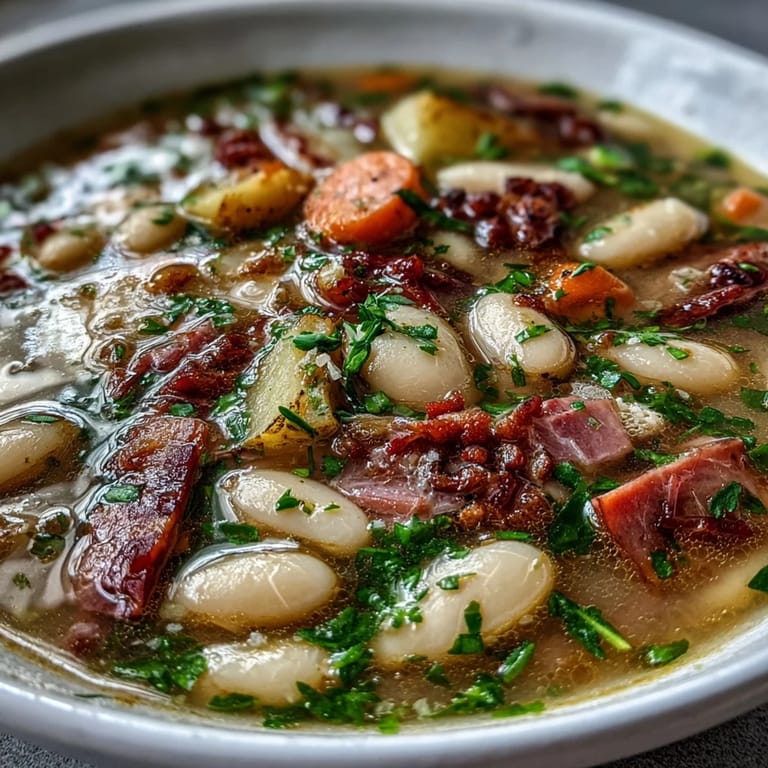
- Ladle into bowls and scatter parsley on top if you have it. The steam rising off each bowl is part of the whole experience.
 Pin
Pin There's a moment in every pot of this soup when the kitchen fills with such a clean, savory smell that everyone in the house wanders into the kitchen asking what's for dinner. It's the moment you realize you've made something people actually want to eat, not just something that fills them up.
When to Make This Soup
Winter deserves a soup like this—something that doesn't feel light or summery but substantial and grounding. I make it when temperatures drop below freezing, when someone's under the weather, or when I want my house to smell like comfort for two hours straight. It's also the kind of soup that improves if you make it a day ahead and reheat it gently, so it's perfect for meal planning.
How to Customize Without Losing It
The architecture of this soup is strong enough to handle changes. Swap the ham for smoked turkey if that's what you have, or add a ham bone for deeper richness and remove it before serving. You can add chopped kale in the last five minutes, throw in diced tomatoes, or swap white beans for cannellini if you want something creamier.
Storage and Serving
This soup tastes even better the next day after the flavors have had time to marry together. Store it in airtight containers in the refrigerator for up to three days, and it freezes beautifully for a month if you have the space. Reheat gently on the stove with a splash of broth if it's thickened too much, and always serve with crusty bread for soaking up every last bit.
- Leftovers taste best reheated slowly on the stove rather than blasted in the microwave.
- If you're freezing it, leave a little headspace in the container since soup expands.
- A fresh drizzle of olive oil and a handful of parsley makes reheated soup taste almost like it's fresh.
 Pin
Pin This soup has been my go-to answer for countless "what should I make" moments, and it's never disappointed. There's something timeless about a bowl of beans, potatoes, and ham that feels right no matter what season your life is in.
Recipe Questions
- → What beans work best for this soup?
White beans such as cannellini or navy beans are ideal, as they hold their shape and offer a creamy texture.
- → Can I use another meat instead of smoked ham?
Smoked turkey or sausage can be good substitutes, providing similar smoky depth to the dish.
- → How can I make this dish gluten-free?
This preparation is naturally gluten-free; just ensure that any broth or ham used is also free from gluten-containing ingredients.
- → What herbs enhance the flavor of the soup?
Bay leaves and dried thyme add subtle earthiness that complements the smoky and savory notes perfectly.
- → How should leftovers be stored?
Keep leftovers refrigerated for up to three days in an airtight container to maintain freshness.