 Pin
Pin There's something about throwing everything into one pot and watching it transform into dinner that still feels like minor kitchen magic to me. Last summer, I was scrambling to make something fresh and light on a sweltering evening when I realized I had a pile of vegetables getting close to their prime and half a box of pasta gathering dust. That night, this one-pot pasta came together so naturally—no fancy technique, just good timing and the brightness of lemon cutting through everything. My partner took one bite and asked why we hadn't been eating this all along.
I made this for a potluck once where I didn't think to mention it was vegan, and watching people genuinely enjoy it without realizing there was no cream or cheese was oddly satisfying. One friend kept asking what made it taste so rich, and I just smiled knowing it was the combination of caramelized vegetables, good olive oil, and the lemon doing all the heavy lifting. That's when I understood this dish works because it tastes like itself, not like it's trying to be something else.
Ingredients
- Dried penne or fusilli, 340 g (12 oz): The shape matters more than you'd think—tubes and spirals catch all those bright vegetable pieces and lemon juice in every bite, while the pasta itself needs to be certified vegan since some brands sneak in odd additives.
- Red onion, 1 small, thinly sliced: Thin slicing means it softens quickly and distributes sweetness throughout the pot without becoming mushy.
- Garlic, 2 cloves, minced: Use fresh garlic here—it's the backbone that makes everything taste intentional rather than haphazard.
- Red and yellow bell peppers, 1 small each, sliced: The two colors aren't just pretty; they give you different flavor depths and ensure you've got enough volume without adding watery vegetables.
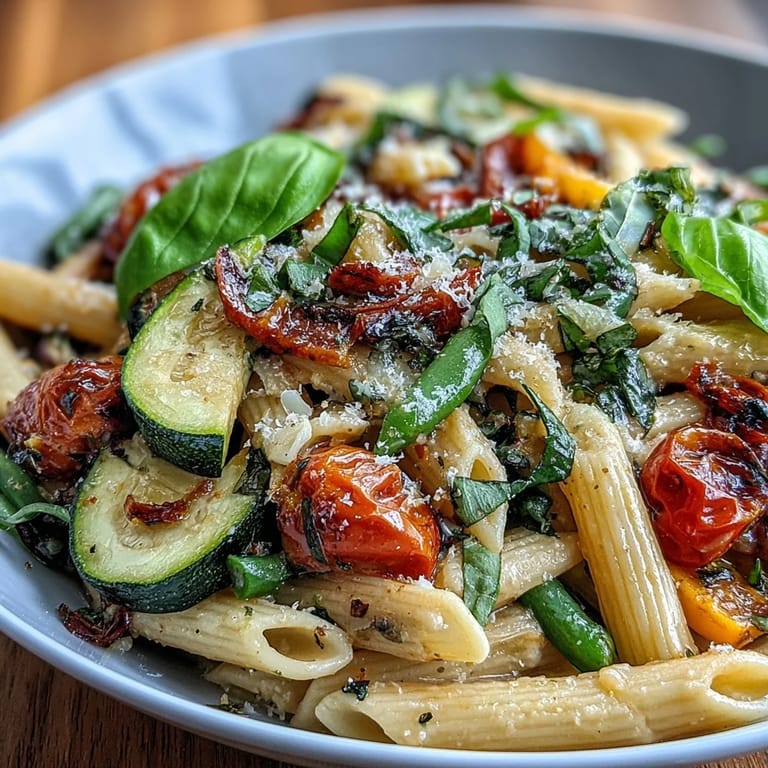
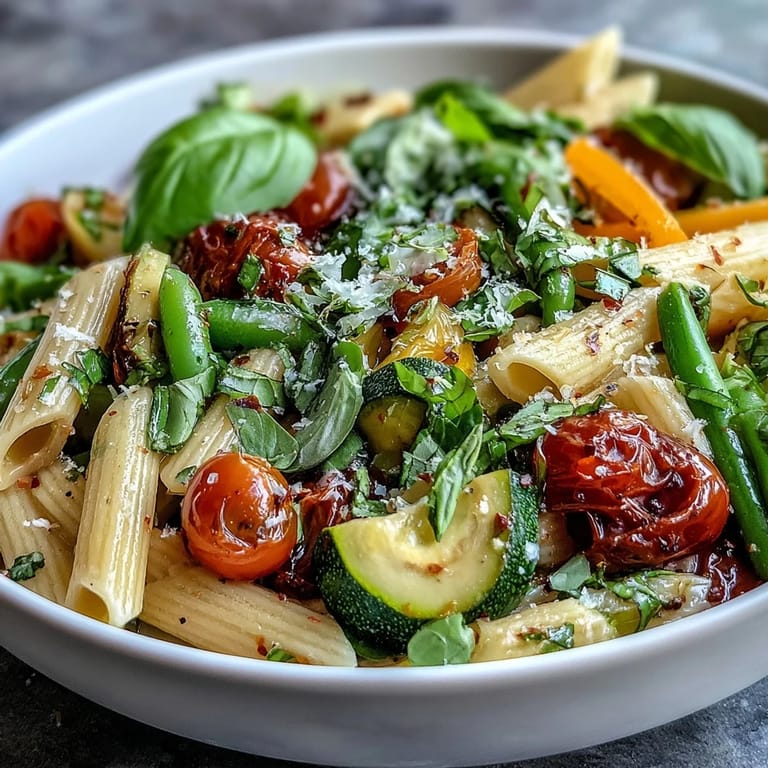
- Zucchini, 1 medium, sliced into half-moons: Half-moons cook evenly and stay tender-firm, absorbing the broth while keeping their shape.
- Cherry tomatoes, 1 cup (150 g), halved: Halving them helps them release their juice into the broth and cook down slightly without disappearing.
- Snap peas or green beans, 1 cup (120 g), trimmed: These add a crucial textural contrast and stay snappy if you don't overcook the whole pot—which is easy to avoid with proper timing.
- Broccoli florets, 1 cup (100 g): Small florets work better than large ones; they cook faster and distribute more evenly throughout the dish.
- Low-sodium vegetable broth, 900 ml (4 cups): The amount matters because you're relying on it to cook the pasta; too little and your pasta seizes up, too much and you get soup.
- Extra-virgin olive oil, 2 tbsp: Don't skimp here—good olive oil makes the entire dish sing.
- Sea salt and freshly ground black pepper: Taste as you go because vegetables release liquid as they cook, changing the seasoning balance.
- Red pepper flakes, pinch, optional: A whisper of heat brightens everything without overpowering.
- Lemon zest and juice from 1 lemon: The zest matters as much as the juice—it carries the brightest lemon flavor and releases oils that coat every piece of pasta.
- Fresh basil leaves, ½ cup (15 g), torn: Tear by hand instead of chopping; it prevents bruising and looks more intentional on the plate.
- Nutritional yeast, 2 tbsp, optional: A umami boost that mimics a subtle cheesy depth without any dairy.
Tired of Takeout? 🥡
Get 10 meals you can make faster than delivery arrives. Seriously.
One email. No spam. Unsubscribe anytime.
Instructions
- Heat and soften the aromatics:
- Pour olive oil into your pot over medium heat and let it get shimmering before adding the onion and garlic. The sizzle when they hit the pan tells you everything's ready, and two to three minutes in, your kitchen should smell like something wonderful is about to happen.
- Build flavor with the vegetables:
- Add your bell peppers, zucchini, tomatoes, snap peas, and broccoli all at once, stirring occasionally so everything gets a light kiss of heat. You want them to soften just slightly and release their flavors without actually cooking through—this takes about three to four minutes and sets up the whole dish.
- Combine pasta and broth:
- Dump the dried pasta directly into the pot along with the vegetable broth, salt, pepper, and red pepper flakes if using. Stir well so nothing sticks to the bottom, and watch as the pasta immediately starts to hydrate and the liquid turns cloudy from the starch.
- Cook until al dente:
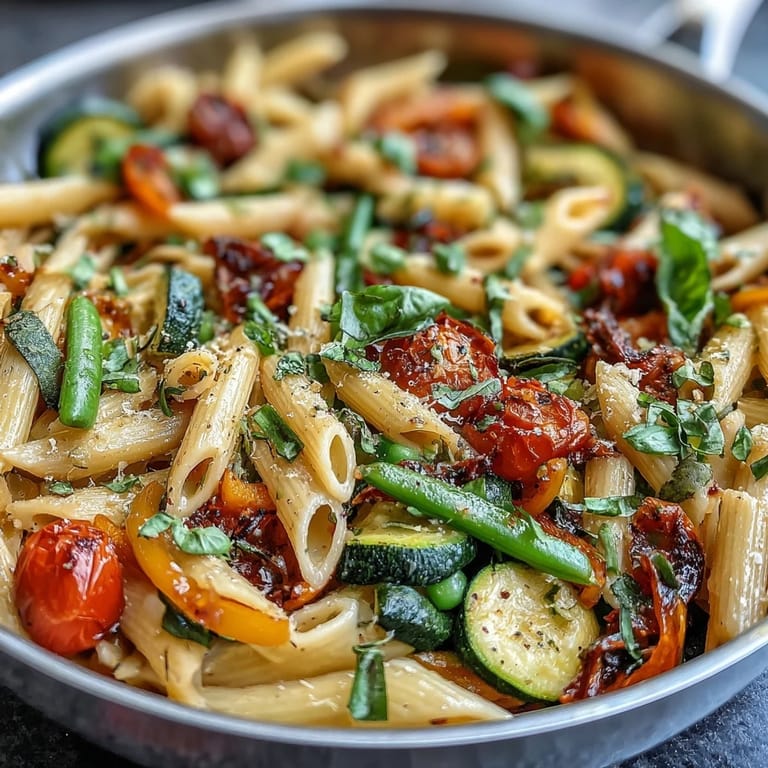
- Turn the heat to high and bring everything to a rolling boil, then drop it back to a medium simmer and cook uncovered for ten to twelve minutes. Stir frequently—more often than feels necessary—because the pasta absorbs broth as it cooks and can catch on the bottom if you're not paying attention. You'll know it's done when the pasta is tender but still has a slight bite and most of the liquid has been absorbed into the pasta and vegetables rather than pooling at the bottom.
- Finish with brightness:
- Kill the heat and immediately stir in your lemon zest, lemon juice, torn basil, and nutritional yeast if using. The residual heat will warm the basil slightly, releasing its oils, and the lemon juice will adjust the seasoning as it mingles with everything in the pot.
- Taste and serve:
- Take a spoon, taste it honestly, and adjust salt and pepper if needed—the vegetables may have released enough liquid that you need more seasoning than you'd expect. Serve right away while everything's still hot and the vegetables still have some of that tender-crisp quality.
 Pin
Pin What surprised me most about this dish is how it taught me that sometimes the best meals come from working with what you have rather than chasing a recipe perfectly. The first time I made it, I forgot the snap peas at the store and added extra broccoli instead, and honestly, nobody noticed what was missing—they just tasted dinner that was better than it had any right to be from one pot.
Why One-Pot Cooking Changes Everything
Cooking pasta in broth instead of plain salted water sounds simple, but it fundamentally changes how the dish comes together. The starch released from the pasta mixes with the vegetable broth to create a light sauce that coats every piece without needing cream or oil added afterward. I've noticed that one-pot meals force you to think about timing and layering in a way that makes you pay attention; there's no way to hide a misstep because everything's happening in the same vessel.
Seasonal Vegetable Swaps That Keep This Fresh Year-Round
Spring calls for asparagus, fresh peas, and lighter aromatics like fennel or leeks if you want to get playful. Summer is when this dish truly shines because you've got access to every vegetable in the market, so use that window to try combinations you wouldn't normally consider. Winter versions work beautifully with root vegetables—just slice them thinner so they cook in the same timeframe, and don't underestimate how good kale or spinach stirred in at the very end tastes alongside lemon and basil.
Making This Dish Feel Like Your Own
The beauty of this recipe is that it's flexible enough to become a signature dish in your kitchen rather than something you follow religiously every time. I've learned through experimentation that a pinch of balsamic vinegar added alongside the lemon creates an entirely different vibe, or that toasted pine nuts scattered on top elevate it for dinner guests while keeping the cooking process just as simple. Consider this your starting point, and trust your instincts when something in your kitchen says try me with this pasta.
- Pine nuts or toasted sunflower seeds add a nutty richness and textural crunch that feels almost decadent.
- A splash of white wine in place of some broth adds depth and tastes unexpectedly sophisticated.
- Vegan parmesan or nutritional yeast brings umami that makes people ask what your secret ingredient is.
 Pin
Pin This pasta has become my go-to when I want to cook something that feels effortless but tastes like I've actually tried. It's the kind of meal that proves simple cooking doesn't mean simple flavors.
Recipe Questions
- → What vegetables work best in this pasta primavera?
Bell peppers, zucchini, cherry tomatoes, snap peas, and broccoli create a colorful mix. Feel free to substitute with asparagus, green beans, or spinach based on what's in season or available in your kitchen.
- → Can I make this gluten-free?
Absolutely. Simply swap the regular penne or fusilli for your favorite gluten-free pasta. The cooking method remains the same—just check the package instructions as some gluten-free varieties may require slightly different timing.
- → How do I store and reheat leftovers?
Store cooled pasta in an airtight container in the refrigerator for up to 3 days. Reheat gently with a splash of vegetable broth or water to loosen the sauce, warming over medium-low heat until heated through.
- → Can I add protein to make it more filling?
Yes, white beans, chickpeas, or lentils blend beautifully with the vegetables. You can also serve alongside grilled tofu or tempeh, or stir in vegan sausage slices during the last few minutes of cooking.
- → What gives this dish its creamy texture without dairy?
As the pasta cooks in the vegetable broth, it releases starches that naturally thicken the liquid into a silky sauce. The nutritional yeast adds depth and subtle cheesy notes while keeping it entirely plant-based.