 Pin
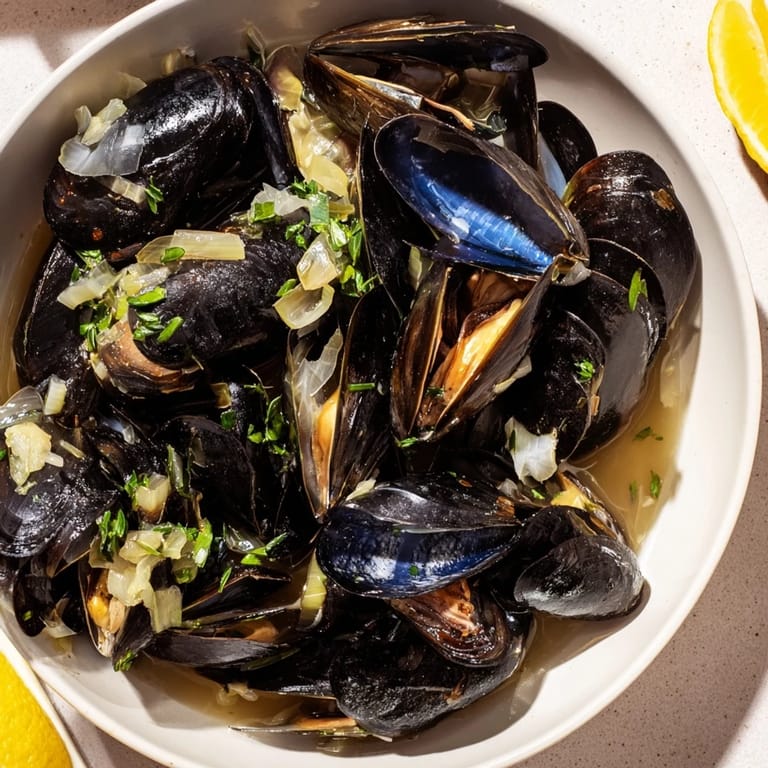
Pin The first time I watched mussels transform in a pot, I was mesmerized by the sound—that gentle click-click-click as shells began to open, releasing their briny steam into clouds of garlic and white wine. My neighbor had insisted I try making moules marinière, swearing it was impossible to mess up, and she was right. What I thought would be intimidating turned out to be one of the most rewarding dishes I'd ever make, ready in less time than it takes to pour wine.
I made this for my sister on a random Tuesday night when she'd had the kind of day that needed comfort food, not work. She arrived looking stressed, but by the time those mussels opened and filled the kitchen with that unmistakable perfume of wine and sea salt, something shifted. We ate straight from the pot with bread and didn't say much, but we didn't need to.
Ingredients
- Fresh live mussels (2 kg): Look for tightly closed shells or ones that snap shut when tapped—they should feel heavy and smell like the ocean, not fishy or ammonia-like.
- Shallots (2 medium, finely chopped): Their sweetness creates the base of your broth; don't skip them or swap for red onions, as the flavor profile changes entirely.
- Garlic (2 cloves, minced): Mince it fine so it dissolves into the wine rather than sitting as chunks.
- Leek, white part only (1 small): The white part is milder and more delicate than the green; slice it thinly so it cooks through in minutes.
- Celery (2 stalks, finely chopped): It adds subtle sweetness and body to the broth without overpowering the mussels.
- Fresh flat-leaf parsley (1 small bunch, chopped): Stir this in at the very end so it keeps its bright, fresh flavor.
- Fresh thyme (2 sprigs) and bay leaf (1): These herbs infuse the wine with earthiness; remove them before serving.
- Dry white wine (300 ml): Choose a wine you'd actually drink—the flavor matters since the mussels have nothing to hide behind.
- Olive oil (2 tbsp): It keeps the aromatics from sticking and carries their flavor into the broth.
- Sea salt and black pepper: Taste before adding salt; the mussel liquid itself is quite salty.
- Lemon wedges: A squeeze brightens everything at the last moment.
Tired of Takeout? 🥡
Get 10 meals you can make faster than delivery arrives. Seriously.
One email. No spam. Unsubscribe anytime.
Instructions
- Prepare the mussels:
- Rinse them under cold water while scrubbing with your fingers, checking each one for cracks or a shell that won't close when tapped. Discard anything suspect—you want only the confident ones.
- Build your flavor base:
- Heat olive oil in a large pot over medium heat, then add shallots, garlic, leek, and celery. Watch them turn soft and glossy, filling your kitchen with that warm, buttery-vegetable smell—this takes about 3 to 4 minutes.
- Add herbs and wine:
- Stir in thyme and bay leaf, then pour in the white wine. Let it simmer gently, swirling the pot to blend everything together.
- Steam the mussels:
- Add the cleaned mussels, cover tightly with a lid, and turn heat to high. This is where the magic happens—in 5 to 7 minutes you'll hear them opening, that satisfying click repeated many times over. Give the pot a gentle shake halfway through.
- Finish and serve:
- Remove from heat, discard any unopened mussels (they didn't want to come to the party anyway), and stir in fresh parsley. Taste the broth and add pepper; go easy on the salt since the mussels themselves season it well.
 Pin
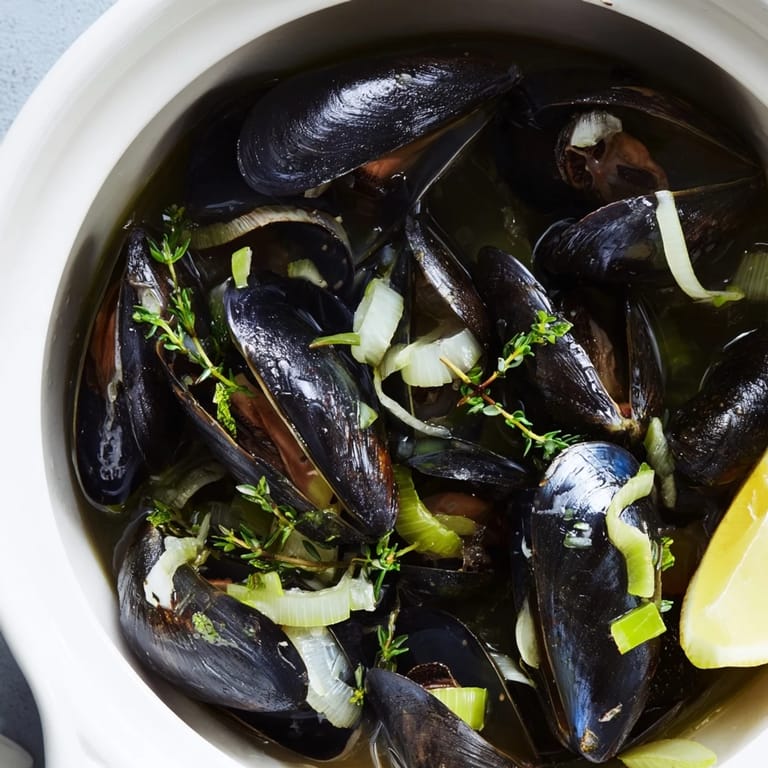
Pin There's a moment, once the lid comes off and steam rises from the pot, when you realize this simple dish has become something ceremonial. Everyone I've cooked this for has paused, spoon halfway to their mouth, to soak bread in that golden broth and exhale with genuine happiness.
Why This Dish Matters
Moules marinière taught me that restaurant food doesn't have to be complicated, just thoughtful. The Belgians have been eating this for generations because it works—mussels need nothing more than their own juice, good wine, and someone patient enough to let them open on their own time. I stopped trying to make it fancy the moment I realized that simplicity was the whole point.
Serving and Pairing
Eat this straight from the pot if you're with people you're comfortable with, or serve it in deep bowls where the broth doesn't spill everywhere. Crusty bread is non-negotiable—the whole meal hinges on having something to drag through that wine-soaked, herb-filled liquid. Belgian fries with mayo on the side transforms it into a proper meal, though honestly, bread and wine are all you really need.
Storage and Leftovers
Mussels are best enjoyed immediately, but the leftover broth is liquid gold. I've refrigerated it and used it as a base for seafood soup, risotto, or even just warmed it with a splash of cream for a completely different dish. It keeps for a few days and tastes better on day two as the flavors deepen and meld.
- Save every drop of broth—it's treasure in a pot.
- If you want a richer version, stir in butter at the very end just before serving.
- Don't cook these ahead; they're only good when they're hot and their shells are still steaming.
 Pin
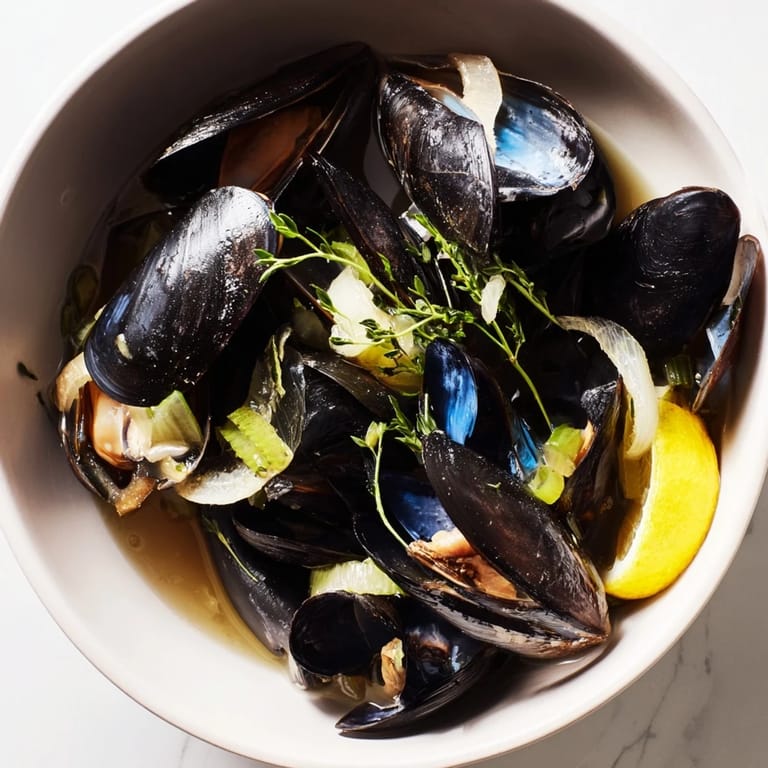
Pin This dish reminds me why I love cooking—not because it's complicated, but because it's proof that the best meals often come from knowing when to get out of the way and let good ingredients speak for themselves. Make this when you want to feel like you've traveled to Belgium without leaving your kitchen.
Recipe Questions
- → How should mussels be prepared before cooking?
Rinse and scrub mussels under cold running water, removing any broken or unopened shells to ensure freshness.
- → What liquids enhance the flavor of this dish?
Dry white wine and olive oil create a flavorful steaming broth that complements the mussels’ natural taste.
- → Can I substitute the shallots in this dish?
A small yellow onion can be used instead of shallots without significantly altering the flavor profile.
- → What herbs are key to this preparation?
Fresh thyme, bay leaf, and flat-leaf parsley infuse the broth with aromatic and savory notes.
- → How long should mussels be steamed?
Steam the mussels for 5–7 minutes until they open fully, discarding any that remain closed.
- → What are good serving suggestions?
Serve with lemon wedges and crusty bread or Belgian fries to soak up the flavorful broth.