 Pin
Pin I'll never forget the evening when our book club gathered around my kitchen table, and instead of the usual cheese board scattered haphazardly across a platter, I decided to create something that felt as thoughtful and intentional as the novels we were discussing. I spent an afternoon arranging goat cheese, aged Manchego, and creamy brie into distinct sections, each one a quiet conversation starter paired with its perfect wine. My friend Sarah picked up a strawberry-topped cracker and laughed, saying it felt like the platter was telling its own story. That moment taught me that the most elegant entertaining isn't about complexity—it's about creating pathways for connection, and this platter became my love letter to the art of slowing down together.
I remember hosting my first real dinner party as an adult, and I was absolutely terrified. Then I realized that a thoughtfully composed platter doesn't demand perfection—it demands intention. When I set this one on the table with little handwritten tags naming the wine pairings, my guests actually paused. They didn't just grab and go; they sat down, they talked about why the green grapes sang next to goat cheese, they debated whether they preferred the red or white section. That's when I understood: this platter isn't just food. It's an invitation to be present.
Ingredients
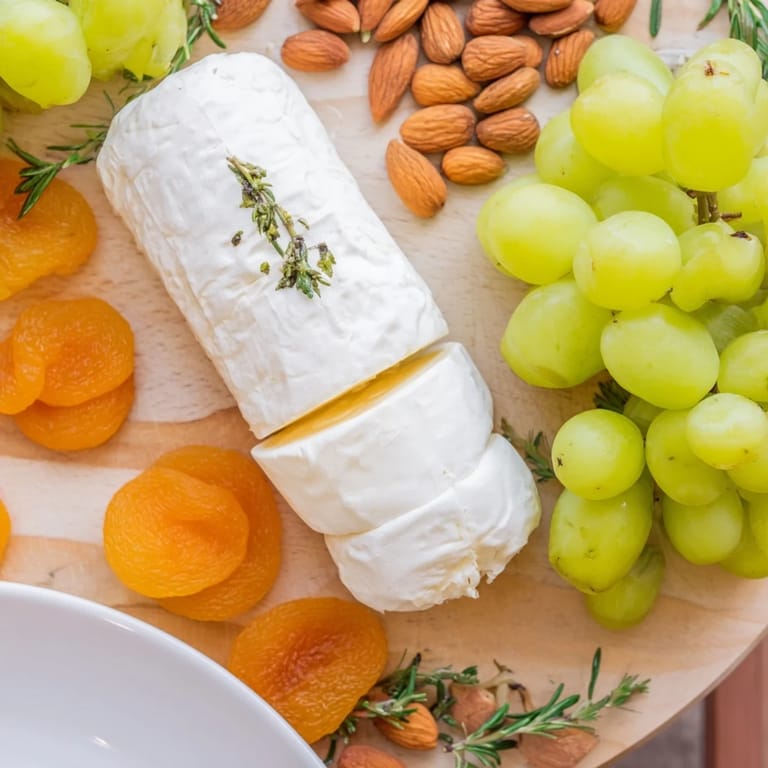
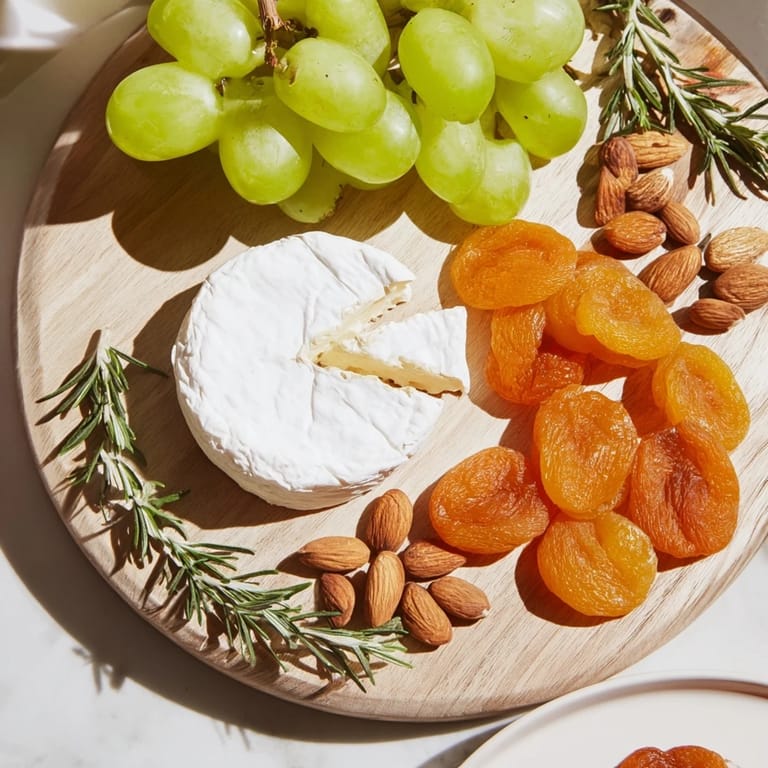
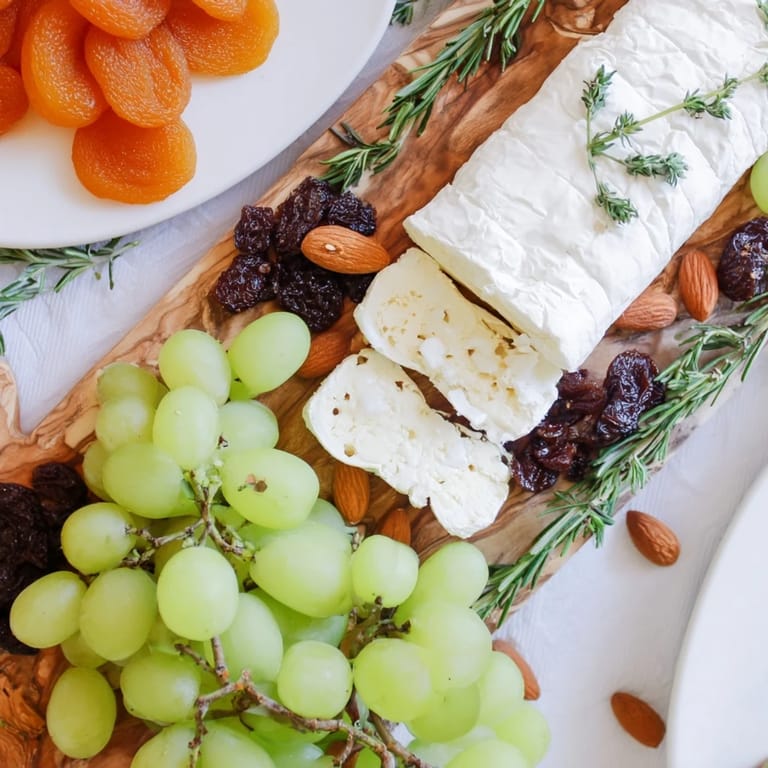
- Soft goat cheese (100 g): Choose a creamy log or disc; it's the anchor of your white wine section and brings a bright, slightly tangy note that makes everything around it taste better. Room temperature is essential—cold goat cheese tastes muted and dense.
- Seedless green grapes (1 small bunch): These are your palate cleansers, crisp and slightly sweet. The key is drying them thoroughly after washing; any moisture will make your platter weep, literally.
- Dried apricots (8–10): They taste like concentrated sunshine and provide a chewy sweetness that plays beautifully against tangy cheese. Look for ones that are still slightly soft, not brittle.
- Raw almonds (1/4 cup): These are your crunch, your textural anchor. They stay fresher longer than other nuts and won't compete with delicate flavors.
- Aged Manchego cheese (100 g): This is the hero of your red wine section—nutty, slightly firm, and impressive without being pretentious. Slice it just before serving so it doesn't dry out.
- Dry-cured chorizo or soppressata (8–10 slices): If you're using meat, choose quality over quantity. These add richness and a hint of spice; vegetarian guests will appreciate sections without them, and that's the beauty of this design.
- Marcona almonds or roasted hazelnuts (1/4 cup): These are deeper and richer than raw almonds, almost buttery. They belong with the red section's heartier flavors.
- Red grapes (1 small bunch): Keep them separate from the chorizo to preserve their delicate flavor; you'll understand why when you taste them this way.
- Triple-crème brie (100 g): This is the final indulgence, luxuriously creamy and almost melts on your tongue. It's the reason people remember this platter, the way they'll close their eyes just a little when they taste it.
- Fresh strawberries (8 halved): Hulled and halved, they're the jewels of your sparkling section—bright, fresh, and a beautiful visual signal that this pairing is all about celebration.
- Candied pecans or walnuts (1/4 cup): Sweet and crunchy, they add an element of surprise. I learned to make my own when I realized store-bought versions taste too uniform; a light hand with honey and sea salt makes all the difference.
- Water crackers (6–8): Choose plain, crisp ones that won't compete with the cheese. They're the blank canvas your brie needs.
- Fresh rosemary sprigs (4–6 large): These are more than decoration; they divide your sections aromatically and visually, and their herbal fragrance lifts everything around them. Choose sprigs with bright green leaves that are firm to the touch, not droopy or brown.
- Edible flowers or microgreens (optional): A whisper of color, never more than that. Use them sparingly—they're like jewelry on a little black dress, not the whole outfit.
Tired of Takeout? 🥡
Get 10 meals you can make faster than delivery arrives. Seriously.
One email. No spam. Unsubscribe anytime.
Instructions
- Clear your stage:
- Take a deep breath and clear your work surface completely. You want a blank canvas, a large wooden board or platter at least 18 inches wide. Sanitize it gently—you're setting the stage for something people will eat from, so this matters. Lay out all your ingredients where you can see them, almost like you're arranging actors before a performance. This is when you start to feel in control.
- Dry everything with intention:
- Wash your fruit and dry each grape, strawberry, and apricot with paper towels as if you're handling something precious. Moisture is the enemy of a beautiful platter; it spreads, it turns things soggy, it tells people you weren't paying attention. As you dry each piece, you're also giving yourself a moment to think about where it will go.
- Slice just in time:
- This is where patience becomes your greatest ingredient. Don't slice your cheeses or meats until you're ready to build. Exposed surfaces oxidize, dry out, and look sad. Use a sharp cheese knife—a dull one crushes rather than cuts, and crushed cheese looks tired before you've even begun serving. Make each cut clean and confident.
- Inspect your rosemary:
- Hold each sprig up to the light. The leaves should be green and aromatic, not wilted or brown. Break off one needle and smell it deeply; if it smells like heaven, you're ready. If it smells faded or dusty, find another sprig. Wilted rosemary signals age, and age is what we're trying to hide on this platter.
- Create your boundaries with grace:
- Lay your 2–3 rosemary sprigs lengthwise across the board, creating distinct visual sections. Press them down gently—you're anchoring, not crushing. These sprigs aren't just pretty; they're the invisible walls that keep white wine notes from mingling with red wine notes, fresh from hearty. They're also your backup plan if your arrangement feels wobbly.
- Build the white wine poetry:
- Start with your goat cheese at the center of this section, the focal point everything else orbits around. Use a cheese knife to create a beautiful first impression—a clean cut, or perhaps you'll arrange thin slices in an overlapping fan. Next to it, fan out your green grapes in a little crowd, making sure they're completely dry. Then scatter your dried apricots, overlapping them slightly so they look abundant but organized. Finally, sprinkle your raw almonds around the scene like the finishing touch. Pause and smell: you should catch fresh, slightly tart, herbal notes.
- Layer in the red wine warmth:
- This section should feel sturdy and inviting, like a leather chair by a fireplace. Arrange your Manchego slices in a neat stack or fan—choose whatever looks more abundant and generous. If using chorizo, fold or roll each slice so it shows off its pretty rings, and lay them beside the cheese rather than on top of it. Keep those red grapes in their own little bunch, away from the meat, so each flavor stays true. Scatter your Marcona almonds or hazelnuts in a small pile, letting them catch the light. This section should look hearty, textured, alive.
- Crown the sparkling celebration:
- Position your brie wedges in a starburst or fan—imagine petals opening to the sun. The cheese should feel creamy and give just slightly to the touch; if it's rock hard, it wasn't ready. Arrange those strawberry halves around it, cut side up so the pink interior glows. Add your candied pecans or walnuts in a small cluster—their sweetness will make people smile. Line up your crackers along the edge in a neat row or gentle arc, almost like soldiers standing at attention. Stop and breathe in this section: it should smell fresh, sweet, creamy, and just a little bit decadent.
- Step back and see the whole picture:
- Look at your platter from above and from the side. Each section should feel like its own world, clearly divided by rosemary. Colors should sing: the pale tang of goat cheese, the deep gold of Manchego, the blushing pink of brie with strawberries. Heights should vary slightly—nothing completely flat, nothing towering and precarious. Everything should be reachable; nothing should hang off the edge of the board like it's about to fall into someone's lap.
- Add the final whisper (if you choose):
- If using edible flowers or microgreens, add them now with a very gentle hand. A few pansies here, some microgreens there—they're the punctuation, not the whole sentence. Less is always more with these; they should make people notice the care, not overwhelm the senses.
- Place and present:
- Set your platter in the center of the table where it becomes the visual anchor of the room. Arrange small cheese knives, cocktail picks, and napkins around it like a frame around a painting. If you're feeling fancy, make little handwritten tags for each section naming the wine pairing—this small gesture changes everything, turning appetizers into an experience. Serve immediately while cheeses are at their creamy best and fruit is still crisp.
 Pin
Pin The moment I'll always remember is when my mother picked up a strawberry and cracker topped with brie, took a bite, and got quiet—the kind of quiet that means something just shifted in your mouth in the best way. She looked at me like I'd invented something, and I realized that entertaining isn't about being perfect. It's about creating small moments where people taste something that makes them pause and feel cared for. That strawberry, that brie, that simple cracker became a love language I could express with my hands.
The Art of Visual Balance
A beautiful platter tells a story, and every story needs rhythm. Think of it like arranging flowers: you need height variation so it's not all flat, color variation so the eye travels, and texture variation so every bite surprises. When I build a platter, I'm thinking about negative space too—the empty board showing through between elements creates breathing room. I learned this when I first made one of these and crowded it so densely that everything blurred together. Now I ask myself: if I cover 70% of the board and leave 30% visible, does that feel abundant without feeling cluttered? The answer is usually yes. The visible board becomes part of the design, a frame that makes everything on it look more intentional. Use height strategically too: prop a cheese wedge slightly higher than a nut, let a stack of meat create an accent, and suddenly your platter looks like it was composed by someone who knows what they're doing.
Timing Your Assembly
I used to prepare my platters hours in advance, thinking I was being smart and organized. What I actually was being was foolish. Fruit oxidizes, cheese warms and sweats, meat loses its appeal, and crackers absorb ambient moisture from the air. Now I follow a simple rule: prep everything in advance—wash, dry, slice into single-use pieces, organize your ingredients where you can see them—but don't actually build the platter until 30 minutes before serving. This is when you slice your cheeses, arrange your elements, and let the platter sit at room temperature to allow cheeses to reach their creamy best. When guests arrive, it's fresh, it's perfect, and it looks like you didn't spend three hours worrying about it. You look effortless, which is the greatest compliment any host can receive. If you're serving a two-hour event, consider building two platters and swapping them halfway through, keeping one in the refrigerator as backup. This keeps everything looking its absolute best the entire time.
Wine Pairings and Flavor Conversations
When I first started hosting book clubs, I didn't think much about wine pairings—I just put out wine and hoped people would figure it out. Then I realized that naming the pairings actually changes how people taste them. A white wine next to goat cheese and green grapes seems obvious once you taste it together: the brightness of the wine lifts the tang of the cheese, and the crisp acidity cleanses your palate between bites. A red wine next to Manchego and chorizo becomes this wonderful embrace of flavors—earthy, slightly spicy, complex. And sparkling or rosé with brie and strawberries? It's like a celebration in your mouth, the bubbles cutting through the richness like tiny flavor revelations. If you want to get really intentional, serve the wines blind and let guests guess which section they belong with. You'll see a moment of discovery when they realize flavors can communicate with each other. That's the real gift you're giving your guests.
- Write small tags for each section naming not just the wine, but describing the pairing experience—guests love knowing what to pay attention to
- Serve wines in the order you'd typically drink them: white first, rosé second, red last, so palates don't get confused
- If you're serving beer or cider instead of wine, apply the same logic: a crisp lager with the white section, a darker ale with the red section, a fruit-forward cider with the sparkling section
 Pin
Pin Here's what I know now: a platter like this isn't about impressing people with complicated food. It's about taking time to understand what flavors speak to each other, then inviting other people into that conversation. That's all it is, and somehow, that's everything.
Recipe Questions
- → What cheeses are included in the platter?
The platter features soft goat cheese, aged Manchego, and triple-crème brie, each selected for complementary textures and flavors.
- → How do rosemary sprigs enhance the platter?
Rosemary sprigs act as aromatic dividers that separate sections visually and help prevent flavor crossover, adding a subtle herbaceous scent.
- → Can the platter accommodate dietary preferences?
Yes, meat options like chorizo are optional, and vegan cheese or charcuterie substitutes can be used for plant-based guests.
- → What is the best way to serve the platter?
Arrange cheeses and accompaniments just before serving, use small knives and picks for ease, and offer beverage pairings verbally or with tags.
- → How should leftovers be stored?
Store in airtight containers refrigerated; fresh fruit within 24 hours, cheeses and meats up to 3 days, and keep crackers separate to avoid sogginess.
- → Are there suggestions for ingredient substitutions?
Seasonal or local fruits and nuts can replace the listed options; olives, pickled vegetables, or honeycomb may add complexity.