 Pin
Pin There's a particular afternoon light that fills a kitchen in Marseille, golden and insistent, that I'll never forget. My friend Sophie had invited me to her family home, and without fanfare, her mother began pulling ingredients from the market basket as if performing a familiar ritual. She didn't consult notes or measure twice, just moved with the quiet confidence of someone who'd made bouillabaisse dozens of times. Watching her layer saffron and fennel into that heavy pot, I realized this wasn't a recipe to follow—it was a conversation between her hands and the sea's bounty. That afternoon taught me that some dishes don't just feed you; they connect you to a place and to people who understand why every detail matters.
I made this for my family on a winter evening when everyone needed warming from the inside out. My daughter, who usually picks at seafood, asked for seconds and spent ten minutes dunking bread into the broth. That's when I understood that bouillabaisse isn't just a dish—it's a moment where people slow down and actually taste what's in front of them, letting the complexity of flavors do the work of conversation.
Ingredients
- Firm white fish fillets (monkfish or sea bass), 400 g: These stay intact during cooking and give the stew substance; avoid delicate white fish that falls apart.
- Oily fish fillets (red mullet), 300 g: The richness adds depth and helps create a naturally silky broth without cream.
- Mussels, 300 g: Clean and debeard them the day before, storing in a bowl of cold water in the fridge to keep them alive and sweet.
- Small shrimp, 200 g: Peel and devein yourself if possible for better flavor than frozen options.
- Sea scallops, 6 large: Optional but worth including if you can find them; they add a luxurious sweetness.
- Olive oil, 2 tbsp: This is your base for building flavor, so use good quality without going too fancy.
- Onion, leek, and fennel: These three create the aromatic foundation; the fennel is crucial and shouldn't be skipped.
- Garlic, 3 cloves: Minced fine so it dissolves into the broth rather than sitting in chunks.
- Ripe tomatoes, 4: Peel and seed them so the stew isn't watery; use summer tomatoes if you can, or high-quality canned when fresh aren't available.
- Carrot, 1 large: Sliced rather than diced so it softens evenly and adds natural sweetness.
- Orange zest: This single element is what makes bouillabaisse taste like Provence; don't skip it or use juice instead.
- Saffron threads, 1/2 tsp: The signature spice, earthy and floral; buy it from a spice merchant you trust, as quality varies dramatically.
- Fennel seeds, thyme, bay leaf, and parsley: Together these create an herbal backbone that smells like a Mediterranean hillside.
- Dry white wine, 200 ml: Something you'd actually drink, not cooking wine; the alcohol burns off but the character remains.
- Fish stock or water, 1.5 liters: Stock is preferable but water works if you're building flavor from the seafood and vegetables.
Tired of Takeout? 🥡
Get 10 meals you can make faster than delivery arrives. Seriously.
One email. No spam. Unsubscribe anytime.
Instructions
- Build the aromatic base:
- Heat olive oil in your largest, heaviest pot—this matters because you need even heat to coax the vegetables into softness without coloring. Add onion, leek, fennel, carrot, and garlic, letting them sweat gently for 8 to 10 minutes while you listen to them sizzle and soften.
- Deepen the flavor foundation:
- Stir in tomatoes, orange zest, bay leaf, thyme, parsley, saffron threads, fennel seeds, peppercorns, salt, and pepper. Let this fragrant mixture cook together for 5 minutes so the saffron releases its color and the herbs perfume the oil.
- Add wine and stock:
- Pour in white wine and let it bubble gently for 2 minutes, then add your fish stock or water. Bring to a boil, then immediately lower the heat and simmer uncovered for 25 minutes so the vegetables fully soften and flavors marry together.
- Strain and clarify:
- Pour everything through a fine sieve, pressing gently on the solids with the back of a spoon to extract all their flavor without pushing through fiber. You should have a fragrant, golden broth; discard the solids.
- Cook the seafood carefully:
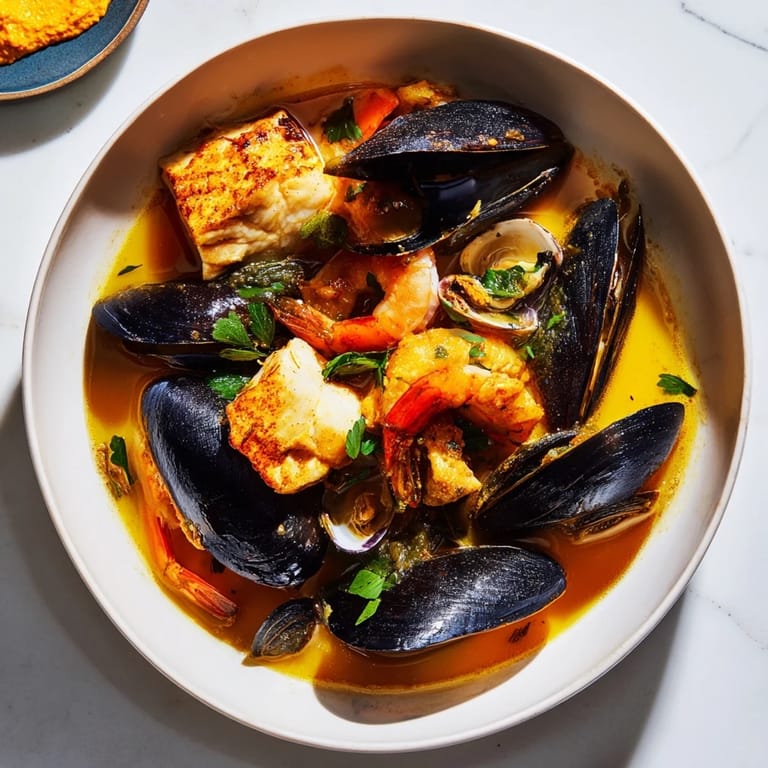
- Return the broth to a clean pot and bring to a gentle simmer. Add your firm white fish first, giving it 5 minutes to begin cooking. Then add oily fish, mussels, shrimp, and scallops all at once, simmering for 5 to 6 minutes until everything is just cooked through and the mussel shells have opened—this is the moment to stop, not to push further.
- Make the rouille:
- In a separate bowl, whisk together egg yolk, minced garlic, chopped chili, saffron with its soaking water, and mustard until smooth. Drizzle in olive oil very slowly while whisking constantly, as if making mayonnaise, until you have a thick, golden, garlicky sauce that coats the back of a spoon.
- Serve with ceremony:
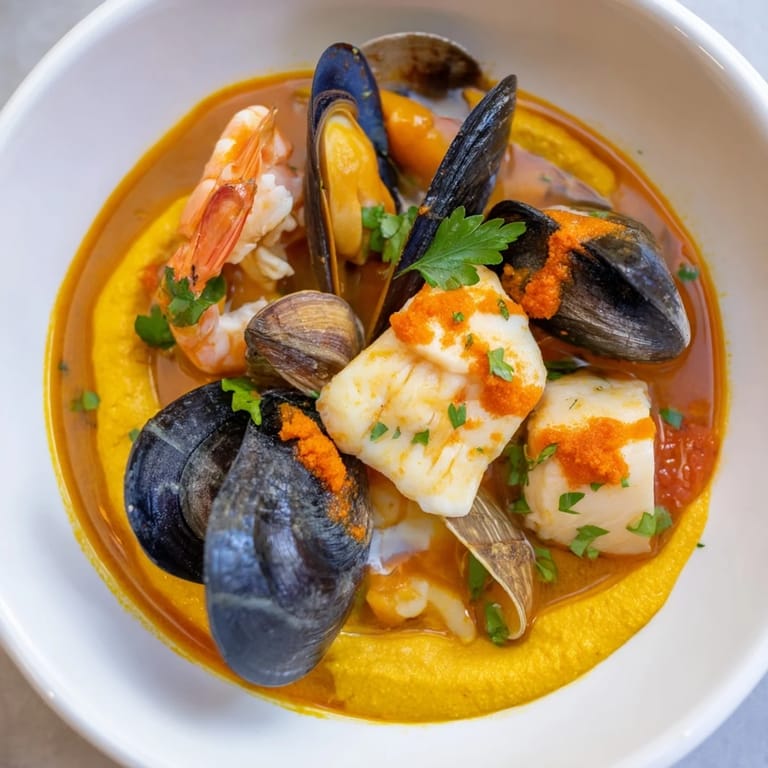
- Ladle the bouillabaisse into warm bowls, sprinkle with fresh parsley, and serve with toasted baguette slices brushed with olive oil and rouille on the side for each person to customize their bowl.
 Pin
Pin The real magic happens when someone tears off a piece of bread, slathers it with rouille, dunks it into the broth, and closes their eyes. In that moment, you're not serving food—you're sharing something that tastes like time spent learning, ingredients treated with respect, and the generosity of a meal made to linger over.
The Art of Layering Flavors
Bouillabaisse isn't built all at once; it's constructed in waves. The vegetables create the foundation, the saffron and herbs add complexity, the wine brings brightness, and finally the seafood arrives to finish the composition. This order matters because each element has time to speak before the next one joins. I learned this by rushing once and ending up with a dish that tasted muddled. When you respect the timing, you taste the difference between fast food and real cooking.
Why the Straining Step Changes Everything
The first time I skipped straining to save time, I served a stew that looked rustic but tasted grainy and undefined. Straining isn't about being precious; it's about letting the broth become something you can taste clearly, where each spice and each fish flavor comes through without the distraction of soft vegetable fiber. It takes five extra minutes and transforms the dish completely.
Serving and Pairing Wisdom
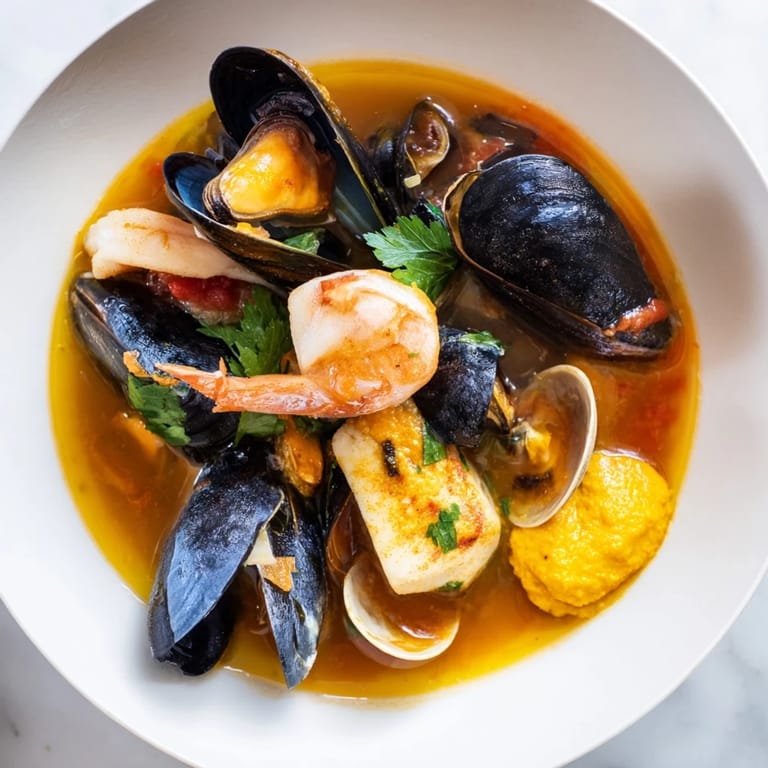
This is a dish that demands company and a good wine alongside it—not just because it's French, but because bouillabaisse asks you to slow down and pay attention. Serve it in warm bowls, give people time between spoonfuls to talk and breathe, and let the rouille be something guests customize themselves rather than a garnish you've already applied. That small choice makes them feel like collaborators rather than passive eaters.
- A chilled Provençal rosé or crisp white wine is perfect alongside, cutting through the richness and echoing the Mediterranean herbs.
- If anyone needs gluten-free bread, don't make them feel like an afterthought; toast it alongside the regular baguette as a matter of course.
- Make the rouille ahead if you want to reduce stress, but always taste and adjust seasoning just before serving because flavors shift as it sits.
 Pin
Pin Bouillabaisse rewards patience and respect for ingredients, and in return, it delivers something that tastes far more complex than the effort required. Make this when you have time to cook without rushing, when you have people around your table who appreciate good food, and when you want to remind yourself why cooking matters.
Recipe Questions
- → What types of fish are best for Bouillabaisse?
Firm white fish like monkfish and sea bass, along with oily fish such as red mullet, provide a balanced flavor and texture ideal for this stew.
- → How do you prepare the rouille sauce?
The rouille is made by whisking egg yolk with garlic, chili, saffron soaked in water, Dijon mustard, and gradually adding olive oil until a thick, mayonnaise-like sauce forms.
- → Can I make Bouillabaisse gluten-free?
Yes, simply replace the traditional baguette with gluten-free bread for serving to accommodate gluten sensitivities.
- → How should mussels be handled during cooking?
Only add cleaned mussels and discard any that do not open after cooking to ensure safety and quality.
- → What wine pairs well with Bouillabaisse?
A chilled Provençal rosé or a crisp dry white wine complements the aromatic and seafood-rich flavors perfectly.
- → Can I prepare components ahead of time?
The rouille sauce can be made ahead and refrigerated for up to one day, making meal preparation easier.