 Pin
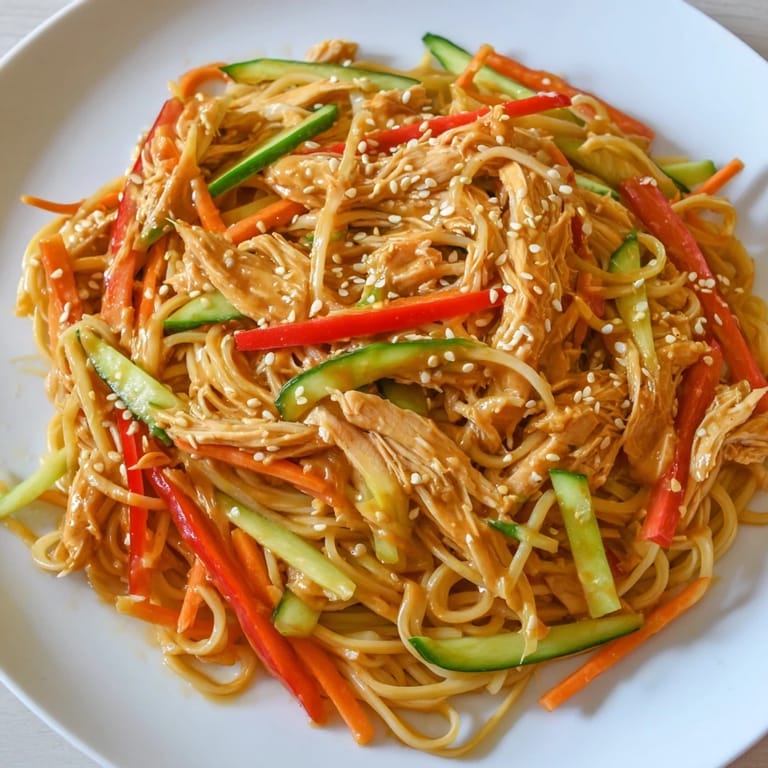
Pin There's something magical about the first time you realize a salad can be a complete meal. I discovered this chilled chicken noodle salad on an unexpectedly hot afternoon when I had leftover shredded chicken and a handful of vegetables that needed rescuing from the back of my fridge. I threw together what felt like a casual lunch, tossed it with a quick sesame dressing, and suddenly found myself making it constantly—it became the dish I'd reach for whenever the kitchen felt too warm to use the oven. The beauty of it is how the cold noodles soften just enough to absorb all that toasted sesame flavor, while the vegetables stay crisp and bright.
I remember bringing this to a potluck on a July evening when everyone else brought heavy casseroles and hot sides. My salad sat there looking so refreshingly different that people actually went back for seconds, which never happens with cold dishes. It became the thing people asked me to make whenever we'd gather in warm months, and I realized it wasn't just about the food—it was about giving people permission to eat something light and satisfying without any guilt.
Ingredients
- Thin egg noodles or rice noodles (250 g/9 oz): Thin noodles cool faster and absorb the dressing beautifully without becoming gummy—I learned this the hard way with thick spaghetti.
- Shredded cooked chicken (2 breasts, about 300 g/10 oz): Rotisserie chicken is a genuine shortcut that saves 20 minutes and honestly tastes just as good.
- Carrot, julienned (1 medium): The thin cuts mean they soften slightly from the dressing while keeping a pleasant bite.
- Red bell pepper, thinly sliced (1): The sweetness balances the umami-rich dressing and adds that pop of color that makes people actually want to eat it.
- Cucumber, deseeded and julienned (1): Removing the seeds prevents the salad from getting watery as it sits, which I discovered after one disappointing lunch box experience.
- Spring onions, sliced (2): They brighten everything up with a mild onion sharpness that feels fresh and summery.
- Fresh cilantro, chopped (2 tbsp): Use it generously—it's what makes this taste like you actually know what you're doing in the kitchen.
- Toasted sesame oil (3 tbsp): The toasted variety is non-negotiable here; it carries the entire flavor profile and smells incredible when you first open the bottle.
- Soy sauce (2 tbsp): Use full-sodium for the richest taste, or tamari if you're avoiding gluten.
- Rice vinegar (2 tbsp): It's gentler than regular vinegar and lets the other flavors shine through without any harsh edges.
- Honey or maple syrup (1 tbsp): Just enough sweetness to round out the salty-savory punch and make it feel balanced.
- Smooth peanut butter or tahini (1 tbsp): This is the secret that gives the dressing body and a silky finish—tahini works beautifully if you want to keep it peanut-free.
- Fresh ginger, grated (1 tsp): It adds a warm, slightly spicy note that makes people ask what the mystery ingredient is.
- Garlic clove, minced (1): Just one is enough to add depth without overwhelming the more delicate flavors.
- Chili flakes (1 tsp, optional): Include them if you like a gentle heat that builds as you eat.
- Toasted sesame seeds (2 tbsp): These are your finishing touch and the textural contrast that makes every bite feel intentional.
Tired of Takeout? 🥡
Get 10 meals you can make faster than delivery arrives. Seriously.
One email. No spam. Unsubscribe anytime.
Instructions
- Cook the noodles until tender:
- Bring a large pot of water to a rolling boil and add your noodles, stirring occasionally so they don't clump together. Drain them the moment they're soft enough to bend slightly, then run them under cold water in a colander while you use your fingers to gently separate any strands that want to stick together.
- Build the salad base:
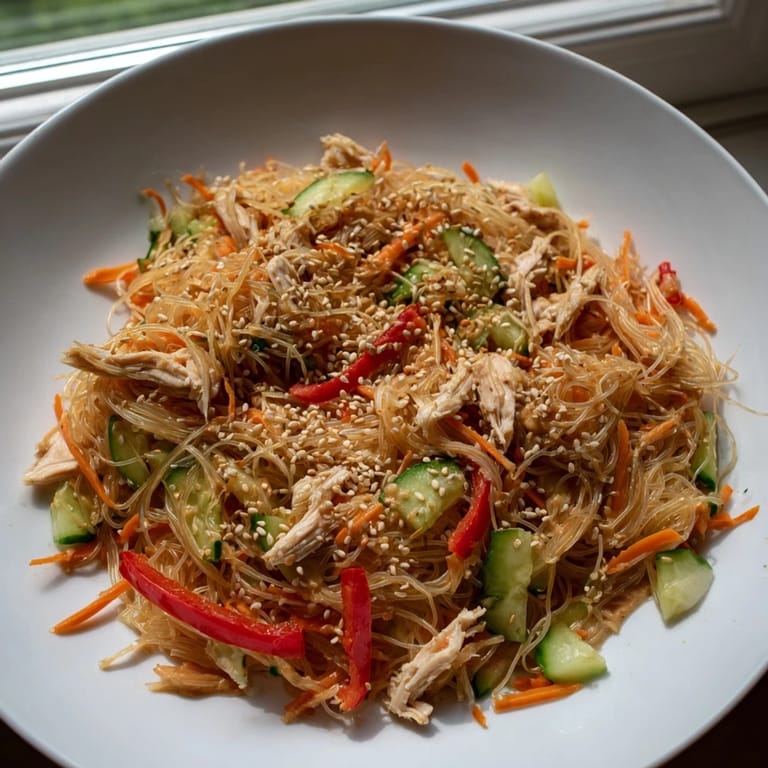
- Combine the cooled noodles with your shredded chicken, all those beautiful julienned vegetables, spring onions, and cilantro in a large bowl—this is where you get to see all your colors come together, and it's honestly satisfying to look at before the dressing even goes in.
- Whisk the dressing to silky smoothness:
- In a small bowl, add the sesame oil, soy sauce, rice vinegar, honey, peanut butter, ginger, and garlic, then whisk steadily until it comes together into something glossy and cohesive. The peanut butter might resist at first, but keep whisking and it'll surrender into that creamy emulsion you want.
- Toss everything together until every strand is coated:
- Pour that dressing over the salad and use two forks or tongs to toss gently but thoroughly, making sure the noodles are evenly dressed and nothing gets left behind at the bottom of the bowl. This is when your kitchen will smell absolutely incredible.
- Add your finishing touch and serve:
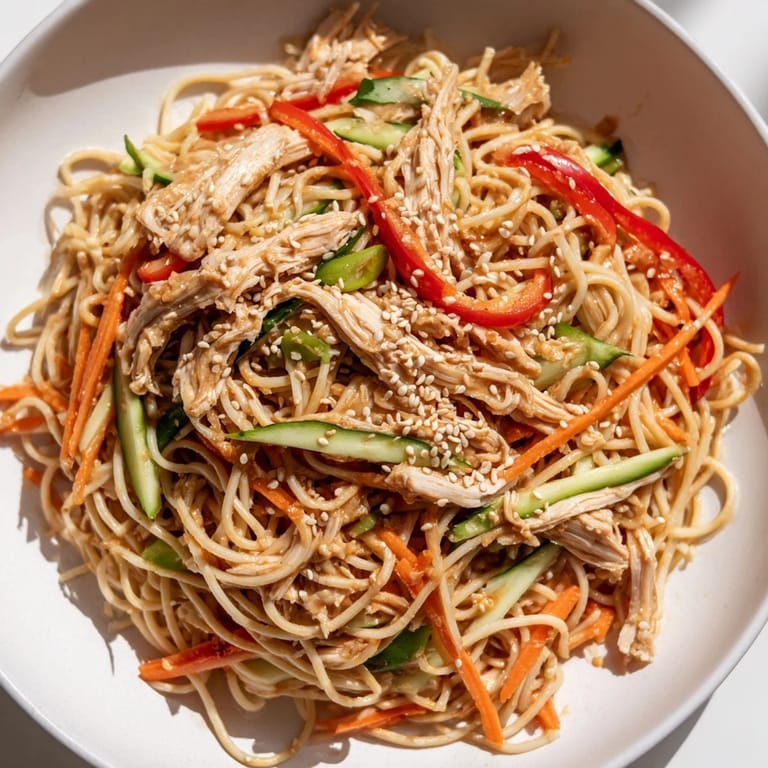
- Scatter the toasted sesame seeds over the top and arrange lime wedges around the plate if you're using them. Serve immediately while everything is cold, or cover and refrigerate for up to 2 hours if you prefer it even chillier.
 Pin
Pin This salad became my answer to those hot summer dinners when nobody wants to cook and everyone's standing around the kitchen looking exhausted. It transformed how I thought about feeding people on difficult weather days—suddenly a cold noodle dish felt celebratory instead of like settling for something quick.
Making This Recipe Your Own
The structure of this salad is flexible enough that you can play around with what you have on hand without losing what makes it work. I've added snap peas for extra crunch, thrown in shredded cabbage when I didn't have cucumber, and even used leftover grilled shrimp instead of chicken when I was feeling fancy. The dressing is the constant that ties everything together, so as long as you nail that combination of sesame oil, soy, vinegar, and that silky peanut butter base, you'll always end up with something delicious.
The Dressing is Everything
I've learned through repetition that this dressing carries the entire personality of the dish, which is why taking 30 seconds to whisk it properly instead of just dumping everything together really matters. The ginger needs to be freshly grated—powdered ginger will make it taste medicinal—and the garlic should be minced fine enough that it distributes evenly instead of leaving bitter chunks. When you're whisking and that peanut butter finally surrenders and becomes this glossy, silky suspension, that's when you know you're about to make something people will remember.
Timing and Storage Tips
The beautiful thing about this salad is that you can prep everything separately and assemble it whenever you're actually hungry, making it perfect for those days when you want dinner ready but don't want to stand over a stove. The noodles can be cooked hours ahead and stored in the fridge, the vegetables can be cut and kept in containers, and the dressing lives happily in a jar for a day or two. Just don't combine everything until you're ready to eat, because the vegetables will release their water and turn the whole thing from crisp and alive to soft and sad.
- Cook noodles in the morning and store them in a container with a light coating of sesame oil to prevent sticking.
- Cut all vegetables an hour or two ahead, but keep them separate in the fridge so they stay crisp and cold.
- Make the dressing up to a day in advance and just shake it up again before using if it's separated.
 Pin
Pin This salad has become my go-to answer for what to make when the weather's warm and I want everyone to leave the table feeling satisfied but not weighed down. There's something deeply comforting about feeding people something cold and fresh that still manages to feel like real food.
Recipe Questions
- → Can I substitute the chicken with a vegetarian option?
Yes, shredded tofu can be used as a protein substitute to maintain the texture and flavors while keeping the dish vegetarian.
- → What noodles work best in this dish?
Thin egg noodles or rice noodles are ideal as they absorb the sesame dressing well without overpowering the other ingredients.
- → How should I store leftovers?
Store in an airtight container in the refrigerator and consume within two days. Toss gently before serving to redistribute the dressing.
- → Is it possible to make this gluten-free?
Yes, use rice noodles and gluten-free soy sauce (tamari) to make the dish suitable for gluten-free diets.
- → What garnishes enhance the flavor?
Toasted sesame seeds add crunch while lime wedges provide a refreshing citrus note that brightens the dish.