 Pin
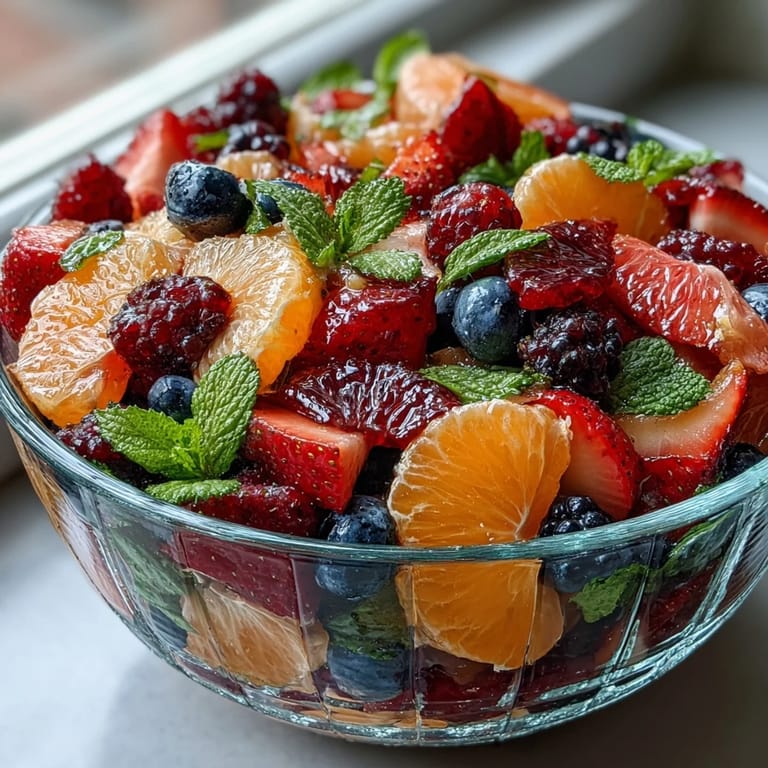
Pin There's something about the first warm Saturday in spring that makes you want to throw open the kitchen windows and fill a bowl with everything bright and alive. I was at the farmers market last April, overwhelmed by the sudden abundance of berries stacked in flats—strawberries so red they looked almost artificial, raspberries still wearing their morning dew—when an older woman next to me mentioned she always paired them with citrus to let the flavors sing rather than compete. That small conversation led to this salad, which somehow became the thing I reach for whenever the season shifts and fresh fruit finally stops tasting like winter storage.
I made this for a Sunday brunch last year when my sister called saying she was bringing her new boyfriend over, and I suddenly panicked about what to serve. Something light but impressive, you know? I threw this together while the coffee was brewing, and watching him go back for thirds while barely making a dent in the bowl made me realize this salad had quietly become my secret weapon for looking like I actually have my life together.
Ingredients
- Large oranges (2): Peeled and segmented—they provide the sunny sweetness that makes this whole salad come alive, and removing the bitter white pith is worth the extra minute it takes.
- Large pink grapefruit (1): Peeled and segmented—the slight bitterness keeps everything balanced and prevents the fruit salad from feeling one-note and cloying.
- Fresh lemon juice (from 1 lemon): This is your secret weapon; it brightens every other flavor and keeps the berries from tasting flat.
- Fresh lime juice (from 1 lime): Adds a subtle tropical note that makes people pause mid-bite and wonder what makes this different from every other fruit salad they've had.
- Fresh strawberries (1 cup), hulled and sliced: Their softness contrasts beautifully with the firmer citrus, and slicing them just before assembly keeps them from releasing too much liquid.
- Fresh blueberries (1 cup): They hold their shape, add little pockets of tartness, and look like tiny jewels scattered through the bowl.
- Fresh raspberries (1 cup): Delicate and perfect, though handle them gently or they'll fall apart into gorgeous pink clouds.
- Fresh blackberries (1 cup): The most robust of the berries, they anchor the salad and add a slight earthiness beneath all the brightness.
- Honey or maple syrup (2 tablespoons): Just enough to enhance natural sweetness without making this feel like dessert masquerading as health food.
- Fresh mint leaves (2 tablespoons), finely sliced: Do not skip this; mint transforms the salad from pretty to extraordinary, and slicing it right before serving keeps it from bruising and turning dark.
- Lemon zest (1 teaspoon): Those tiny flecks carry concentrated flavor that the juice alone can't deliver.
- Lime zest (1 teaspoon): Works alongside the lemon zest to create depth and complexity in what could otherwise be a simple dressing.
Tired of Takeout? 🥡
Get 10 meals you can make faster than delivery arrives. Seriously.
One email. No spam. Unsubscribe anytime.
Instructions
- Prepare your fruit with intention:
- Wash everything first, then gently peel and segment your citrus over a large bowl to catch any juices—don't waste those precious drops. Hull your strawberries, let the blueberries and blackberries roll free, and handle the raspberries like they're made of spun sugar because they absolutely are.
- Build the fruit foundation:
- In your large bowl, combine the citrus segments with all the berries, using a gentle hand as if you're tucking them in rather than tossing them around. You want them mingled but still intact, not bruised.
- Make the dressing sing:
- In a small bowl, whisk together the lemon juice, lime juice, honey, lemon zest, and lime zest until the honey dissolves completely and the mixture smells like concentrated sunshine. This is where the magic happens—the tartness, the sweetness, the fragrance all coming into balance.
- Marry the fruit and dressing:
- Pour the dressing gently over the fruit and use a silicone spatula to fold everything together just two or three times, coating without crushing. You're looking for a light, glossy finish where the juice clings to each piece of fruit.
- Finish with mint and time:
- Scatter the sliced mint over the top and fold once more very gently. Either serve immediately for bright, crisp flavors, or cover and chill for up to two hours if you want the flavors to meld and deepen.
 Pin
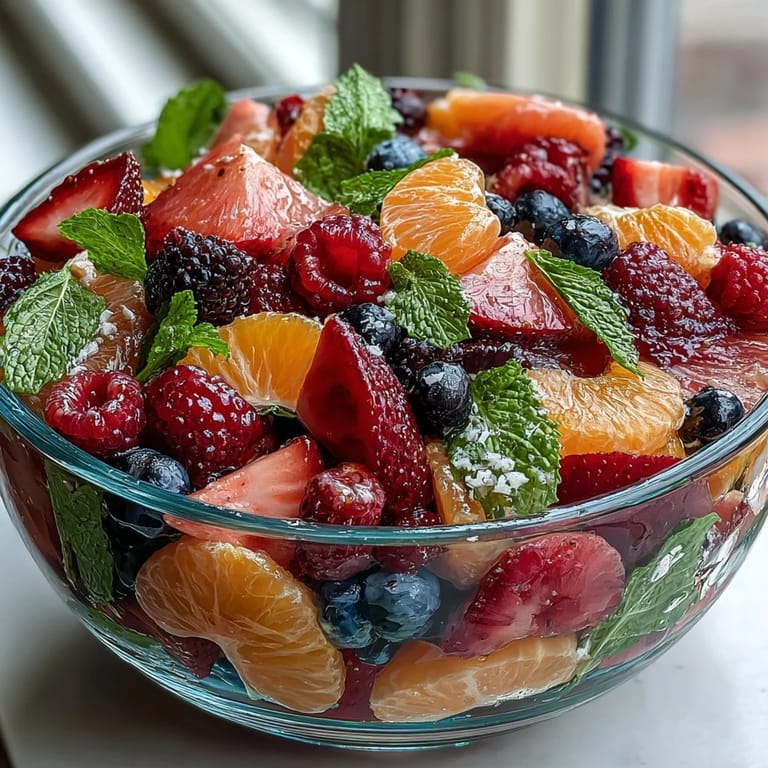
Pin I learned the real purpose of this salad one afternoon when I was feeling stuck and overwhelmed, and making it became a small meditation—the simple repetition of peeling citrus, the good smells, the colors getting brighter as each ingredient joined the bowl. By the time it was finished, the afternoon had shifted, and I realized I'd stopped thinking about my worries somewhere between the grapefruit and the raspberries.
The Magic of Citrus and Berry Combinations
What makes this salad work is understanding that citrus and berries aren't competing—they're completing each other. The citrus provides structure and brightness while the berries add softness and complexity. I used to make salads that felt like a grocery store exploded on a plate, but this one taught me that sometimes fewer ingredients orchestrated well beat abundance scattered carelessly. The key is letting each fruit have a moment to shine while supporting everything else around it.
Sweetener Selection and Your Preferences
The choice between honey and maple syrup matters more than you might expect. Honey brings a floral undertone that plays beautifully with berries, while maple syrup adds earthiness and feels more substantial. I've also used agave nectar when vegan friends were coming over, and it disappears into the dressing without changing the flavor profile—it's more neutral, which sometimes is exactly what you want. Taste as you go; you can always add more sweetener, but you can't take it out, and different fruit batches vary in their natural sugar content.
Serving, Storage, and Seasonal Flexibility
This salad is best served within a few hours of assembly, though it actually improves if you give it thirty minutes to an hour for the flavors to truly know each other. Cold bowls make everything taste brighter, so I chill mine while I'm prepping the fruit. For variations, add pomegranate seeds for crunch and deeper color, or slice kiwi for a different green note that plays differently than mint. You can swap berries depending on what's at peak season in your area—the formula stays the same, only the cast changes.
- Store any leftovers in a covered container for up to two days, though they're best eaten the day you make them.
- Make the dressing separately and toss it with room-temperature fruit right before serving if you're prepping hours in advance.
- Pair this with sparkling wine, crisp white wine, or even champagne for brunches—it bridges sweet and savory perfectly.
 Pin
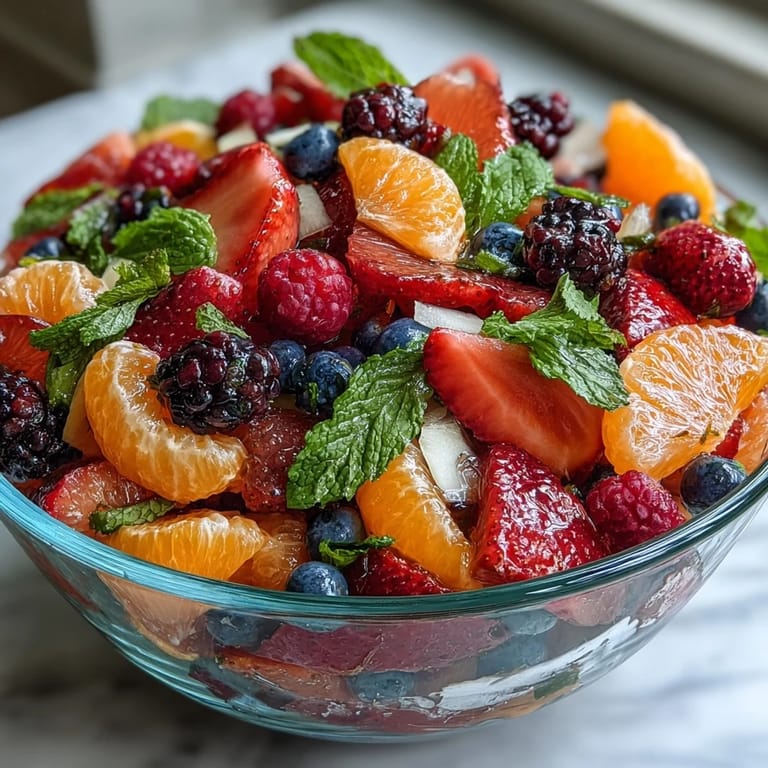
Pin This salad has become my answer to the question of what to bring when someone asks you not to go to too much trouble. It's simple enough to feel effortless, but it tastes like you spent your morning at a farmers market instead of your couch, which is sometimes the best kind of kitchen magic.
Recipe Questions
- → Can I use a different sweetener?
Yes, maple syrup or agave syrup can be used as alternatives to honey for sweetness, especially to keep it vegan friendly.
- → How long can the salad be stored?
The salad can be chilled for up to 2 hours before serving to enhance flavors, but is best enjoyed fresh.
- → What is the best way to prepare the citrus fruits?
Peel and segment the oranges and grapefruit carefully to remove the pith, ensuring a juicy and clean texture without bitterness.
- → Can this dish be made ahead of time?
It’s best to prepare and toss the salad shortly before serving to maintain the fresh texture of the fruits and herbs.
- → Are there any flavor variations you recommend?
Adding pomegranate seeds or sliced kiwi enhances color and adds complementary flavor notes to the salad.