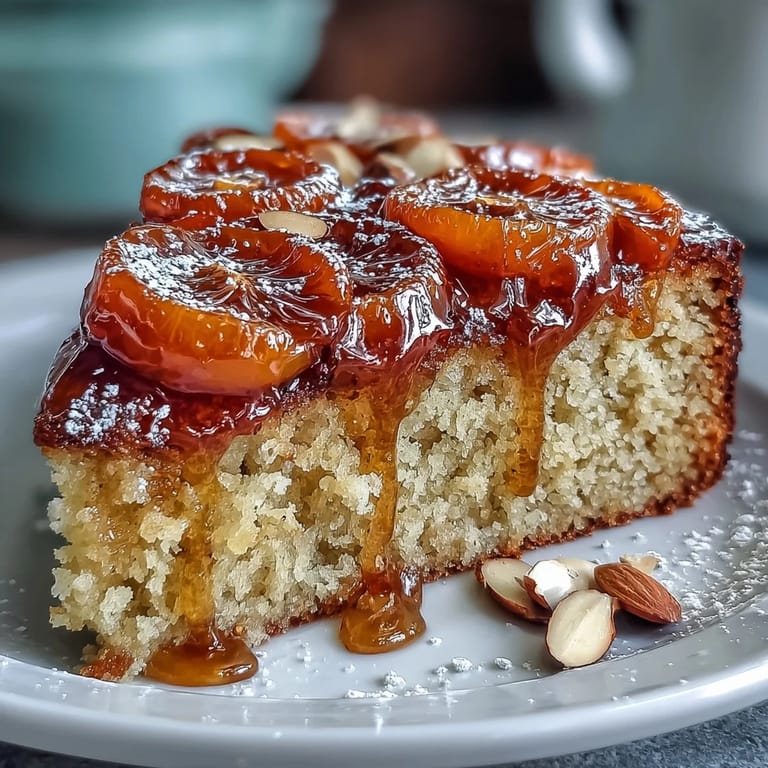
 Pin
Pin One gray afternoon, I found myself staring at a bowl of perfectly candied orange slices, wondering what on earth to do with them. A friend had left them at my kitchen after an experimental jam-making session, and they were too beautiful to waste. That's when I remembered my grandmother's almond cake, the one she'd make with whatever was on hand, and suddenly this cake materialized—a golden, tender thing that transformed those bright citrus rounds into something unforgettable. The first slice told me I'd stumbled onto something special.
I made this cake for a small gathering on a rainy spring evening, and my kitchen filled with the most intoxicating smell—citrus, toasted almonds, olive oil all mingling together. Someone arrived early and caught me pulling it from the oven, and they literally sat down in a kitchen chair and waited for it to cool just to have the first slice. That moment, watching someone decide that warm cake was more important than being on time, made me realize this recipe was worth keeping close.
Ingredients
- Candied oranges (2 medium, thinly sliced): These become the jeweled crown of your cake, so slice them uniform and thin so they candy evenly and look stunning when the cake is inverted.
- Granulated sugar for candying (1 cup): This transforms ordinary orange slices into translucent gems with a gentle sweetness that doesn't overwhelm the cake itself.
- Water (1 cup for syrup): The vehicle that carries flavor into the oranges—use filtered water if you have it, as any off-taste will concentrate during simmering.
- Almond flour (2 cups): The heart of this cake, giving it that tender crumb and subtle nuttiness that makes people ask for the recipe before they've finished eating.
- Gluten-free flour blend (1/2 cup): This lightens the almond flour without making the cake dense; if baking for non-gluten-free folks, regular all-purpose flour works beautifully here too.
- Baking powder (1 1/2 tsp): Your gentle leavening agent—don't skip it or use baking soda as a substitute, or you'll end up with a flat, sad cake.
- Salt (1/4 tsp): A small pinch that amplifies every other flavor in the cake without announcing itself.
- Room temperature eggs (3 large): Cold eggs won't incorporate properly into the batter, so pull them out of the fridge while you're candying the oranges.
- Granulated sugar for batter (3/4 cup): Beat this with the eggs until they're pale and foamy—this step is non-negotiable for a light, airy cake.
- Extra-virgin olive oil (1/2 cup): Use one you actually like tasting, because it's the backbone of this cake's richness and subtle sophistication.
- Greek yogurt (1/2 cup): This adds moisture and tanginess without making the cake feel heavy; it's the secret ingredient nobody ever guesses.
- Orange zest (from 1 orange): Use the finest microplane you can find and only get the colored part—the white pith underneath is bitter and unwelcome.
- Vanilla extract (1 tsp): A whisper of vanilla that rounds out all the citrus and almond notes without stealing the show.
- Powdered sugar for dusting (optional): A light finishing touch that looks intentional and elegant.
- Fresh mint leaves (optional): A pop of green and a cool counterpoint to the warm, sweet cake.
Tired of Takeout? 🥡
Get 10 meals you can make faster than delivery arrives. Seriously.
One email. No spam. Unsubscribe anytime.
Instructions
- Candy your oranges with patience:
- Combine sugar and water in a saucepan over medium heat, stirring until the sugar completely dissolves—you'll hear it shift from granular to smooth, and the syrup will turn clear. Lay your orange slices in a single layer and let them simmer gently for 20 to 25 minutes, turning them every few minutes so they candy evenly and become translucent without browning or hardening into candy.
- Prepare your stage:
- While the oranges are working their magic, preheat your oven to 350°F and ready a 9-inch round pan with grease and a fitted piece of parchment paper on the bottom. This is your insurance policy against a cake that sticks and tears.
- Arrange the beautiful foundation:
- Once the candied oranges have cooled on parchment paper, lay them in overlapping circles on the bottom of your prepared pan. This is the first thing people see when you invert the cake, so take a breath and arrange them like you're plating at a restaurant.
- Build your dry base:
- Whisk together the almond flour, gluten-free flour blend, baking powder, and salt in a large bowl, breaking up any clumps in the almond flour that might have formed. This mixing step aerates the dry ingredients and prevents dense pockets in your finished cake.
- Cream your eggs and sugar into clouds:
- In another bowl, beat the room-temperature eggs with the granulated sugar until the mixture is pale, thick, and ribbony—this takes 2 to 3 minutes and is worth every second because it's building air into your cake. Whisk in the olive oil, Greek yogurt, orange zest, and vanilla extract until the mixture is smooth and homogeneous.
- Marry wet and dry with a gentle hand:
- Pour the wet mixture into the dry ingredients and fold them together with a spatula using as few strokes as possible—the moment you don't see flour streaks anymore, stop. Overmixing activates gluten and makes the cake tough, and nobody wants that.
- Build and bake:
- Pour the batter over the candied oranges, smooth the top with the back of a spoon or spatula, and slide the pan into the oven. Bake for 40 to 45 minutes until a toothpick inserted in the center comes out clean or with just a few moist crumbs clinging to it.
- The moment of truth:
- Let the cake cool in the pan for exactly 10 minutes—this allows the structure to set but the pan still has enough residual heat to help the cake release cleanly. Run a thin knife around the edges, place your serving plate upside-down on top of the pan, and flip with confidence, then carefully peel away the parchment paper to reveal your candied orange crown.
- A final flourish:
- Once the cake reaches room temperature, dust it lightly with powdered sugar and tuck a few mint leaves here and there if you're feeling fancy. Serve slices at room temperature so all the flavors can shine.
 Pin
Pin There's something about serving a cake that looks this elegant and having someone ask, genuinely confused, how you made something so restaurant-quality at home. That moment of quiet pride, when you get to shrug and say it was simpler than they thought, is honestly why I keep making this cake.
Why This Cake Works
Almond flour and olive oil are a partnership that's been tested by Mediterranean home cooks for generations, and for good reason—they create a tender, moist crumb that stays soft for days without needing frosting or heavy glazes. The Greek yogurt adds just enough tang to make every other flavor pop without announcing itself, and the candied oranges provide both visual drama and a sophisticated citrus note that transforms what could be an ordinary almond cake into something you'd order at a proper café. This cake doesn't pretend to be something it's not; it's honest and elegant in equal measure.
Variations Worth Trying
Once you've made this cake once, you'll start seeing possibilities everywhere in your kitchen. Blood oranges make it almost jewel-toned and add a deeper, almost wine-like flavor that's stunning if you're serving it at dinner instead of afternoon tea. Swapping half the Greek yogurt for sour cream creates an even tangier crumb that sings with aged cheeses and afternoon wine, while adding a tablespoon of cardamom or a teaspoon of ground ginger opens up entirely different flavor territories that feel cozy and warm. I once made it with candied lemons instead of oranges on a whim, and it became my go-to for cheese boards and wine tastings.
Storage and Serving Wisdom
This cake is genuinely better on its second day—the flavors settle and deepen, and the texture becomes even more tender as it absorbs the syrup from the candied oranges. Cover it loosely with a kitchen towel or dome and leave it at room temperature for up to two days, or wrap individual slices in parchment and refrigerate for nearly a week if you want to ration it out slowly. Serving it with a dollop of whipped cream or Greek yogurt adds richness without overwhelming the delicate citrus balance, and a small cup of strong coffee or tea is the perfect companion.
- Room temperature slices taste infinitely better than cold ones, so pull it from the fridge about 15 minutes before serving.
- If you're taking this to a gathering, transport it in the pan and flip it onto a cake plate right before slicing—it travels better that way.
- Candied oranges can be made up to a week ahead and stored in a sealed jar with their syrup, so you can bake the actual cake whenever inspiration strikes.
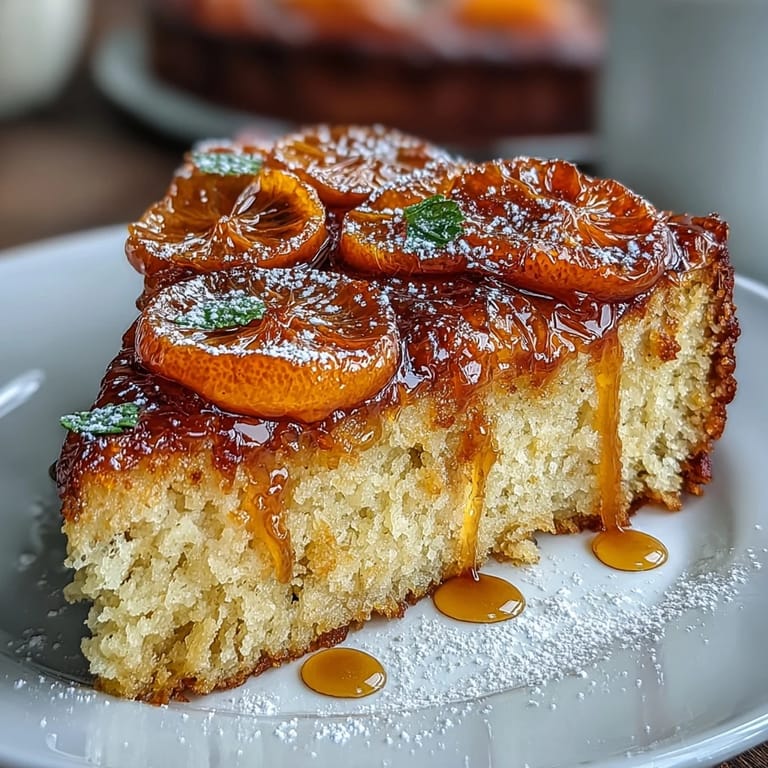 Pin
Pin This cake has a way of becoming a regular in your rotation once you've made it once—it's the kind of thing you'll find yourself baking when you want to feel accomplished without actually working hard. It's deeply satisfying to serve something this beautiful and get to say, honestly, that it took barely an hour from start to finish.
Recipe Questions
- → How do I make the candied oranges?
Simmer thinly sliced oranges in a sugar-water syrup for 20–25 minutes until translucent. Turn occasionally for even cooking and cool on parchment before using.
- → Can I substitute the almond flour?
Almond flour provides moisture and nuttiness, but a gluten-free flour blend or other nut flours could be used, keeping texture in mind.
- → What is the best way to bake this cake evenly?
Preheat the oven to 350°F (175°C) and use a greased 9-inch pan lined with parchment. Bake 40–45 minutes or until a toothpick comes out clean.
- → How can I make this suitable for dairy-free diets?
Replace Greek yogurt with a dairy-free alternative like coconut or almond-based yogurt while maintaining the creamy texture.
- → How should I store leftovers?
Keep the cake covered at room temperature for up to 2 days to retain moistness and flavor.