 Pin
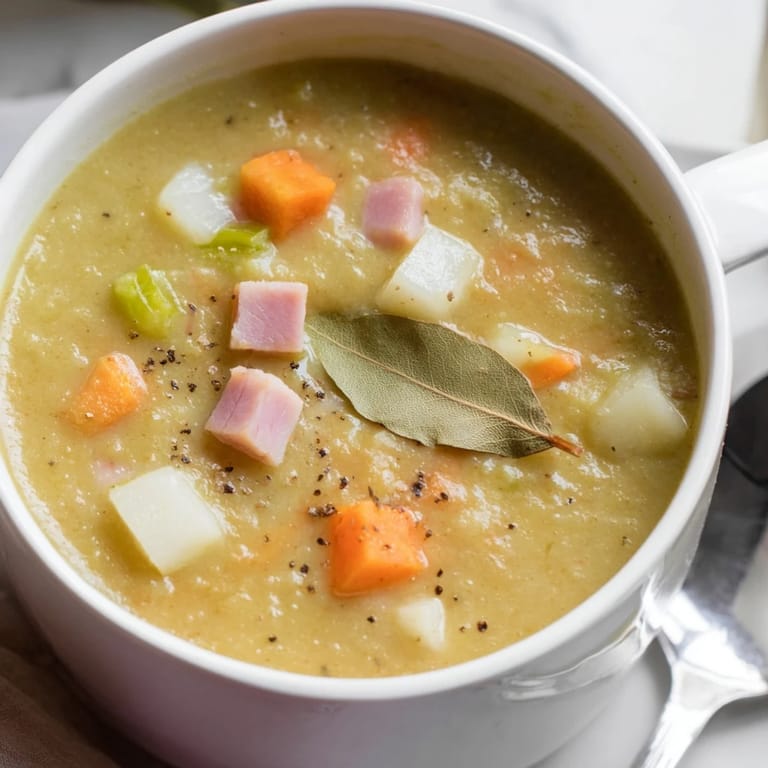
Pin The kitchen window was fogged up completely, and I could barely make out the snow falling outside. My split peas had been sitting in the pantry for months, one of those ingredients I kept buying with good intentions but never actually used. That afternoon, with nowhere to be and a drafty apartment, I finally committed. The house filled with this earthy, comforting smell that made everything feel right with the world.
My roommate walked in from work, snow melting on her coat, and immediately asked what smelled so incredible. We ended up eating it standing up at the counter, too hungry to bother with proper bowls. She still messages me every winter asking for the recipe, and I have to laugh because it is essentially the same one my grandmother used, minus the ham bone she insisted was nonnegotiable.
Ingredients
- 2 cups dried split green peas, rinsed: These little legumes break down beautifully and create that velvety thickness without any help from dairy
- 1 large onion, diced: Sweet yellow onions work best here, they caramelize just enough during the initial sauté
- 2 carrots, peeled and diced: They add natural sweetness and color that cuts through the earthiness
- 2 celery stalks, diced: Essential for that classic soup base flavor everyone recognizes
- 2 garlic cloves, minced: Add these after the vegetables soften so they do not burn and turn bitter
- 1 medium potato, peeled and diced: Yukon Gold works wonders here, adding creaminess without making the soup gluey
- 1 bay leaf: This humble herb adds depth, just remember to fish it out before serving
- 1 teaspoon dried thyme: Fresh is lovely but dried thyme actually holds up better in long simmering soups
- 6 cups vegetable broth: Low sodium broth gives you control over the final seasoning
- 1 tablespoon olive oil: Just enough to sauté the vegetables and start building flavor
- 1 cup diced smoked ham (optional): Adds traditional smoky depth but the soup is wonderfully complete without it
- 1/2 teaspoon black pepper: Freshly cracked makes a noticeable difference here
- Salt to taste: Wait until the end to season since the broth and ham contribute salt
Tired of Takeout? 🥡
Get 10 meals you can make faster than delivery arrives. Seriously.
One email. No spam. Unsubscribe anytime.
Instructions
- Build your flavor foundation:
- Heat olive oil in a large soup pot over medium heat, then add onion, carrots, and celery, sautéing for 5 minutes until softened and fragrant.
- Wake up the garlic:
- Stir in garlic and cook for just 1 minute until fragrant, being careful not to let it brown.
- Bring everything together:
- Add split peas, diced potato, bay leaf, thyme, and broth, plus the ham if you are using it.
- Let it work its magic:
- Bring to a boil, then reduce heat to low, cover, and simmer for 1 hour, stirring occasionally until peas are completely soft and soup has thickened.
- Finish with texture:
- Remove ham bone and bay leaf, then use an immersion blender to puree part of the soup for creaminess while leaving some chunks for interest.
- Season to perfection:
- Add salt and pepper to taste, then serve hot with crusty bread.
 Pin
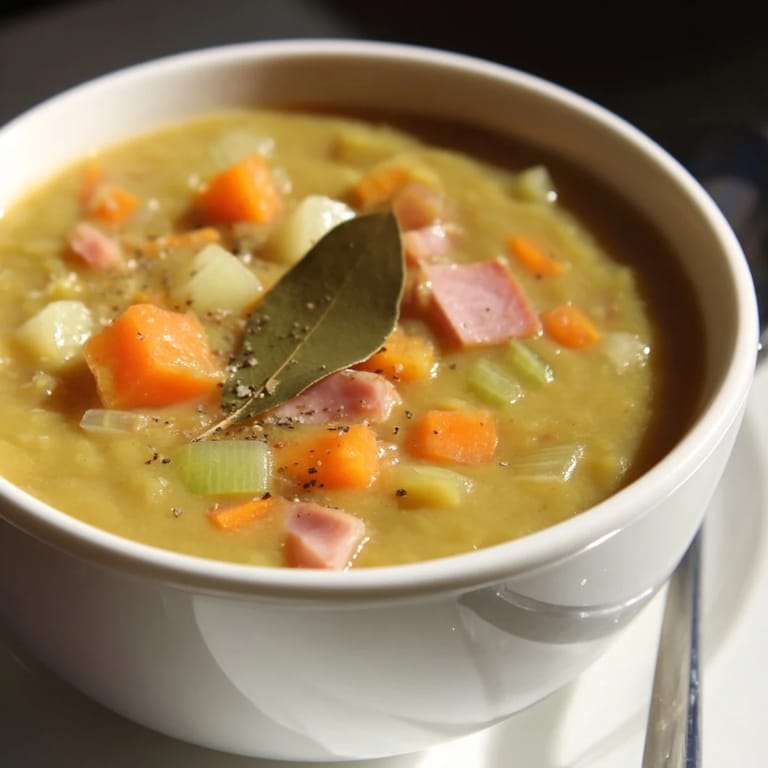
Pin Last January, I made a batch for my neighbor who was recovering from surgery. She sent me a text two days later saying she had eaten nothing else for three days straight and was actually sad when the pot was empty. There is something about this soup that feels like being hugged from the inside out.
Making It Your Own
I have played around with adding a Parmesan rind during simmering, which contributes an incredible savory depth. You could also stir in a handful of spinach or kale in the last five minutes for some green. A splash of vinegar right before serving brightens everything wonderfully.
The Bread Question
A really crusty sourdough or baguette is nonnegotiable in my house. Something about dipping that chewy, charred bread into creamy pea soup just works. Toasted country bread rubbed with raw garlic and olive oil might be even better though.
Perfecting The Texture
Some people like it completely smooth, others prefer chunks. I land somewhere in between, pureeing about three quarters and leaving some texture. If it is too thick, stir in a bit more broth or water. If too thin, let it simmer uncovered for another ten minutes.
- Mashing some potatoes against the side of the pot adds instant creaminess
- A quick splash of cream or coconut milk at the end feels indulgent
- Lemon juice is the secret weapon when soup feels flat
 Pin
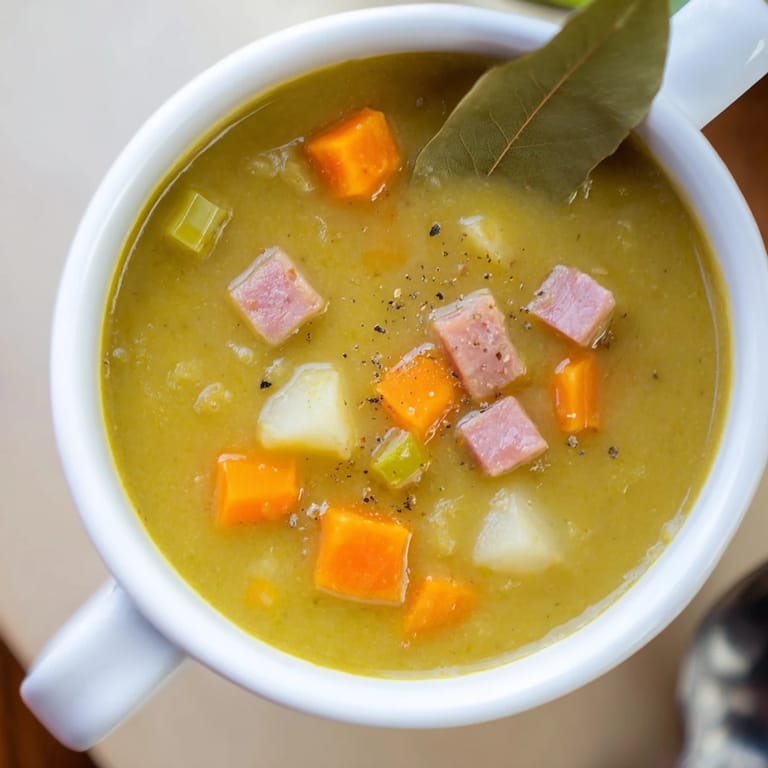
Pin There is a quiet confidence that comes from making something so nourishing from such humble ingredients. Hope it brings you as much comfort as it has brought me.
Recipe Questions
- → Do I need to soak split peas before cooking?
No soaking required. Split peas cook relatively quickly compared to dried beans and will soften perfectly during the 1-hour simmer time.
- → How can I make this vegan?
Simply omit the ham or ham bone and use vegetable broth instead of chicken broth. Add smoked paprika to maintain the smoky flavor element.
- → Why is my soup too thick?
Split pea soup naturally thickens considerably as it cools. Simply add water or additional broth when reheating to reach your desired consistency.
- → Can I freeze this soup?
Absolutely. This soup freezes beautifully for up to 3 months. The texture may become slightly thicker after thawing, so thin with broth when reheating.
- → What's the purpose of blending only part of the soup?
Partial blending creates the best of both worlds—creamy texture from the pureed portion while maintaining some chunky vegetable pieces for heartiness and visual appeal.
- → What bread pairs best with this soup?
Crusty sourdough, French bread, or rustic whole grain bread all work wonderfully. The crusty texture complements the smooth, creamy soup perfectly.