 Pin
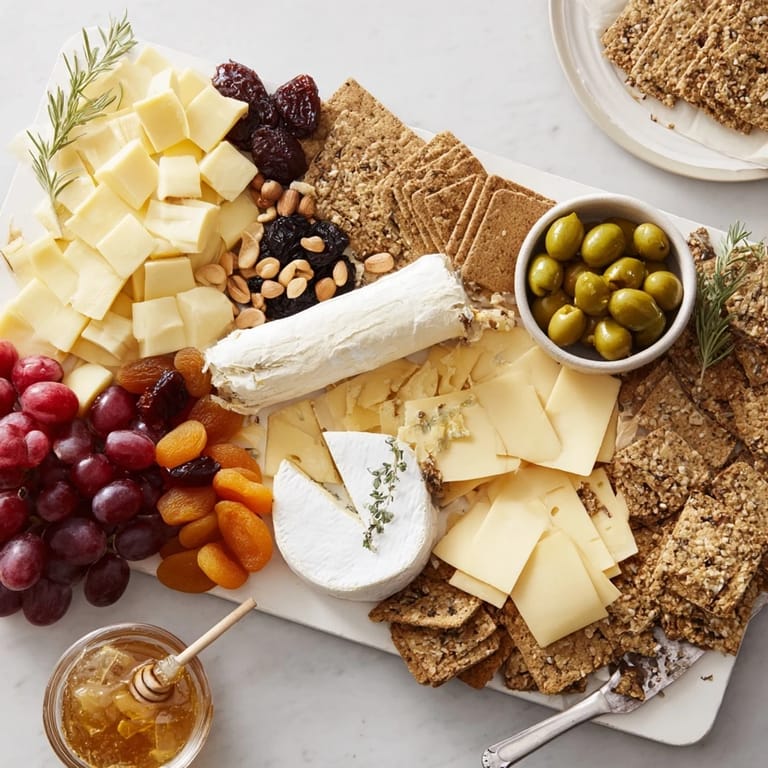
Pin I'll never forget the first time I hosted an open house in my new place. I was nervous about entertaining on a larger scale, worried I'd need to spend hours in the kitchen. Then I discovered the magic of a well-crafted cheese and cracker board—a spread so generous and thoughtfully arranged that guests felt welcomed and celebrated without requiring me to be stuck cooking all evening. It became the centerpiece of that afternoon, a edible invitation that said, "Make yourself at home, help yourself to something delicious."
I learned the true power of this spread when my neighbor stopped by my open house, stood in front of the board for a solid five minutes, and said, "This is fancy." It wasn't fancy at all—just thoughtfully arranged—but that moment taught me that abundance and care in presentation matter more than complexity. By the end of the afternoon, the board had become the gathering point, the place where conversations happened and connections were made over a perfectly aged gouda and a handful of grapes.
Ingredients
- Sharp cheddar block (300g/10 oz): This is your bold anchor flavor—it needs time to warm up and develop its characteristic bite. Always buy blocks, never pre-shredded, as they stay fresher and develop a beautiful glossy sheen when brought to room temperature
- Swiss cheese block (300g/10 oz): The mild, slightly nutty middle ground that appeals to almost everyone. Its natural holes and smooth texture make it visually interesting on a board
- Creamy brie wheel (300g/10 oz): Position this where light hits it—when properly warmed, it becomes almost luminous and invites people to spread it generously on crackers. This is your indulgence on a board
- Blue cheese wedge (200g/7 oz): For the adventurous eaters in your crowd. Keep it on its own small plate to contain any crumbles and prevent them from seasoning everything else on the board
- Gouda block (300g/10 oz): The golden child of cheese boards—creamy enough to enjoy on its own, but complex enough to feel special. Guests reach for this repeatedly
- Herbed goat cheese log (250g/8 oz): Position near the edge of the board for easy slicing. The herbs already integrated mean guests can enjoy it immediately without needing additions
- Whole wheat crackers (250g/9 oz): These hold up well under toppings and provide an earthy base that doesn't compete with delicate cheeses
- Water crackers (250g/9 oz): The refined choice—they're neutral enough to let each cheese shine without distraction
- Seeded multigrain crackers (200g/7 oz): Visual texture and actual crunch. These appeal to guests who want substance and nutrition alongside their cheese
- Thin-cut rye crisps (200g/7 oz): A slightly tangy note that pairs beautifully with creamy cheeses. Their delicate texture makes guests feel they're eating something a bit more sophisticated
- Gluten-free crackers (200g/7 oz, optional): Never assume all your guests can eat wheat. Keeping these separate shows thoughtfulness and ensures they're actually available, not contaminated
- Seedless red grapes (1 cup, washed and clustered): Nature's perfect palate cleanser and color pop. Wash and dry thoroughly hours ahead so they're crisp, then separate into small clusters so guests can grab just what they need
- Green grapes (1 cup, washed and clustered): The cooler-toned counterpart that balances the board's warmth
- Dried apricots (1 cup): Chewy sweetness that bridges the gap between fruit and candy. They provide unexpected pleasure alongside sharp cheeses
- Dried figs, halved (1 cup): More sophisticated than apricots, with a deeper sweetness. Halving them makes them easier to grab and eat
- Mixed nuts—almonds, walnuts, pecans, toasted (1 cup): Always toast them yourself if possible—the flavor difference is remarkable. The toasting brings out oils and deepens the nutty character. Keep these in a contained pile in case someone has an allergy
- Castelvetrano or kalamata olives, drained (1 cup): Keep these in a shallow bowl with a small fork so the brine doesn't seep onto your crackers. Castelvetrano olives are buttery and mild; kalamatas are bold and briny. Choose based on your crowd
- Honey in a small serving jar (½ cup): Drizzled over brie or sharp cheddar, this transforms both into something transcendent. Warm honey tastes sweeter than cold honey, so let it sit on the board
- Fig or apricot preserves in a bowl (½ cup): The bridge between sweet and savory that makes guests close their eyes for a moment when they taste it
- Fresh basil or rosemary sprigs for garnish (½ cup): Tuck these around the board's edges for fragrance and visual life. They signal that you've thought about every detail
Tired of Takeout? 🥡
Get 10 meals you can make faster than delivery arrives. Seriously.
One email. No spam. Unsubscribe anytime.
Instructions
- Set Your Stage:
- Choose your largest, most beautiful serving surface—a wooden board if you have one, as it photographs beautifully and has a naturally welcoming warmth. Wipe it clean with a damp cloth, then dry thoroughly with a fresh kitchen towel. You want the surface to be clean but not wet, as moisture is the enemy of crackers. This simple step takes two minutes but completely changes how the board photographs and feels
- Bring Your Cheeses to Life:
- Remove all your cheese from the refrigerator at least 30 minutes before you expect guests to arrive. Cold cheese tastes like almost nothing—the flavors are locked behind the cold. As it warms, the cheese softens slightly, becomes glossy, and releases its true character. Unwrap everything and let it breathe. This single step is the difference between a cheese board that's adequate and one people remember
- Position Your Cheese Anchors:
- Arrange the largest blocks first—your cheddar, Swiss, and gouda—in a loose triangle or scattered pattern around your board, leaving room between them. Position your brie wheel where it will catch light, perhaps slightly elevated if you have a small pedestal or just positioned to look intentional. Place the blue cheese on a small separate plate or parchment square to contain crumbles. Tuck the goat cheese log near the board's edge where it's easy for guests to access. Lightly score each cheese with a knife—not deep cuts, just gentle guidance showing where guests might naturally cut. Place a separate knife or spreader beside each cheese type. This prevents cross-contamination of flavors and shows your attention to detail
- Build Crackers with Abundance:
- This is where generosity shows. Create overlapping piles of crackers, mixing shapes and textures as you go. Fan them out near each cheese, thinking about which cracker might pair well with which cheese. Don't pack them tightly—stack them loosely so guests can easily grab what they want without causing an avalanche. If you're including gluten-free crackers, place them on a separate, clearly labeled plate nearby to prevent cross-contact with gluten-containing items. As your event progresses and crackers disappear, refresh these piles. Stale crackers are the enemy of a beautiful board
- Scatter Your Accents with Purpose:
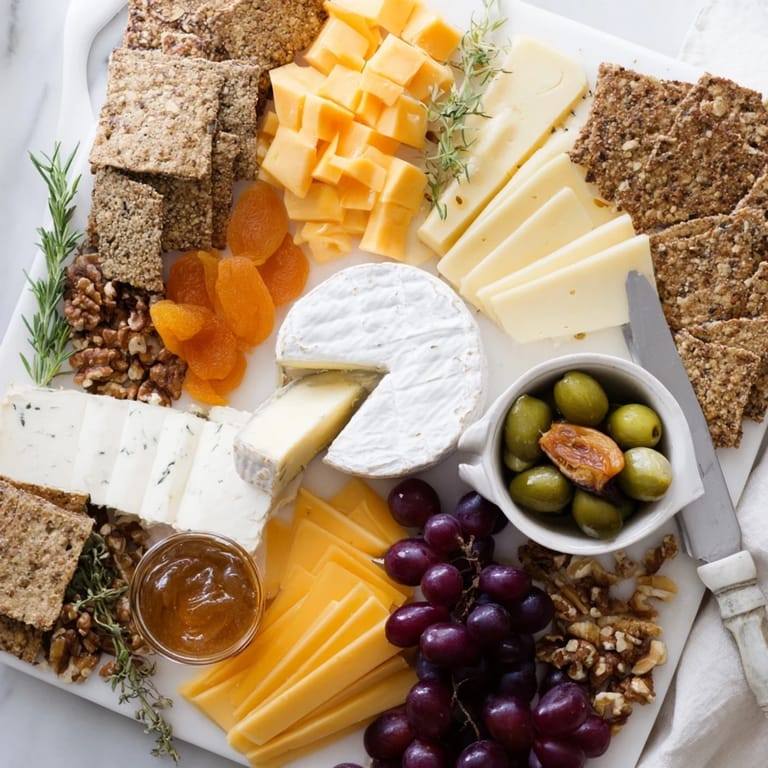
- Now comes the part that makes the board look like an inviting landscape rather than a simple platter. Arrange your grape clusters in small groups among the cheeses, creating pops of color and moisture. Make small mounds of dried apricots and figs, positioning them where they'll be within reach but not overwhelming any single area. Sprinkle toasted nuts into small piles—if you know anyone with nut allergies, keep nuts contained to one area with a clear label or separate serving spoon. Pour your olives into a small bowl with a serving fork so the brine stays contained. Place honey and preserves in their own small jars or bowls with serving spoons. Tuck fresh herb sprigs around the edges and into any gaps, thinking about creating pathways for the eye to wander
- Take Your Final Look:
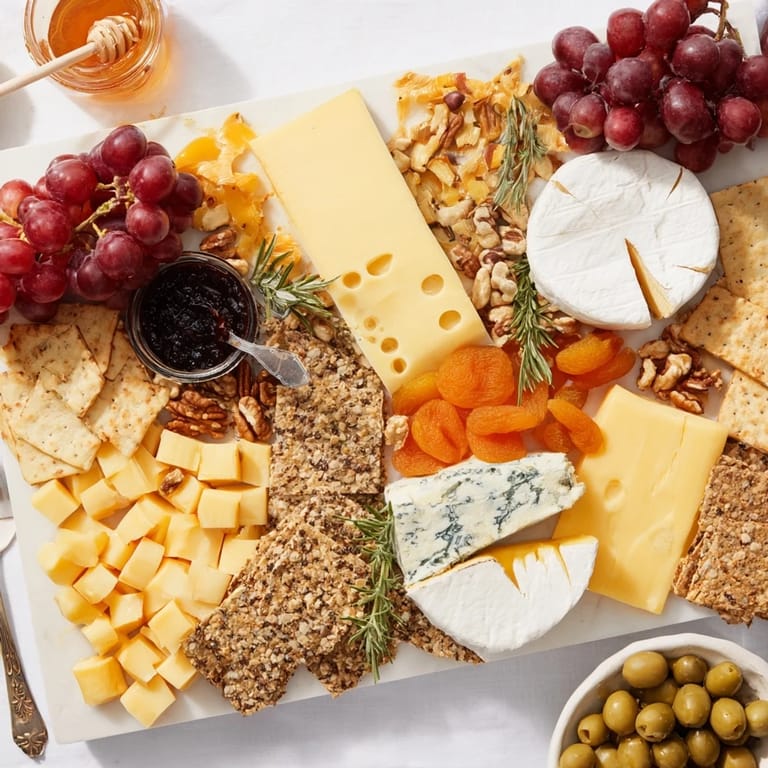
- Step back and observe. The board should look bountiful, with varied colors creating visual interest—deep blues from blue cheese, golden goudas, pale bries, jewel-tone grapes, earthy nuts. There should be no large empty spaces, but also no crowding. It should feel like abundance without chaos. Smell the board—fresh cheese should smell pleasant and dairy-rich; any sharp, unpleasant, or fermented odors beyond normal cheese funk suggest something has gone off. Run your fingers across a cracker; it should be crisp and snap slightly under pressure, not soft or chewy. Replace any crackers that feel stale
- Prepare for Your Guests:
- Arrange small plates, napkins, and small cheese knives or spreaders nearby so guests can make their selections independently. Set out small tongs or forks for particularly moist items like olives or grapes. Once guests arrive, position yourself nearby to greet them, to replenish crackers as needed, to ensure utensils stay clean and aren't used across multiple cheeses, and to ensure everything stays at a comfortable temperature. After about four hours, begin putting perishable items away, as food safety matters
 Pin
Pin There's a particular moment I've noticed happens at nearly every gathering I host with a board like this: someone will stand in front of it, often a person who initially seemed rushed or stressed, and they'll pause. They'll look at all the choices, feel the permission to simply enjoy something beautiful without performance or formality, and they'll relax. That moment—when food becomes less about eating and more about feeling welcomed—is when I know the board has succeeded.
Understanding Cheese Selection
A great board isn't about having the fanciest cheeses—it's about understanding balance. You want variety in texture (creamy, crumbly, firm), flavor intensity (mild, sharp, tangy), and color (pale, golden, blue-veined). The sharp cheddar gives you boldness; the brie gives you indulgence; the Swiss gives you approachability; the blue gives you adventure; the gouda gives you sophistication; the goat cheese gives you earthiness. Together, they tell a story. When planning a board, think about what your guests might enjoy, but don't be afraid to include something slightly unexpected. Often, that's the cheese someone discovers and loves, the one they remember and ask about later.
The Art of Cracker Pairing
Not all crackers are created equal when it comes to cheese pairing. Delicate water crackers disappear alongside sharp cheddar, letting the cheese be the star. Hearty whole wheat crackers stand up to creamy brie without getting lost. Rye crisps complement mild Swiss beautifully. The seeded multigrain option appeals to guests who want texture and nutrition. By offering variety, you're not just being generous—you're ensuring that every guest finds their perfect combination. This is also where you show care for those with dietary restrictions. Gluten-free guests often feel an afterthought at gatherings, so having real, good gluten-free crackers on a separate, clearly labeled plate sends a message: you matter here, and your needs were planned for.
Creating Visual Magic
The difference between a serviceable cheese board and one that makes people stop and admire it is intention in arrangement. Think in color groups, texture contrast, and negative space. The cool tones of blue cheese and green grapes balance the warm golds of cheddar and gouda. Soft cheeses are placed near crispy crackers. Matte-finished cheeses are positioned where they won't be overshadowed by shiny olives or glossy grapes. Herb sprigs tucked around the edges create a garden-like quality that signals this was made with care. You're not arranging food—you're creating an edible still life that happens to be delicious.
- Use odd numbers when grouping items (three grape clusters looks more natural than four)
- Create pathways for the eye by alternating colors and textures so no two similar items sit directly adjacent
- Place your most beautiful cheese where it catches light—brie with its pale, creamy surface looks stunning when slightly elevated or positioned near a window
 Pin
Pin A good cheese board is an act of hospitality that says, "I'm glad you're here, help yourself to something delicious, and linger as long as you'd like." That generosity, expressed through thoughtfully chosen cheeses, abundant crackers, and beautiful arrangement, creates an atmosphere where guests feel welcomed and celebrated. That's the real magic of this spread.
Recipe Questions
- → Why should cheeses be at room temperature before serving?
Allowing cheeses to rest at room temperature for about 30 minutes enhances their flavors and texture, making them easier to slice and more enjoyable to eat.
- → How can I keep crackers crispy during the event?
Place crackers loosely in piles to prevent breakage and store extras in sealed containers or bags to maintain their crispness throughout the gathering.
- → What are good accompaniments for a cheese and cracker board?
Fresh grapes, dried apricots and figs, mixed nuts, olives, honey, preserves, and fresh herbs add color, texture, and flavor contrast to complement the cheeses and crackers.
- → How should I arrange the cheeses on the board?
Position larger cheese blocks spaced evenly, place softer cheeses like brie centrally, and include separate knives for each type to guide guests in serving.
- → Can this spread accommodate dietary restrictions?
Yes, including gluten-free crackers on a separate plate with clear labeling helps accommodate guests with dietary needs without cross-contact.