 Pin
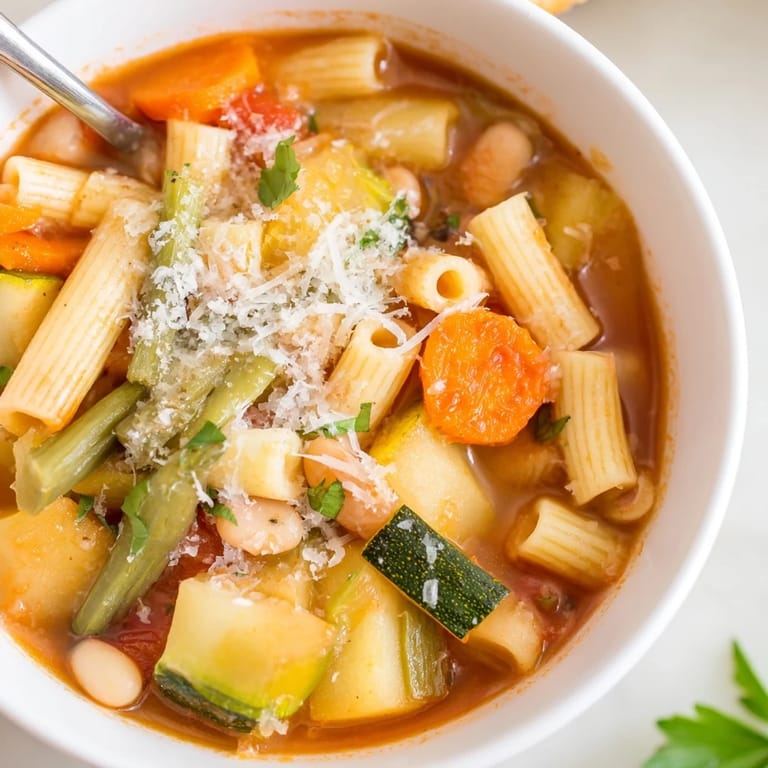
Pin My tiny apartment kitchen smelled absolutely divine when I first attempted minestrone on a gray Sunday afternoon. I had no Italian grandmother to guide me, just a craving for something that felt like a hug in a bowl. The vegetables were slightly wilted from sitting in my crisper drawer too long, which turned out to be perfect. That soup taught me that humble ingredients can transform into something extraordinary with a little patience and the right herbs.
Last winter, my neighbor Sarah stopped by while I had a pot bubbling away on the stove. She ended up staying for hours, bowl after bowl, as we watched snow fall outside the window. That afternoon convinced me that minestrone isnt just soup, its an invitation to slow down and connect.
Ingredients
- Olive oil: Creates the foundation and carries all the herbal flavors beautifully
- Onion and garlic: Dont rush these, they build the aromatic base that makes the house smell amazing
- Carrots and celery: These classic aromatics add sweetness and depth
- Zucchini and potato: The potato naturally thickens the broth while zucchini adds freshness
- Green beans: Bring a lovely crunch and bright color to every spoonful
- Canned diced tomatoes: Use the juices, theyre packed with flavor and acidity
- Vegetable broth and water: This combination keeps the soup from becoming too heavy or salty
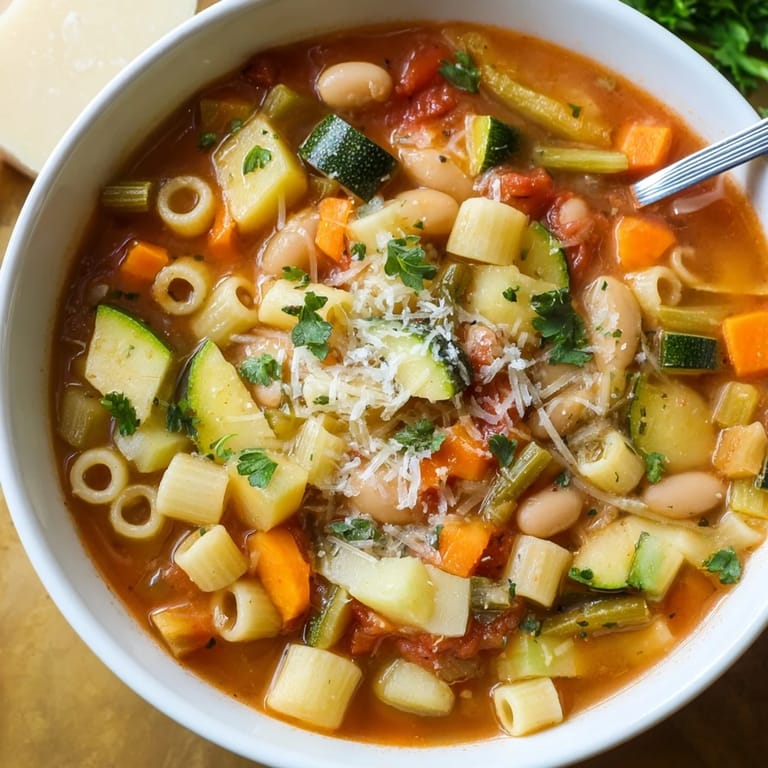
- Cannellini beans: Creamy and mild, they make this soup genuinely satisfying
- Small pasta: Ditalini or elbows are traditional but any tiny shape works wonderfully
- Dried oregano and basil: These dried herbs bloom in the hot oil, releasing their essential oils
- Bay leaf: The secret ingredient that adds subtle depth to the broth
- Fresh parsley and basil: Add these at the end to wake up all the flavors
- Parmesan cheese: Optional but transforms it into something utterly luxurious
Tired of Takeout? 🥡
Get 10 meals you can make faster than delivery arrives. Seriously.
One email. No spam. Unsubscribe anytime.
Instructions
- Build your flavor base:
- Warm the olive oil in your largest pot over medium heat, then add the onion and garlic, letting them soften and become fragrant for about 2 to 3 minutes. You want them translucent, not browned.
- Add the hardy vegetables:
- Toss in the carrots, celery, zucchini, potato, and green beans, stirring to coat everything in that infused oil. Let them sauté for 5 to 6 minutes until they start to soften and smell wonderful.
- Create the broth:
- Pour in the diced tomatoes with all their juices, followed by the vegetable broth and water. Add your dried herbs and bay leaf, then bring everything to a gentle boil.
- Let it simmer:
- Reduce the heat, cover the pot, and let it bubble away for 15 minutes. The vegetables should be getting tender and the broth will be developing real character.
- Add the heart:
- Stir in the cannellini beans and pasta, then simmer uncovered for another 10 to 12 minutes. Taste the pasta to make sure its cooked through but still has a little bite.
- Finish with fresh herbs:
- Fish out and discard the bay leaf, then stir in the fresh parsley and basil. Give it a taste and adjust the salt and pepper until it sings.
- Serve it up:
- Ladle the steaming soup into bowls and offer Parmesan at the table. Watch people go quiet for that first perfect spoonful.
 Pin
Pin My friend Marco from Florence told me that every Italian household has their own version, and the secret ingredient is really just time. That small piece of wisdom changed how I approach soup making entirely.
Making It Your Own
The beauty of minestrone lies in its adaptability. In spring, I love adding fresh peas and asparagus. Fall calls for butternut squash and kale. Winter welcomes cabbage and extra beans. The only rule is using what looks fresh and beautiful at the market.
The Bread Question
Some days I serve this with crusty bread rubbed with raw garlic and olive oil. Other times I toast thick slices and float them right in the bowl like a miniature French onion situation. Both ways are absolutely correct.
Leftovers Love
This soup keeps beautifully in the refrigerator for up to five days and freezes well for months. I actually prefer it on day two or three, when all the flavors have had time to really get to know each other. Just keep in mind that the pasta will continue to soften.
- Store leftovers in airtight containers, leaving some room at the top for expansion
- When reheating, add a splash of water or broth to loosen it up
- Consider cooking pasta separately and adding it to individual portions if you plan to freeze portions
 Pin
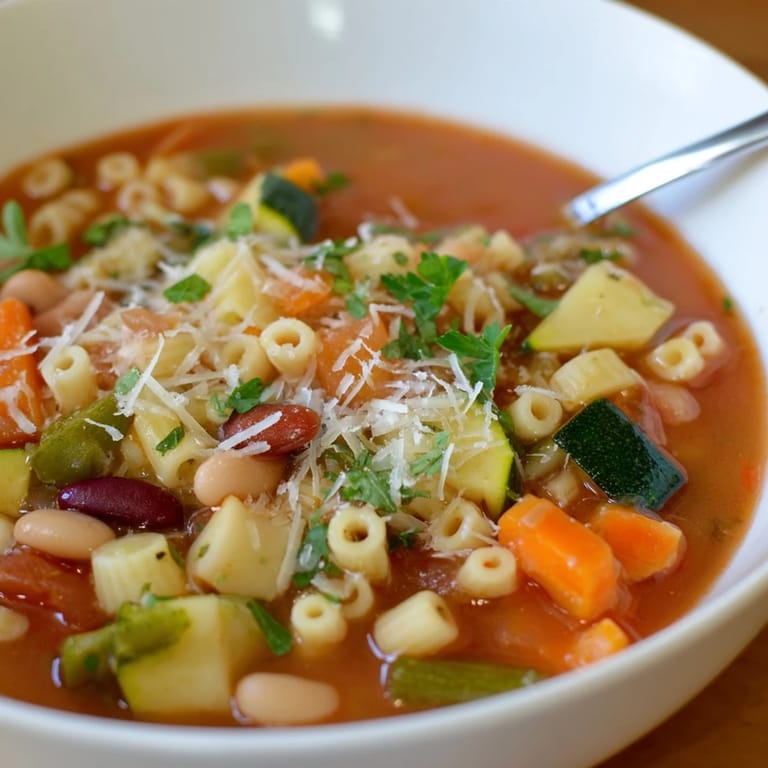
Pin There is something profoundly comforting about a pot of minestrone simmering on the stove. It is more than soup, it is edible proof that simple ingredients, treated with care, can feed us in ways that go far beyond nutrition.
Recipe Questions
- → What vegetables work best in minestrone?
Traditional minestrone includes carrots, celery, zucchini, potatoes, and green beans. You can adapt based on seasonality—try spinach, kale, or cabbage in winter, or fresh summer vegetables when available.
- → Can I make minestrone soup vegan?
Yes! Simply omit the Parmesan garnish or use a plant-based alternative. The soup base relies on olive oil and vegetables, making it naturally dairy-free except for the optional cheese topping.
- → What pasta should I use?
Small pasta shapes like ditalini, elbow macaroni, shells, or tubetti work perfectly. They hold their shape during simmering and are easy to scoop up with each spoonful of broth and vegetables.
- → How long does minestrone keep?
Stored in an airtight container, minestrone keeps for 4-5 days in the refrigerator. The flavors often improve overnight. You can also freeze it for up to 3 months, though the pasta may soften slightly.
- → Can I add protein to make it heartier?
Absolutely! Consider adding pancetta or bacon with the onions for depth. Extra beans, lentils, or even shredded chicken can boost protein while maintaining the soup's comforting character.
- → What should I serve with minestrone?
Crusty Italian bread is essential for soaking up the flavorful broth. A glass of Chianti or other Italian red wine complements the tomatoes and herbs beautifully. A simple green salad rounds out the meal.