 Pin
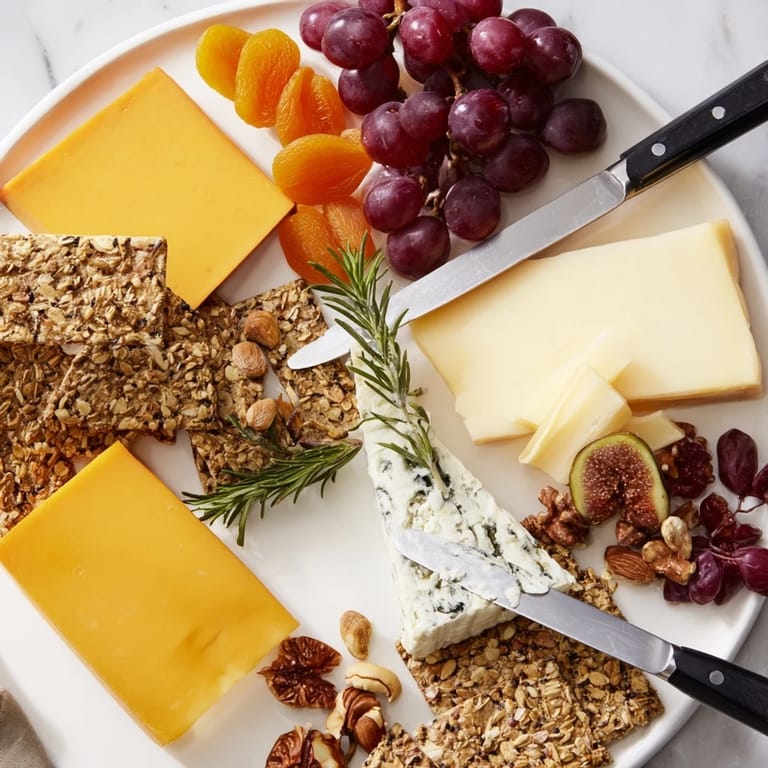
Pin I'll never forget the Saturday I first hosted an open house in my new place. My hands were shaking as I arranged a cheese board for the first time—was it fancy enough? Would people think it was too simple? But as guests arrived and naturally gravitated toward the board, clustering around it with genuine delight, I realized something magical happens when you give people beautiful things to share. That day taught me that the best entertaining isn't about perfection; it's about creating a table that says, "Help yourself, stay awhile, we're all friends here." Now, whenever I'm hosting, I think back to that nervous energy and smile, because I know a well-built cheese and cracker board does half the work of hospitality for you.
My sister once told me that watching people graze is like watching a nature documentary—everyone has their rhythm, their preferences, their moment of pure joy when they find that exact combination they didn't know they were looking for. When I set out a board like this, I'm not just offering food; I'm creating a stage for those small, genuine moments of pleasure that make people feel cared for.
Ingredients
- Sharp cheddar block (300 g): This is your bold anchor—firm, sliceable, and immediately recognizable. It gives the board confidence.
- Swiss cheese block (300 g): The subtle sweetness here bridges between sharp and creamy, and those holes? They're beautiful on a board and signal quality.
- Creamy brie wheel (300 g): This is the luxe moment—position it where people see it first. Room temperature, it becomes almost spreadable perfection.
- Blue cheese wedge (200 g): Not everyone wants it, but everyone respects its presence. It's the sophisticated guest at the party.
- Gouda block (300 g): Buttery, approachable, and slightly sweet—this cheese makes people smile without thinking.
- Herbed goat cheese log (250 g): The unexpected tender moment. Fresh, bright, and it catches the light beautifully on a board.
- Whole wheat crackers (250 g): Hearty and substantial—these carry heavier cheeses like champions.
- Water crackers (250 g): The purist's choice. They get out of the way and let cheese shine.
- Seeded multigrain crackers (200 g): Visual texture and a hint of nuttiness that complements everything.
- Thin-cut rye crisps (200 g): These bring earthiness and drama—they're unexpectedly good with sweet preserves.
- Gluten-free crackers (200 g, optional): A thoughtful touch that says everyone matters. Keep them separate.
- Red grapes in small clusters (1 cup): They're little flavor palate cleansers and they glow on a board like jewels.
- Green grapes in small clusters (1 cup): Contrast and a subtle tartness that wakes up the richness of brie.
- Dried apricots (1 cup): Chewy, golden, and they bridge the gap between sweet and savory beautifully.
- Dried figs, halved (1 cup): These are my secret weapon—they're unexpectedly complex and people always ask about them.
- Mixed toasted nuts (1 cup): Almonds, walnuts, pecans—toast them yourself if you can. The aroma alone says "I care."
- Castelvetrano or kalamata olives (1 cup): The green ones are buttery and mild; the black ones are bold and briny. Both deserve a seat at this table.
- Honey in a small serving jar (1/2 cup): Drizzled over brie, it becomes transcendent. This is the moment people remember.
- Fig or apricot preserves in a bowl (1/2 cup): Tangy, sweet, and it adds that restaurant-quality touch without fuss.
- Fresh basil or rosemary sprigs (1/2 cup): These aren't just garnish—they perfume the entire board and remind people that beauty matters.
Tired of Takeout? 🥡
Get 10 meals you can make faster than delivery arrives. Seriously.
One email. No spam. Unsubscribe anytime.
Instructions
- Gather your stage:
- Find your board—marble, wood, slate, or even a collection of pretty platters work beautifully. Wipe it clean with a damp cloth and dry it completely. You're not just cleaning; you're preparing a canvas for something lovely.
- Wake up your cheeses:
- Pull all your cheeses out 30 minutes before guests arrive. I know this feels counterintuitive when you're rushing, but this is the most important step. Cold cheese is dense, muted, almost sad. Room-temperature cheese is soft, yielding, full of flavor and personality. Unwrap them and let them breathe on the board as you arrange everything else.
- Place your cheese anchors:
- Start with your largest blocks—cheddar, Swiss, gouda—placed at generous intervals around the board. Think of them as the main characters in your story. Position the brie wheel prominently, maybe slightly elevated or in the center. It's the star. Place the blue cheese on a small plate or parchment; it's precious and slightly messy, so give it its own space. Nestle the goat cheese near an edge where it's easy to access.
- Score and arm each cheese:
- Take a sharp knife and lightly score each cheese block in a couple of places—not cutting deep, just showing guests where they might slice. Place a cheese knife or spreader beside each type. This small gesture is remarkable; it shows you've thought about making things easy for people.
- Build your cracker landscape:
- Create generous, overlapping piles near each cheese. Fan them out, let them tumble slightly. Tight packing is the enemy of a beautiful board and of crispness. Mix your varieties—whole wheat next to water crackers next to seeded multigrain. The visual interest matters. If you have gluten-free crackers, give them a separate, clearly labeled spot with a dedicated serving area.
- Scatter your colors and accents:
- Now comes the fun part—the moments that make a board sing. Cluster your grapes in small groups, creating pockets of color. Mound your dried fruit in small collections so people can see what they're getting. Scatter your toasted nuts in strategic spots—they catch light and look generous. Place your olives in a small bowl with a serving fork or spoon; olives in brine can weep onto crackers if you're not careful. Set your honey and preserves in their jars with spoons ready.
- Tuck in your greenery:
- This is the magic trick nobody expects. Weave fresh basil or rosemary sprigs around your board. Not fancy—just threaded between items, softening the arrangement and filling the whole spread with fragrance. Your guests will smell it before they even taste it, and that sensory combination is what they'll remember.
- Step back and breathe:
- Before anyone arrives, look at your board from a few feet away. Does it look bountiful? Inviting? Are there any awkward gaps or oddly empty corners? Fill them. Does it smell fresh and dairy-rich and herbal? If you smell anything sharp, sour, or off, trust that instinct and replace it. Touch a few crackers—they should be crisp, with that satisfying snap. If they're soft or chewy, they've been exposed to humidity; replace them.
- Set up for grace and ease:
- Arrange small plates, napkins, and extra cheese knives within easy reach. Put small forks and tongs nearby. During the event, keep an eye on your board—replenish crackers as they disappear, refresh any preserves that look depleted, and monitor the temperature. If anything sits at room temperature for more than 4 hours, gently retire it. Your board should always look like it's been tended with care.
 Pin
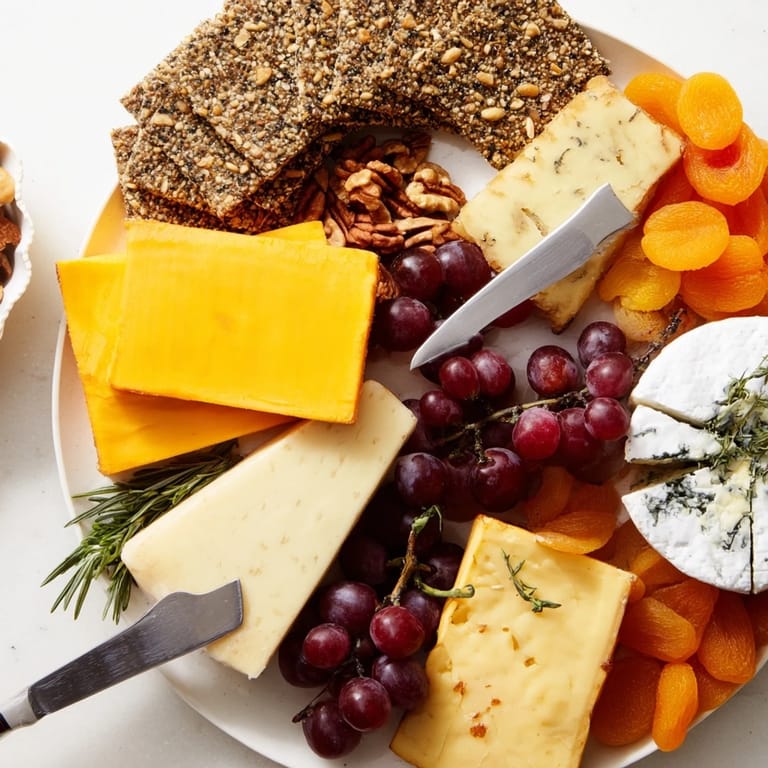
Pin I remember my friend Sarah arriving early to my housewarming and just standing in front of the cheese board, taking a photo. Later, she told me it was the most inviting thing about my new home—not the furniture or the paint, but that moment when I'd said, "Please, sit, eat, stay." That's what a well-made board does. It speaks in the language of abundance and ease.
The Art of Cheese Selection
Building a board isn't about having the fanciest cheeses; it's about balance and contrast. You want something sharp to wake up the palate, something creamy to satisfy, something crumbly for texture, and something mild for those who want comfort. I think about it the way a musician thinks about a chord—each cheese plays a different note, and together they create something more interesting than any single one could be alone. The trick is tasting as you build. A sharp cheddar paired with sweet preserves is different from that same cheddar next to honey. These small experiments are how you learn what your guests will love.
Creating Visual Drama Without Effort
The secret to a board that looks like you spent hours on it when you spent 30 minutes? Color, height variation, and letting things overlap slightly. Think of how a florist arranges flowers—not in neat rows, but in natural clusters and layers. Use the natural colors of your ingredients: the gold of dried apricots, the deep purple of grapes, the creamy pale of goat cheese, the rich amber of honey. Vary heights by placing some items on the board itself and some on small plates or in bowls. Let crackers fan and tumble. The goal is for someone to look at it and think, "This person put real thought into this," not "This person spent all day cooking."
Serving with Confidence and Grace
The moment your guests arrive, your only job is to point them toward the board and then get out of the way. Don't hover or explain each cheese—let people discover. If someone asks about something, tell them what you know with warmth, not like you're reading from an encyclopedia. The beauty of a grazing board is that it's self-service entertainment. People feel like they're making their own adventure, which makes them happier and also means you're not constantly refilling plates.
- Monitor your board throughout the evening, refreshing crackers and checking that everything still looks inviting and abundant.
- If a cheese looks depleted or broken, gently tidy it or replace it rather than leaving odd crumbs and gaps.
- Keep an eye on timing—after 4 hours, retire the board to keep everything fresh and safe.
 Pin
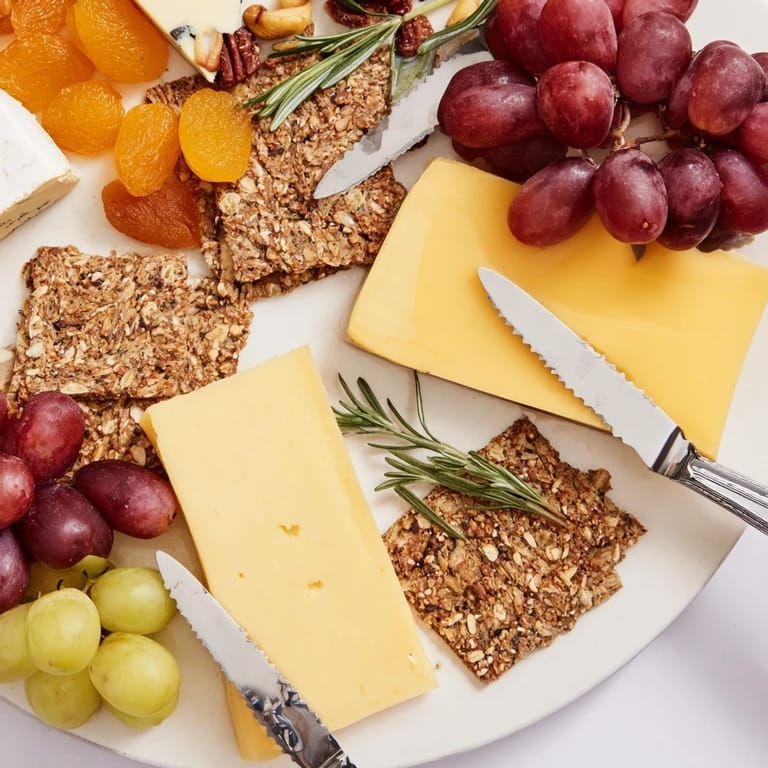
Pin A cheese and cracker board is more than appetizer logistics; it's an invitation to slow down and enjoy each other. In a world that often feels rushed, creating a table where people can linger, taste, explore, and connect is a gift you give without saying a word.
Recipe Questions
- → How should I prepare the cheeses before displaying?
Allow cheeses to rest at room temperature for about 30 minutes to enhance flavor and improve slicing texture.
- → What types of crackers work best on the board?
A mix of whole wheat, multigrain, water crackers, rye crisps, and gluten-free options creates texture variety and caters to different preferences.
- → How can I keep the board looking fresh during the event?
Replenish crackers as needed, use clean utensils for each cheese, and monitor temperature to avoid spoilage.
- → What accents complement the cheeses and crackers?
Fresh grapes, dried apricots and figs, toasted mixed nuts, olives, honey, preserves, and herbs add color, flavor, and variety.
- → Are there allergy considerations to keep in mind?
Clearly label gluten-free crackers separately and keep nuts contained; provide alternatives for guests with dietary restrictions.
- → How should leftovers be stored?
Store cheeses in airtight containers in the fridge up to 5 days; keep crackers sealed to maintain crispness, avoid freezing cheeses.