 Pin
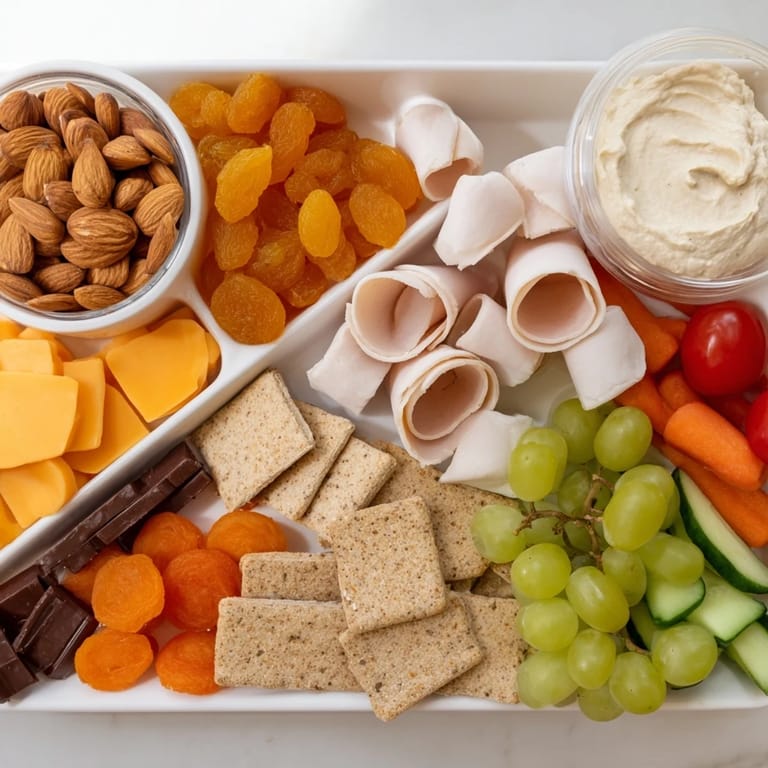
Pin I remember the first time I packed a road trip snack box for my friends—it was a lazy Sunday afternoon, and I was determined to create something that would make our drive feel like a celebration rather than just another car ride. I'd been inspired by those beautiful bento boxes I'd seen at markets, thinking: why couldn't snacking on the road be just as thoughtfully arranged? That first attempt, with its neat little compartments of roasted almonds, cheese cubes, and vibrant carrots, transformed our conversation. Instead of stopping at gas stations for mediocre snacks, we sat in a scenic overlook, sharing from this little box like it was the most exciting part of our trip. That moment taught me that food isn't just fuel—it's an experience, and even the simplest snack box can become a memory when it's made with intention.
I'll never forget packing these boxes for my sister's cross-country move. She was driving alone for fourteen hours, and I wanted to make sure she had comfort food that would feel like home. As she pulled away, she popped a cube of cheese and a handful of almonds into her mouth at the first rest stop, and texted me a photo of the box with a heart emoji. That box somehow made the journey feel less lonely for her, and I realized that feeding someone—even in the smallest way—is a love language I hadn't fully appreciated before.
Ingredients
- Roasted almonds: These are your protein anchor and the foundation of the whole box. I learned to always choose unsalted or lightly salted—it lets you taste the actual nut, and it pairs beautifully with sweet grapes and tart dried apricots without overwhelming your palate
- Cheese cubes: Sharp cheddar or creamy gouda work best because they hold their shape during travel and don't sweat all over your crackers. Cut them the day of to keep them fresh, and keep them as far from moisture as possible
- Turkey or chicken breast slices, rolled: The protein that makes this feel substantial and grown-up. I roll mine to save space and because rolled meat just looks nicer nestled next to everything else. If you skip this for vegetarian, the box still sings
- Whole grain crackers: These are the glue between savory and sweet—pick quality ones that won't shatter into crumbs. I discovered that keeping crackers in their own compartment is non-negotiable; they're flavor absorbers otherwise
- Seedless grapes: These bring a burst of natural sweetness and moisture that balances the salty almonds. Always wash and dry them thoroughly—waterlogged grapes are a disappointment
- Baby carrots: Sweet, crunchy, and they stay firm for hours if you keep them dry. I peel them fresh because there's something about that almost-translucent quality that feels more refined
- Cucumber slices: Pat these completely dry before packing—I can't stress this enough. They're refreshing and add volume without heaviness, but wet cucumber ruins surrounding snacks
- Cherry tomatoes: Washed and thoroughly dried, these burst with flavor and color. They're the jewels of your box visually
- Dried apricots: These bridge the gap between savory and sweet beautifully. Their natural tanginess makes them interesting next to creamy cheese
- Dark chocolate squares: Individually wrapped if you can find them—this detail matters because it keeps them clean and makes them feel like little gifts. I discovered that keeping chocolate away from heat is everything
- Hummus: In a leak-proof container, this is your vegetable's best friend and adds protein. Make sure it's in a proper sealed container or you'll have hummus perfume in your car
- Greek yogurt dip: Thick, tangy, and satisfying—this is the secret weapon that makes crackers taste like something special. Keep it truly sealed or it will quietly seep everywhere
Tired of Takeout? 🥡
Get 10 meals you can make faster than delivery arrives. Seriously.
One email. No spam. Unsubscribe anytime.
Instructions
- Prepare Your Workspace:
- Start by cleaning your surfaces and gathering everything in front of you—I know this sounds basic, but it's the difference between a peaceful assembly and chaos. Wash your hands, lay out your compartmentalized box, and imagine the finished product before you start. This mental preparation helps you arrange things thoughtfully instead of just filling spaces.
- Wash and Dry the Produce:
- Under cool running water, gently wash each grape, tomato, carrot, and cucumber slice—imagine you're cradling them, not scrubbing. Pat each piece individually with paper towels until they're completely dry; any moisture clinging to them will migrate to everything else in that box like a contagion. This is tedious, but it's the line between a crisp box and a soggy disappointment.
- Portion Everything with Care:
- Using measuring cups, portion out each ingredient so everything is balanced and proportionate. This isn't just about fairness—it's about ensuring that whoever opens this box feels like you thought about their experience. Each compartment should look intentional and distinct.
- Layer the Savory Snacks:
- Start with the items that need the most protection from moisture: cheese, meat, and nuts in separate compartments. I always place nuts first because they absorb moisture and flavors, then cheese away from anything damp, then rolled meat away from crackers. The visual should look clean and separated—no mixing unless you're confident in your box's compartment design.
- Arrange the Fresh Produce:
- Place your vegetables and grapes in their own compartments, leaving just a tiny bit of breathing room so they're not compressed. Arrange them so they look vibrant and appealing—color matters here. A tomato nestled next to a carrot is more inviting than a carrot pile.
- Nestle the Sweet Elements:
- Place dried apricots and chocolate squares in dedicated spaces, away from the hummus and yogurt dip. If your chocolate isn't individually wrapped, place it in a small silicone cup or piece of parchment paper so it stays pristine.
- Seal the Dips Properly:
- Transfer your hummus and yogurt dip into small, airtight containers—spend the extra moment making sure they're truly sealed. Position them upright in your box. If your dip seems too runny, pop it in the fridge for twenty minutes to thicken before packing.
- Close and Label:
- Seal your box securely and, if you're making multiple boxes or packing for later, add a date label. This small detail ensures you eat it within the freshness window and avoids confusion if you're preparing several.
- Chill or Pack with Ice:
- If you're not leaving immediately, refrigerate the box until you're ready. For longer journeys, slip a small ice pack into your cooler bag alongside the snack box. Check inside just before leaving—if you see condensation, wipe it away so nothing gets damp during the trip.
 Pin
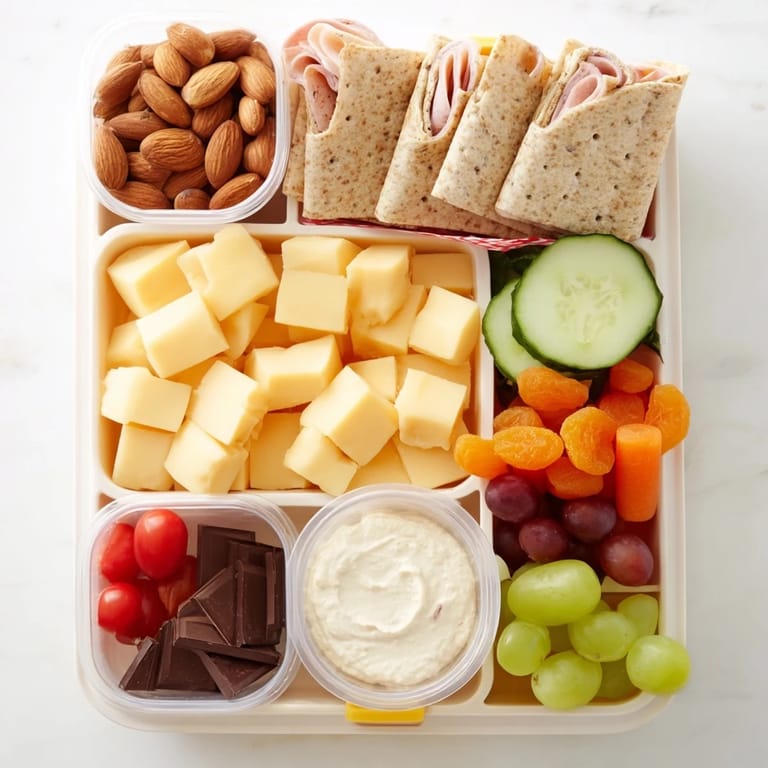
Pin There was a moment during a family road trip when my eight-year-old nephew opened the snack box I'd packed and got genuinely quiet. Not the quiet of boredom, but the quiet of wonder—like he'd been handed something precious. He examined each compartment, asked questions about the dried apricots, and made a little game out of tasting everything in a specific order. His mom told me later that he talked about that snack box for weeks, that it made the drive feel special to him. That's when I understood that feeding people is about more than nutrition; it's about saying 'you matter enough for me to arrange things beautifully for you.'
The Art of Compartmentalization
The beauty of a snack box lies in its compartments—they're not just functional, they're psychological. When everything has its own space, the eater feels cared for. I've learned that silicone muffin liners work wonderfully if your box doesn't come with built-in dividers; they create small, distinct sections that make the whole thing look intentional and restaurant-quality. The compartments also solve a real problem: they prevent flavors from bleeding into each other and keep textures distinct. A cracker that sits next to hummus will absorb moisture and lose its crunch; a cracker in its own compartment stays crisp for hours.
Timing and Freshness
I've discovered that the timeline for a snack box is crucial. Ideally, you pack it the morning of your trip—not the night before, because overnight refrigeration can cause condensation and flavor transfer. The sweet spot is assembling it within an hour or two before you leave, keeping it chilled until departure, and eating it within four hours if it's not kept cold. For longer trips, that ice pack becomes your best friend. I've learned to check the box one final time before leaving, wiping away any condensation that's formed, ensuring every compartment is sealed, and confirming that dips are truly locked tight. This final check takes thirty seconds but prevents disasters.
Customization and Adaptability
What I love most about this snack box is that it bends to accommodate almost anyone. Your vegan friend? Swap the cheese and yogurt for plant-based alternatives and skip the meat—the box still works beautifully. Gluten-free? Use gluten-free crackers and you're set. Nut allergies? Replace almonds with sunflower seeds or pumpkin seeds; the box doesn't lose its integrity. I've learned that the structure itself—the compartments, the balance of textures, the mix of savory and sweet—is what makes this box work, not the specific ingredients. Once you understand the framework, you can build endless variations that speak to who you're feeding.
- Swap cheese for dairy-free alternatives if needed, and they'll stay just as firm and delicious
- Use hummus variations like beet or roasted red pepper for visual interest and different flavor profiles
- Add nuts you prefer—cashews, pistachios, or peanuts work just as well as almonds
 Pin
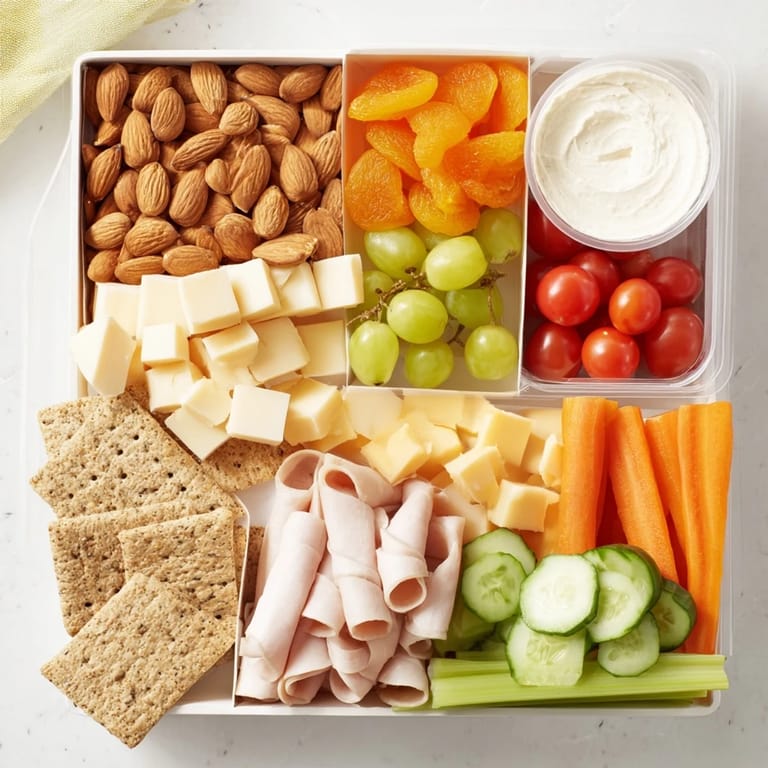
Pin Every time I pack one of these boxes, I'm reminded that the smallest gestures of care matter most. Whether it's a road trip with friends, a solo journey that needs companionship, or just a Tuesday afternoon that deserves something a little special, a thoughtfully arranged snack box says: I was thinking of you.
Recipe Questions
- → How should fresh produce be prepared for packing?
Wash all fruits and vegetables thoroughly under cold running water and pat completely dry to avoid moisture that can cause spoilage.
- → What is the best way to keep dips fresh in the box?
Use small, leak-proof containers to securely seal dips and keep them upright to prevent spilling during travel.
- → Can this snack box be adjusted for dietary restrictions?
Yes, cheese can be replaced with vegan alternatives, crackers swapped for gluten-free versions, and meats replaced with plant-based proteins like tofu or tempeh.
- → How do I prevent crackers from becoming soggy?
Keep moist items like cheese and deli meats separated from crackers and pack ingredients in distinct compartments for airflow.
- → What storage recommendations keep the snack box fresh?
Store the box in the refrigerator until use and, if on a long trip, include ice packs to maintain a temperature below 4°C (39°F).
- → What tools are recommended for assembling the snack box?
Use a large compartmentalized box or bento container, measuring cups for portions, small leak-proof containers for dips, and paper towels for drying produce.