 Pin
Pin I discovered the magic of flatbread boards at a dinner party where the host casually arranged cured meats and cheeses on warm naan like it was the easiest thing in the world. Watching guests reach for piece after piece, breaking off whatever combination caught their eye, I realized this wasn't fancy plating or complicated technique—it was just permission to be generous and a little bit chaotic. The warmth of the flatbread, the salt of the prosciutto, the creaminess of the brie all hitting at once made me understand why this approach feels so much friendlier than individual appetizers on small plates.
My sister brought this to a potluck once and I watched three different people ask for the recipe before they'd even finished eating. The board sat in the middle of the table, and it became the thing people kept coming back to between conversations, which never happens with appetizers. That's when I realized this dish has a quiet confidence about it—it doesn't need to prove anything.
Ingredients
- Flatbreads: Lavash, naan, or ciabatta all work beautifully here; the key is choosing something sturdy enough to hold weight but still bendable enough that guests can tear pieces off without the whole thing collapsing.
- Olive oil: Good enough to taste, because you're only using a little and it matters.
- Garlic clove: Just one, minced fine, so it toasts into the flatbread rather than overpowering everything.
- Prosciutto: The salty anchor that makes everything else taste better.
- Salami: Choose one with flavor you actually enjoy eating on its own.
- Smoked turkey breast: Adds a different texture and lets people who want something lighter have an option.
- Soppressata or chorizo: Whichever one you're drawn to; this is where you add a little heat or spice personality.
- Brie: Creamy and mild, it acts like an edible glue that holds flavor combinations together.
- Aged cheddar: Sharp enough to stand up to the meats without disappearing into them.
- Manchego: Nutty and slightly firm, it adds a savory note that feels a little more sophisticated.
- Blue cheese: A small crumble goes a long way; it's there for people who want boldness and complexity.
- Grapes: The sweetness cuts through salt and fat in a way that keeps you reaching for more.
- Cherry tomatoes: Bright acid, best halved so they don't roll around.
- Marinated olives: Whatever type you have is fine; they add brine and texture.
- Roasted red peppers: Soft and slightly sweet, they layer beautifully with everything else.
- Fresh basil: Torn at the last second, scattered on top for color and because it smells like summer.
- Honey or fig jam: For people who want to experience the sweet-salty moment that changes everything.
Tired of Takeout? 🥡
Get 10 meals you can make faster than delivery arrives. Seriously.
One email. No spam. Unsubscribe anytime.
Instructions
- Heat your flatbreads:
- Set the oven to 200°C (400°F) and brush each flatbread lightly with olive oil, then scatter the minced garlic across them. Slide them into the oven for five to seven minutes until they're just starting to crisp at the edges and smell toasted—you want them warm and slightly pliable, not crunchy.
- Create your base:
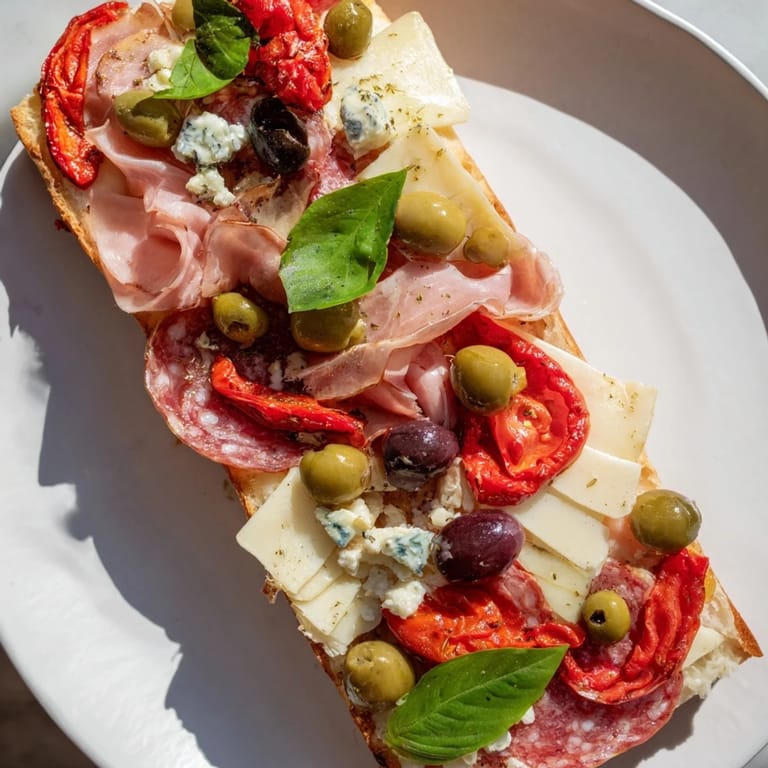
- Lay the warm flatbreads on a large wooden board or platter, spacing them so they look like actual rafts waiting to be loaded. The warmth matters because it makes the cheese start to soften just enough to stick.
- Layer with intention:
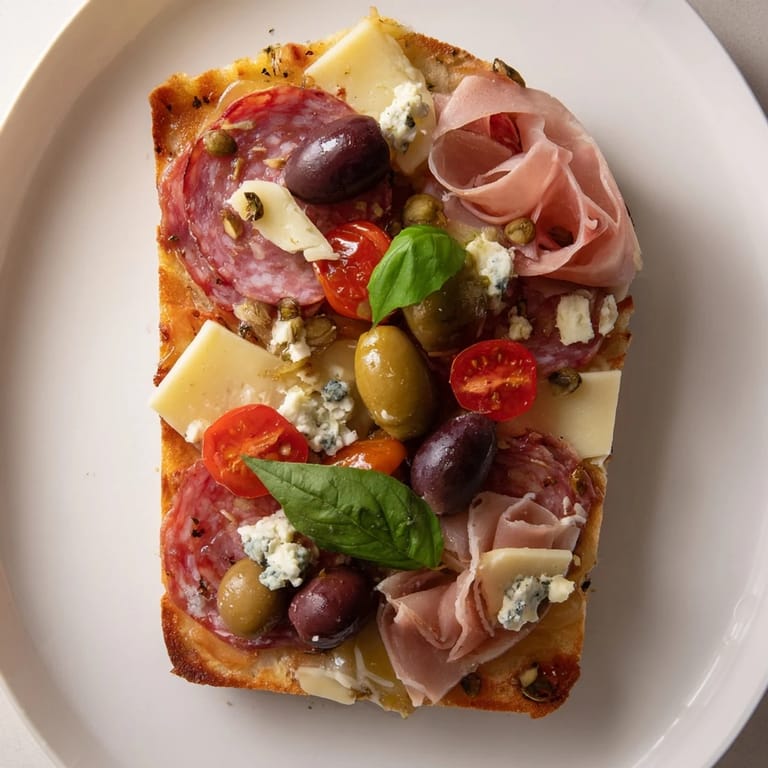
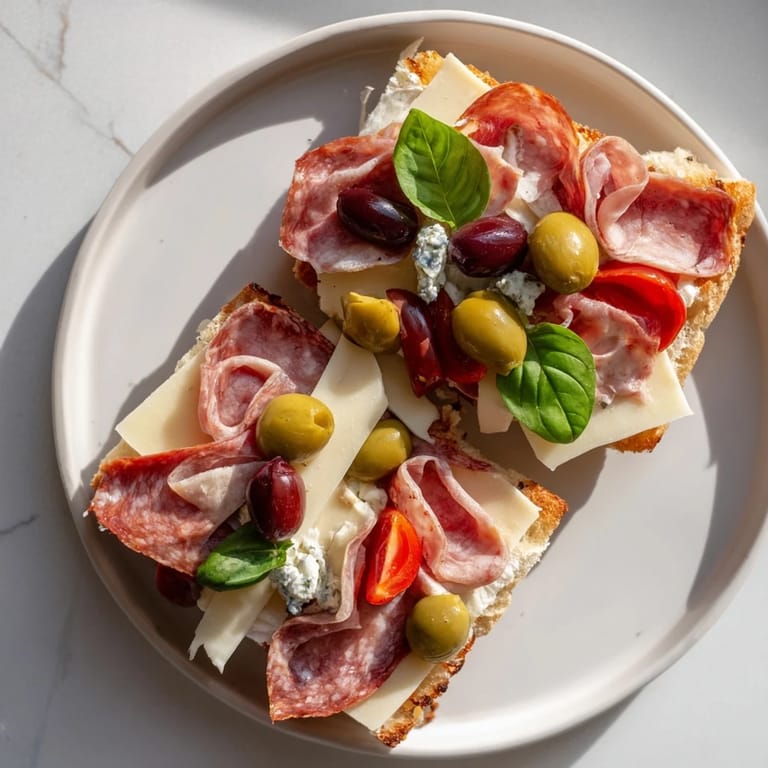
- Begin arranging the meats and cheeses across each flatbread, alternating types so you get color and flavor variation in every section. This isn't about precision; it's about making it look abundant and inviting.
- Fill the spaces:
- Scatter the halved grapes, cherry tomatoes, olives, and roasted peppers into the gaps around and between the flatbreads. These little pops of color and brightness are what make people actually want to taste everything together.
- Finish and serve:
- Tear fresh basil leaves and scatter them over the whole thing, then place small bowls of honey or fig jam nearby for drizzling. Tell your guests to break off pieces of flatbread with whatever toppings appeal to them and not to overthink the combinations.
 Pin
Pin There's a specific moment when everyone stops talking and just starts eating, reaching across each other without asking permission, building their own wild combinations. That's when you know you've created something that makes people feel relaxed and cared for at the same time.
Building Your Board with Personality
The beauty of this recipe is that it invites substitution and improvisation. If you don't have manchego, grab whatever aged cheese looks appealing at the market. If you find yourself with different cured meats, swap them in. The structure stays the same, but your version will taste different from anyone else's version, and that difference is the whole point.
Pairing and Presentation Ideas
Serve this with a crisp white wine or a light-bodied red, something that won't compete with the salty, savory layers happening on each bite. A sparkling wine works beautifully too if your gathering feels celebratory. The wooden board is doing half the work visually; you don't need to complicate the presentation because the colors and textures are already doing their job.
Room for Creativity
This is where your own tastes get to live. Some people add Marcona almonds for crunch, others bring in pickled vegetables for tanginess. One of my friends adds thinly sliced pear for sweetness, and it sounds strange until you try it. The flatbread raft framework is strong enough to carry whatever flavors you want to layer onto it.
- Toast nuts lightly before adding them so they taste like themselves and not just texture.
- If you're adding pickled anything, drain it well so it doesn't make the flatbread soggy.
- Assemble as close to serving time as possible so everything maintains its temperature contrast and the flatbread stays just warm enough to matter.
 Pin
Pin This is appetizer as permission, conversation starter as food. It sits between casual and special in a way that makes people feel both relaxed and celebrated.
Recipe Questions
- → What types of flatbreads work best as a base?
Rectangular flatbreads like lavash, naan, or ciabatta provide sturdy, flavorful foundations that crisp nicely when warmed with olive oil and garlic.
- → Can I substitute the meats and cheeses?
Yes, feel free to swap in your preferred cured meats and cheeses. Look for a balance of textures and flavors to maintain the savory profile.
- → How should I serve the flatbreads for sharing?
Arrange the flatbreads spaced out on a large board or platter so guests can break off pieces topped with their favorite combinations.
- → Are there recommended accompaniments to add between flatbreads?
Fresh grapes, cherry tomatoes, olives, and roasted red peppers add vibrant pops of color and flavor between the flatbreads.
- → What drink pairs well with these flatbreads?
A crisp white wine or a light-bodied red complements the medley of savory meats, cheeses, and fresh accompaniments nicely.