 Pin
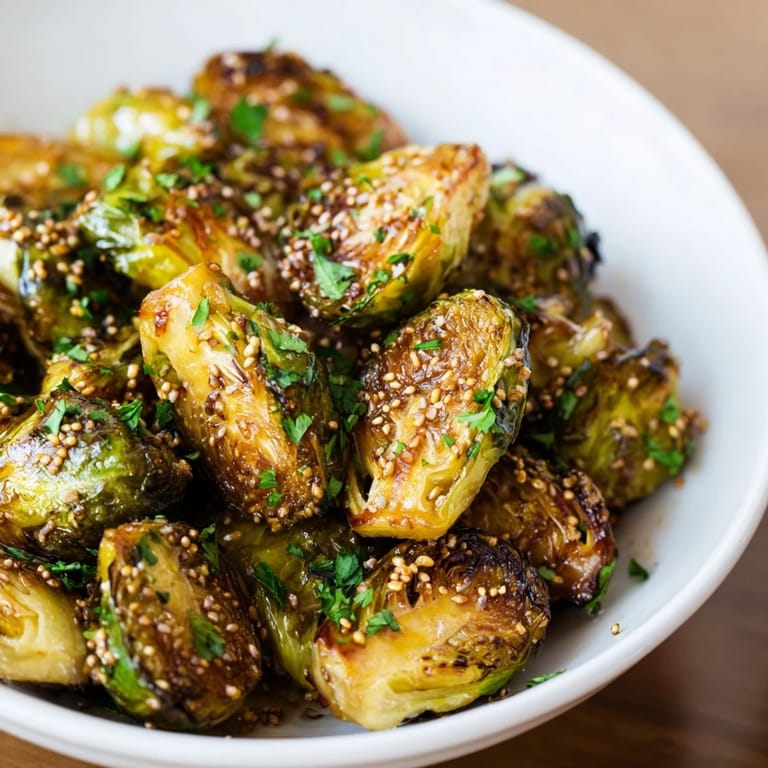
Pin There's something about the smell of Brussels sprouts hitting a hot pan that makes me pause whatever I'm doing. My neighbor once asked why my kitchen smelled like caramelized vegetables and brown butter on a random Tuesday—I'd been testing this honey mustard glaze for the third time that week. The moment those little green domes turned golden and the glaze caught slightly at the edges, I knew I'd found something special. It's become one of those dishes I make when I want to turn a simple side into something people actually remember.
I made this for a Thanksgiving potluck once, terrified the Brussels sprouts would arrive soggy. Instead, they stayed crispy on the outside and tender within, and three people asked for the recipe before dessert was even served. My friend's skeptical teenager tried one 'just to be polite' and ended up eating half the dish. That's when I realized this glaze has quiet power—it converts people without needing to convince them.
Ingredients
- Brussels sprouts: Choose ones that are roughly the same size so they roast evenly; halving them flat-side down is the secret to that golden caramelization.
- Olive oil: Don't skip it—this carries the heat and helps everything brown properly.
- Honey: The sweetness rounds out the mustard's tang, but it also encourages caramelization; use raw honey if you have it.
- Dijon and whole-grain mustards: Dijon brings smoothness, whole-grain adds texture and a subtle earthiness that deepens the flavor.
- Apple cider vinegar: This is the backbone of the glaze's brightness; it keeps things from tasting one-note and sweet.
- Garlic powder: A small amount rounds out the flavor without overpowering the delicate vegetables.
- Fresh parsley: Optional but worth it—it adds a fresh finish that cuts through the richness.
Tired of Takeout? 🥡
Get 10 meals you can make faster than delivery arrives. Seriously.
One email. No spam. Unsubscribe anytime.
Instructions
- Heat your oven and prep:
- Set the oven to 425°F and line your baking sheet with parchment—this prevents sticking and makes cleanup effortless. While the oven preheats, trim your Brussels sprouts and halve them, making sure each piece sits flat.
- Make the glaze:
- Whisk together the oil, honey, both mustards, garlic powder, vinegar, salt, and pepper in a large bowl until the mixture looks smooth and emulsified. If it breaks, just whisk a bit longer—it'll come together.
- Coat and arrange:
- Toss the Brussels sprouts directly into the glaze, making sure every piece gets coated. Spread them on the baking sheet cut-side down—that flat side against the heat is what creates those golden, crispy edges.
- Roast with intention:
- Put them in the oven for about 20 to 25 minutes, flipping halfway through so the rounded sides get color too. You'll know they're done when the cut sides are deep golden and the leaves are starting to crisp.
- Finish and serve:
- Transfer to a serving dish, scatter parsley over the top if using, and serve while they're still warm and the glaze is slightly sticky.
 Pin
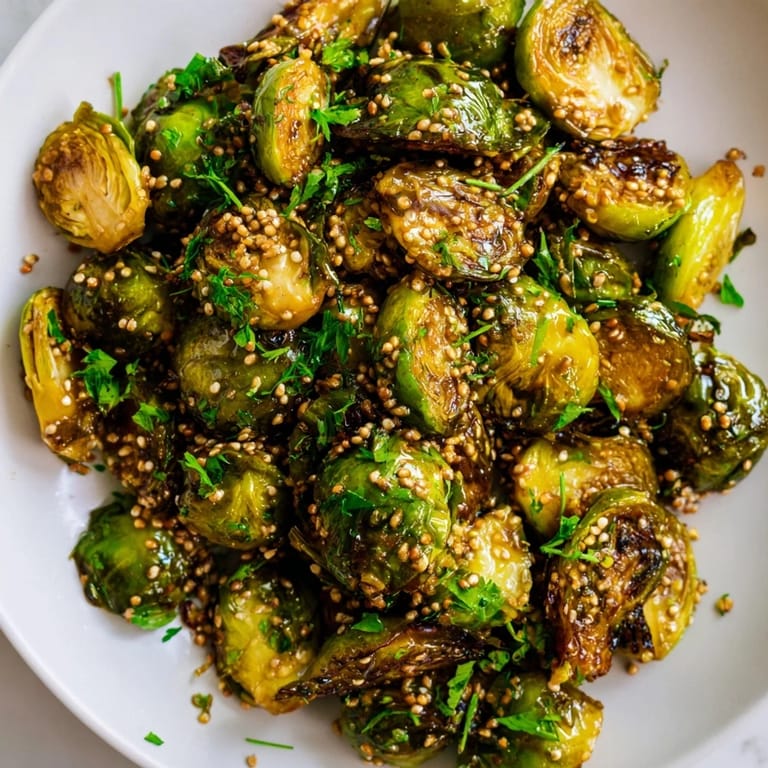
Pin The first time my partner tasted these, he asked why I'd never made them before, then went back for seconds while they were still warm. It's one of those small victories in cooking where you realize something simple can become genuinely crave-worthy with just the right balance of flavors and a bit of attention in the oven.
The Magic of Flat-Side-Down Roasting
I learned this by accident—the first time I made these, I scattered the Brussels sprouts cut-side up, and they turned out pale and steamed-looking. A friend's cook suggested placing them flat-side down and leaving them still for the first 15 minutes. The transformation was immediate: that contact with the hot pan created caramelization I'd never achieved before. Now it's the first thing I tell anyone making these.
Why Both Mustards Matter
Using two mustards feels fancy but actually solves a flavor problem. Dijon mustard alone can taste one-dimensional, but whole-grain mustard brings little seeds that add texture and a milder, slightly sweet undertone. Together, they create depth without overpowering the Brussels sprouts. I spent two versions using just one, thinking I was overcomplicating things, before realizing the combination was essential.
Make It Your Own
This base glaze is flexible enough to adapt to what's in your kitchen or what you're craving. I've added everything from a pinch of smoked paprika to a touch of maple syrup, and each version has been interesting. The key is keeping the balance of sweet, tangy, and savory—that's what makes the Brussels sprouts sing.
- Toss in toasted pecans or walnuts at the end for crunch and richness.
- Add a pinch of chili flakes if you want a subtle warmth that rounds out the sweetness.
- Substitute maple syrup for honey for a deeper, earthier sweetness that plays beautifully with the mustard.
 Pin
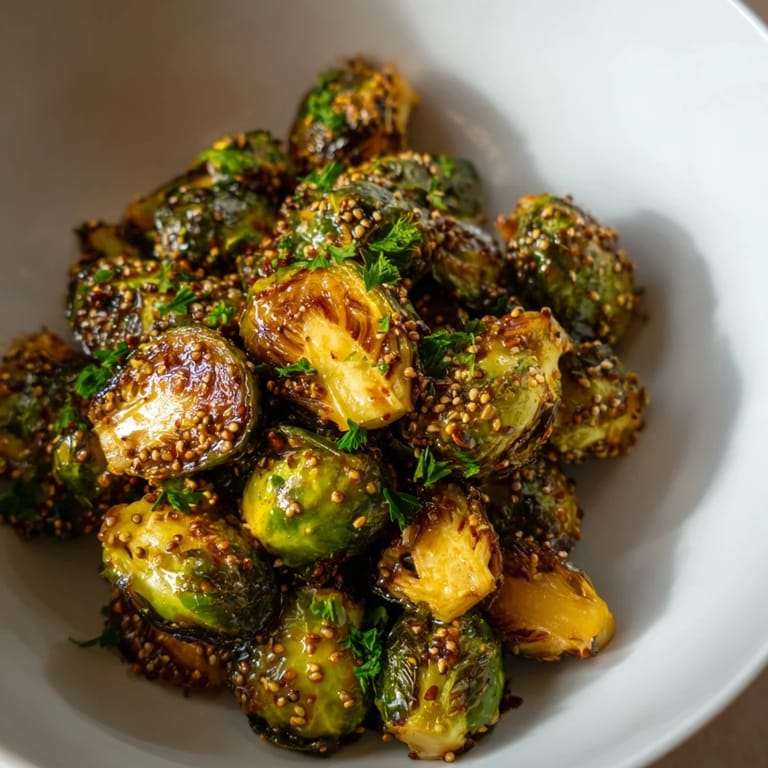
Pin These Brussels sprouts have become my default side dish for any occasion where I want people to feel cared for without the fuss. There's something about a roasted vegetable that's been treated with intention that says you actually want to feed the people at your table well.
Recipe Questions
- → How do I achieve caramelized Brussels sprouts?
Roast the halved sprouts cut side down at a high temperature (425°F) for 20-25 minutes to develop a golden, caramelized crust.
- → Can the honey mustard glaze be adjusted for dietary needs?
Yes, substitute honey with maple syrup for a vegan-friendly glaze without compromising sweetness and tang.
- → What spices enhance the glaze flavor?
Garlic powder, apple cider vinegar, salt, and black pepper enrich the glaze with balanced savory notes.
- → How can I add extra texture to this dish?
Sprinkle toasted chopped pecans or walnuts before serving for a crunchy contrast to the tender sprouts.
- → Is this dish suitable for gluten-free diets?
Yes, but verify that the mustard used is gluten-free and free from additives that may contain gluten.