 Pin
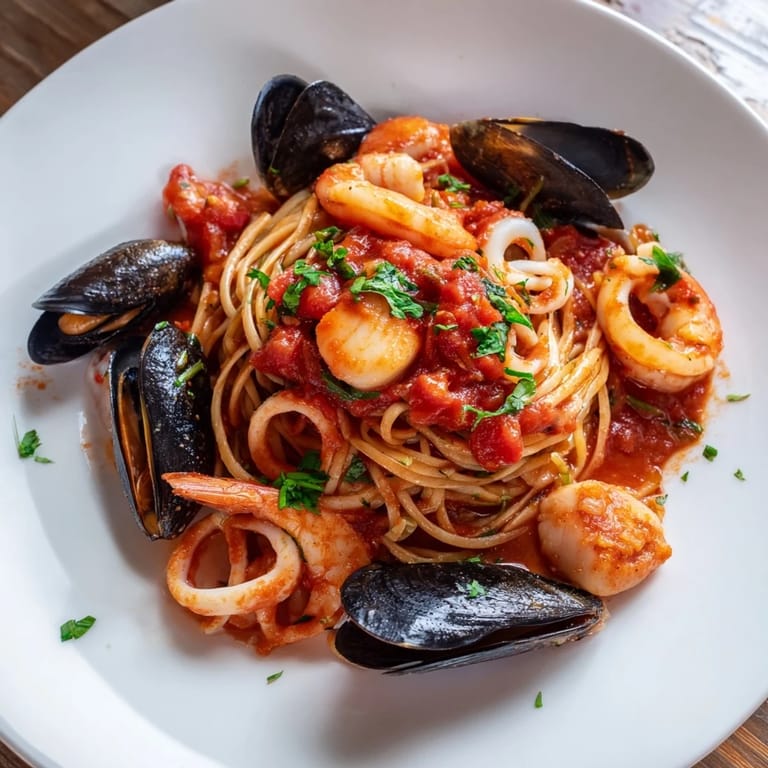
Pin There's a moment that happens every time I cook seafood marinara pasta—that exact second when the shrimp turn from translucent to coral pink, and the kitchen fills with a smell so alive it practically demands you call someone to come experience it. I first made this dish on a whim after finding a pile of pristine seafood at the market, and something about combining all those different textures in one pan felt like the right kind of cooking chaos. The sauce simmers quietly while you wait, coaxing sweetness from the tomatoes and letting the garlic and wine do their quiet magic together.
I remember making this for a dinner party where I was honestly nervous about the mussels—would they open? Would someone get one that didn't?—but the whole thing came together so smoothly that I was able to actually sit down and talk with my friends instead of stress-cooking in the background. That's when I realized this wasn't a fussy dish at all; it was one that rewards attention but doesn't demand it.
Ingredients
- Large shrimp: 200 grams of good shrimp is worth it; they cook fast and stay tender if you don't leave them in too long.
- Mussels: Buy them the day you cook, clean them well under cold water, and trust that they'll open when ready.
- Squid rings: Quick-cooking and tender if not overdone, adding a subtle sweetness to the sauce.
- Sea scallops: These go in first because they need a gentle few minutes to stay buttery.
- Pasta: Linguine or spaghetti both work; save some starchy pasta water to loosen the final dish.
- Olive oil: Use your better bottle here since it flavors the base.
- Onion and garlic: The foundation of every good sauce; don't skip the mincing step.
- Canned crushed tomatoes: Higher quality cans make a real difference in the finished taste.
- Tomato paste: Just two tablespoons adds concentrated depth that balances the wine and acidity.
- Dry white wine: Something you'd drink; the cheap stuff tastes cheap in the sauce.
- Oregano and basil: Dried herbs here are perfect; fresh would be overpowering in this proportion.
- Red pepper flakes: Optional, but they add a gentle heat that wakes everything up.
Tired of Takeout? 🥡
Get 10 meals you can make faster than delivery arrives. Seriously.
One email. No spam. Unsubscribe anytime.
Instructions
- Boil the pasta:
- Salt your water generously—it should taste like the sea—and get it rolling before you start the sauce. This way everything finishes at the same moment. Drain it just before it's fully tender, because it'll keep cooking in the sauce.
- Build the base:
- Heat olive oil and watch the onion turn translucent; this takes exactly as long as it takes. When it's soft and clear, add garlic and let it perfume the oil for just a minute before the wine goes in.
- Simmer the sauce:
- The wine reduces, the tomatoes break down, and everything becomes unified and deep. Stir occasionally and let ten minutes pass while you taste and adjust as you go.
- Cook the seafood:
- Start with squid and scallops, which need time; then add shrimp and mussels together and cover the pan so the steam does the work. Listen for the gentle shift in sound as things finish cooking.
- Combine everything:
- Drain your pasta and fold it into the sauce with gentle tossing; use that reserved pasta water to make everything silky and connected.
- Taste and serve:
- Sea salt and black pepper at the end are your final adjustments. Garnish with parsley and lemon wedges, and serve immediately while everything is warm.
 Pin
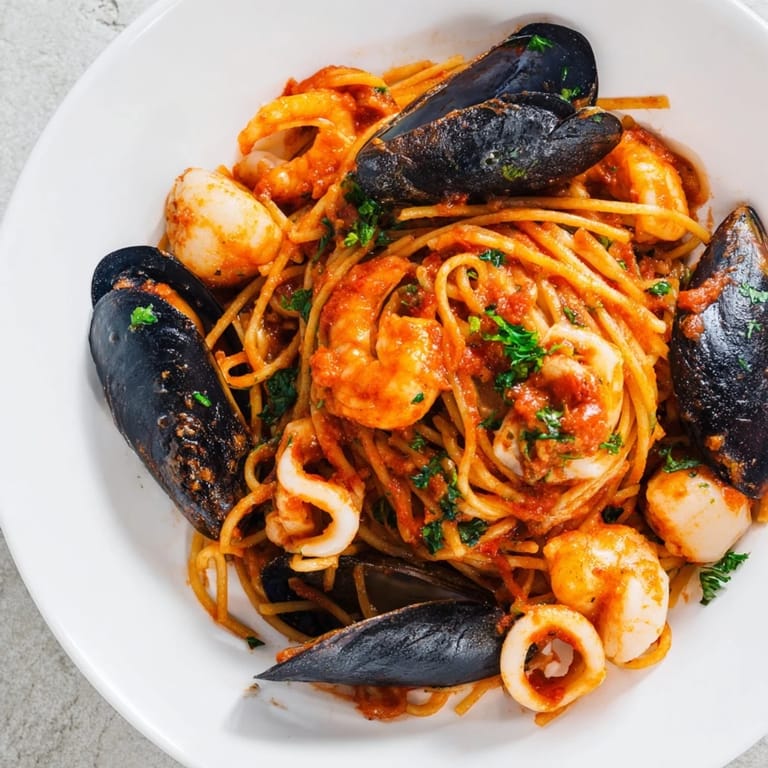
Pin There was an evening when I made this for someone who said they didn't normally like seafood, and watching them twirl that pasta and taste the sauce and just sort of sit quietly for a moment—that's when I understood that sometimes a recipe is just an excuse to feed people something that makes them feel looked after.
Why the Sauce Matters
The marinara isn't an afterthought here; it's the whole reason everything works. Building it slowly—starting with onion and garlic, adding wine to cook off any harshness, letting tomatoes and tomato paste simmer into one unified voice—gives you a base that's deep enough to stand up to all that seafood. The sugar isn't about sweetness; it's about balance, cutting through acidity and making the sauce taste more like itself.
Seafood Selection and Prep
The beauty of this dish is its flexibility within a framework. You can swap shrimp for scallops in a different proportion, add clams, use white fish instead of squid—whatever you find that looks good. The key is understanding that different proteins cook at different speeds, which is why you layer them into the pan strategically. Mussels take the longest to open; shrimp are fast; squid needs just enough time to stay tender.
Finishing Touches and Variations
The lemon wedges at the end are crucial; they brighten everything and give people the option to adjust the balance themselves. Fresh parsley is mostly there for color and freshness, cutting through the richness. If you want to go deeper, a splash of seafood stock mixed in with the tomatoes adds an oceanic undertone that some people find irresistible.
- A glass of white wine alongside makes sense; it echoes what's in the sauce.
- Serve this the moment it's ready; seafood pasta doesn't get better sitting around.
- Any good crusty bread is essential for soaking up the sauce that clings to your plate.
 Pin
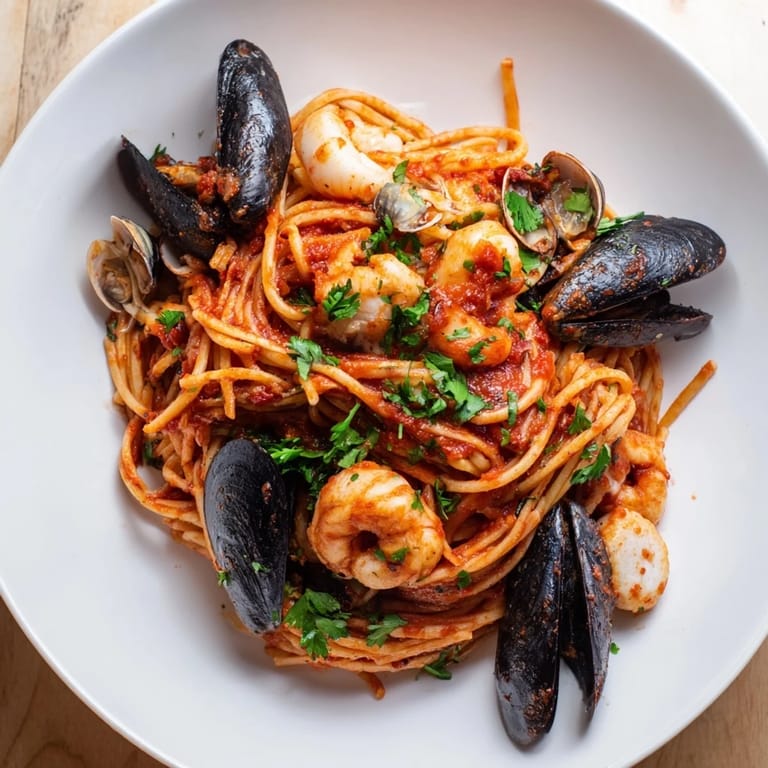
Pin This is the kind of dish that reminds you why cooking matters—not because it's complicated, but because it brings something alive to the table that tastes like care. Make it when you want to feel a little bit fancy without the fuss.
Recipe Questions
- → What seafood works best for this pasta?
Large shrimp, mussels, squid rings, and sea scallops provide a balanced mix of textures and flavors that complement the tomato sauce.
- → How do you prevent the mussels from being gritty?
Ensure mussels are cleaned and debearded thoroughly before cooking to avoid grit or sand in the dish.
- → Can I adjust the sauce spiciness?
Yes, red pepper flakes are optional and can be added or omitted to adjust the heat to your preference.
- → What pasta types pair well with this sauce?
Spaghetti or linguine are traditional choices that hold the sauce well and complement seafood textures.
- → Is there a way to enhance the sauce depth?
Adding a splash of seafood stock with the tomatoes deepens the flavor profile remarkably.
- → How should leftovers be stored?
Refrigerate in an airtight container for up to two days and warm gently to preserve texture and flavor.