 Pin
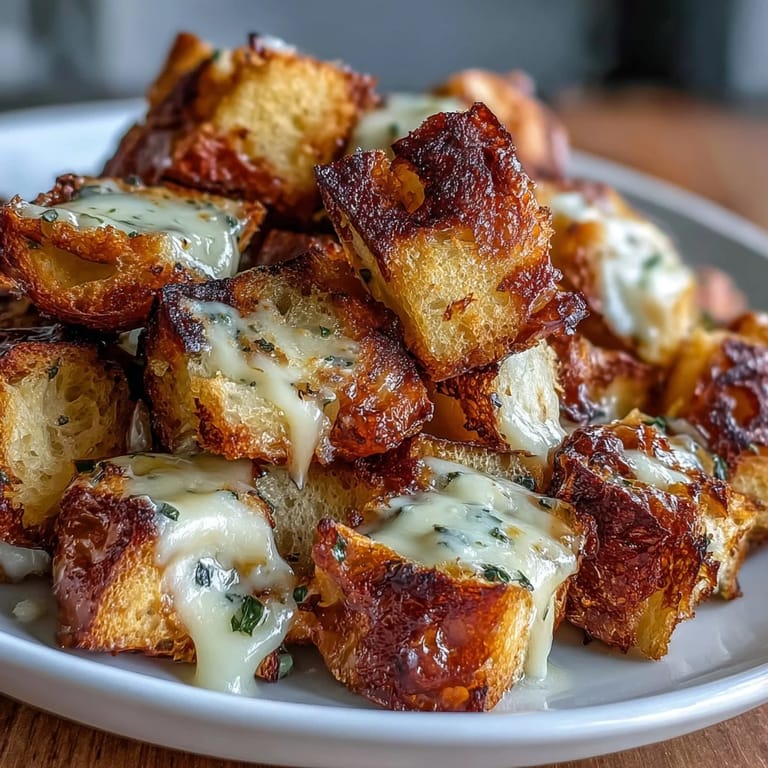
Pin There's something about the moment when you pull a tray of sourdough croutons from the oven that stops you mid-conversation. My kitchen filled with this nutty, garlicky warmth last winter, and my partner wandered in asking what smelled so good, only to find me standing there like I'd invented something revolutionary. These aren't just bread cubes—they're the difference between a good French onion soup and one that makes people close their eyes and pause mid-spoonful. Day-old sourdough becomes something entirely new here, crispy outside and still tender enough to absorb that first sip of broth.
I made these for my sister on a gray February evening when she was having one of those days where everything feels like too much. She arrived, and I had soup on the stove and these golden croutons ready to go, each one still slightly warm. Watching her spoon one into the bowl and take that first bite—the way her shoulders actually relaxed—reminded me that sometimes the smallest details matter most.
Ingredients
- Sourdough bread, 4 cups (about 200 g), cut into 1-inch cubes, preferably day-old: Day-old bread dries slightly, which means it'll crisp up beautifully instead of turning soft. If your bread is fresh, slice it and leave it out for a few hours or toast it briefly first—this is the secret to actual crunch.
- Olive oil or unsalted butter, 3 tbsp: Olive oil gives you that French kitchen feeling, but melted butter creates an almost richer crispness; choose based on your soup's vibe.
- Garlic clove, 1, minced: Fresh garlic is non-negotiable here—it becomes sweet and almost mellow as it toasts.
- Sea salt, 1/2 tsp: This isn't just seasoning; it draws out flavors in the bread itself.
- Freshly ground black pepper, 1/4 tsp: Grind it yourself if you can; pre-ground fades fast during roasting.
- Dried thyme or herbes de Provence, 1/4 tsp (optional): This optional addition whispers French countryside into every bite without overwhelming anything.
- Gruyère or Emmental cheese, 1/2 cup (50 g) grated (optional): If you add cheese, pick authentic stuff—it melts into creamy pockets rather than sitting on top like plastic.
Tired of Takeout? 🥡
Get 10 meals you can make faster than delivery arrives. Seriously.
One email. No spam. Unsubscribe anytime.
Instructions
- Warm your oven and prepare:
- Preheat to 375°F (190°C) and line a baking sheet with parchment paper so nothing sticks and you don't have that annoying cleanup later.
- Make your coating:
- In a large bowl, whisk together olive oil or melted butter, minced garlic, salt, pepper, and herbs if you're using them. Let this sit for a minute so the garlic starts to release its flavor into the oil.
- Coat every piece:
- Add your sourdough cubes to the bowl and toss thoroughly—you want every surface touched by that seasoned oil, no dry edges hiding underneath.
- Spread them out:
- Arrange the bread cubes in a single layer on your baking sheet, giving each one space to breathe so they toast evenly rather than steaming together.
- Toast with intention:
- Bake for 15–18 minutes, stirring once halfway through. You're looking for deep golden color and a crispy exterior that sounds like a gentle crunch when you pick one up.
- Cheese moment (optional):
- If you're adding cheese, sprinkle it over the hot croutons straight from the oven and return them for just 2–3 minutes until it's melted and bubbling slightly. Don't skip this step if you're using cheese—the residual heat matters.
- Cool slightly before serving:
- Let them sit for a few minutes so they firm up a bit more and won't immediately soften when they hit the warm soup.
 Pin
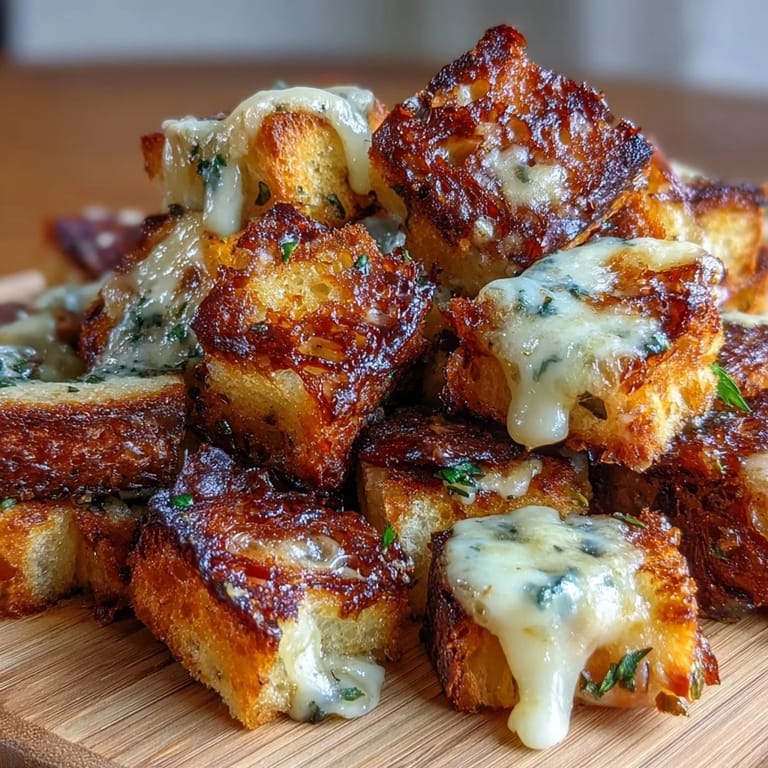
Pin There's a quiet joy in finding the right garnish for something you've spent hours building. These croutons aren't just a topper; they're the texture that makes the spoon feel right in your hand, the sound that tells you this is homemade, the thing that turns soup into an actual meal worth remembering.
Storing and Planning Ahead
Make these in the morning if soup is your dinner plan, and they'll stay crisp in an airtight container through the afternoon. I've kept them for up to three days and honestly forgotten I made them until I opened the cupboard and found myself snacking straight from the jar. For entertaining, you can prep everything except the final toasting the night before, then pop them in the oven while guests arrive—those twenty minutes of kitchen activity feels purposeful rather than rushed.
Customizing Your Croutons
The base recipe is sturdy enough to handle improvisation without falling apart. Swap Gruyère for Comté if that's what's in your cheese drawer, or skip it entirely if you're cooking for someone avoiding dairy. I've even rubbed the raw bread cubes with a halved garlic clove before coating them—it intensifies that garlic note so the croutons practically announce themselves when they hit the soup. The herbs are similarly forgiving; tarragon works if you're feeling delicate, or crispy sage leaves if you want something bolder.
The Soup and Crouton Conversation
French onion soup has been cooking for hours, building depth through patience and caramelization. Your croutons arrive after thirty minutes of simple heat, catching that golden moment between chewy and crunchy. Together they're greater than either alone—the soup's richness needs the crouton's texture and tang, and the crouton needs the soup's warmth and broth to prevent it from being just salty bread.
- Sourdough's natural tang echoes the brightness the soup needs after all that butter and beef stock.
- Toast them close to serving time if possible; they hold their crisp best in the first hour after baking.
- If your soup is ready and croutons aren't, they'll happily wait in a warm oven at 200°F without drying out further.
 Pin
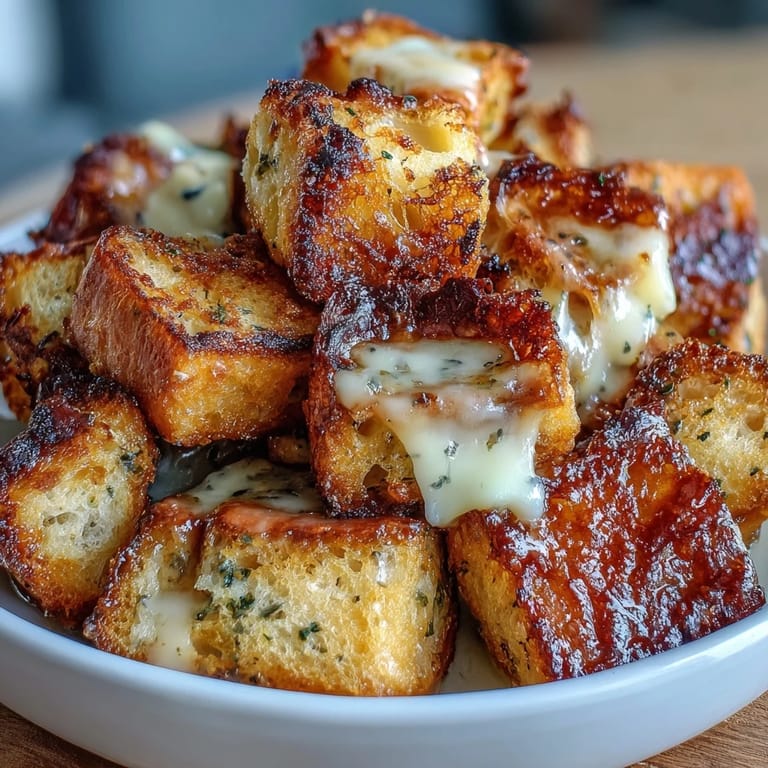
Pin These croutons are your edible reminder that the best dishes aren't always about complexity—sometimes they're about knowing which small detail makes everything else feel complete. They've become as essential to my French onion soup as the soup itself.
Recipe Questions
- → What type of bread works best?
Day-old sourdough bread is ideal for its firm texture and tangy flavor, which crisps up nicely when baked.
- → Can I use butter instead of olive oil?
Yes, melted unsalted butter can replace olive oil for a richer, buttery taste in the croutons.
- → How do I make croutons extra flavorful?
Rubbing bread cubes with a garlic clove before baking or sprinkling herbs like thyme enhances the depth of flavor.
- → Is cheese necessary for these croutons?
Cheese is optional but adds a creamy richness when melted over the hot croutons toward the end of baking.
- → How long do croutons stay fresh?
Store cooled croutons in an airtight container for up to 3 days to maintain crispness and flavor.
- → Can I adjust seasoning to my preference?
Absolutely, salt, pepper, and herbs can be modified to suit your preferred flavor profile.