 Pin
Pin The first time I made paella, I was standing in my friend Maria's kitchen in Barcelona, watching her mother move through the steps with the kind of ease that comes from decades of practice. She never measured anything, just knew by touch and sound when the rice had absorbed enough stock, when to stop stirring, when to let it rest. Years later, when I finally made it at home, I understood what she meant about listening to the pan—that gentle sizzle at the bottom isn't something to fear, it's exactly what you want.
I made this for my partner on our anniversary last spring, timing it so the paella would be ready just as the sun started to set. There's something about cooking paella that forces you to slow down—you can't rush it, can't fidget too much with it once the stock goes in. Halfway through, we opened the wine that was supposed to go with dinner and ended up just talking on the balcony, watching the steam rise off the pan, and somehow that felt like the whole celebration right there.
Ingredients
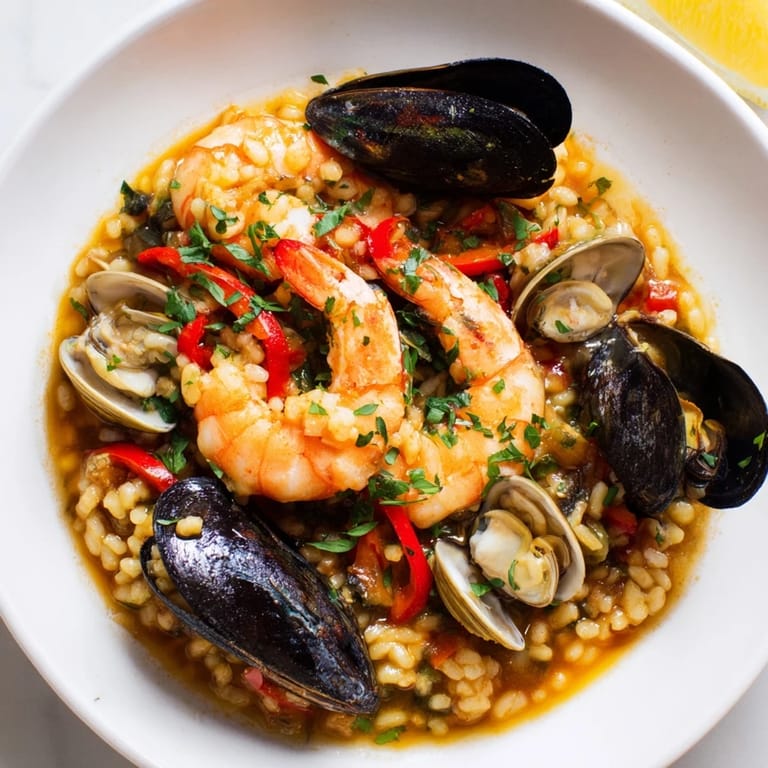
- Large shrimp, peeled and deveined (12): Shrimp cook fast, sometimes too fast, so make sure you're not overcooking them into rubber—they'll keep cooking a bit more in the residual heat after you pull the pan off the stove.
- Mussels and clams (12 each): Buy them the day you plan to cook and keep them cold; they're alive and they need respect, plus any that don't open after cooking should be discarded without question.
- Short-grain paella rice (1 1/2 cups): Bomba and Arborio are the only two that really work here—they hold their shape and don't turn into mush the way long-grain varieties do.
- Onion and garlic: Finely chopped aromatics are your flavor foundation; don't skip the mincing step or you'll have unexpected crunchy bits showing up.
- Red and green bell peppers: They add color and sweetness; slice them lengthwise and they'll look prettier when the paella comes to the table.
- Tomato: Grating it on the box grater means most of the liquid runs away, leaving you with just the essence of tomato flavor without soggy vegetables.
- Saffron threads (1/4 teaspoon): This is the ingredient that makes people lean in and ask what smells so amazing; don't skip it and don't buy the cheap stuff, you'll taste the difference.
- Fish or seafood stock (4 cups): This is not a place to use chicken stock or water—the depth of flavor from proper seafood stock is what separates good paella from forgettable rice.
- Smoked paprika (1 teaspoon): It adds a whisper of smoke that complements the saffron rather than competing with it; regular paprika won't give you the same depth.
- Olive oil (2 tablespoons): Use something you actually like tasting, not your cooking generic oil; it makes a noticeable difference in this simple, ingredient-forward dish.
- Fresh parsley and lemon wedges: The parsley brings brightness, the lemon brings acidity that cuts through the richness of the seafood and saffron.
Tired of Takeout? 🥡
Get 10 meals you can make faster than delivery arrives. Seriously.
One email. No spam. Unsubscribe anytime.
Instructions
- Infuse the stock with saffron:
- Pour your stock into a saucepan and crumble those saffron threads in—they'll release their color and that unmistakable aroma almost immediately. Keep it warm on the lowest heat; you want it hot but not boiling when you add it to the rice.
- Start the aromatics:
- Heat olive oil in your paella pan over medium heat, then add the chopped onion and let it soften for a couple of minutes. You're not trying to brown it, just make it translucent and sweet.
- Build the flavor base:
- Stir in the minced garlic and cook until it's fragrant, which takes maybe thirty seconds—any longer and it starts turning bitter. Add the sliced bell peppers next and let them soften for a few minutes, then stir in the grated tomato and let it cook down until most of the liquid has evaporated.
- Toast the rice:
- Add your rice to the pan and stir it around for a minute or two, coating every grain with the oil and vegetables. This step toasts the rice slightly and helps it absorb the stock more evenly.
- Add the saffron stock:
- Pour in that warm, golden saffron stock, spreading the rice out so it sits in a single layer. This is the moment you stop stirring—resist the urge to fidget, resist the temptation to stir, just let it be and trust the process.
- Cook the rice and shellfish:
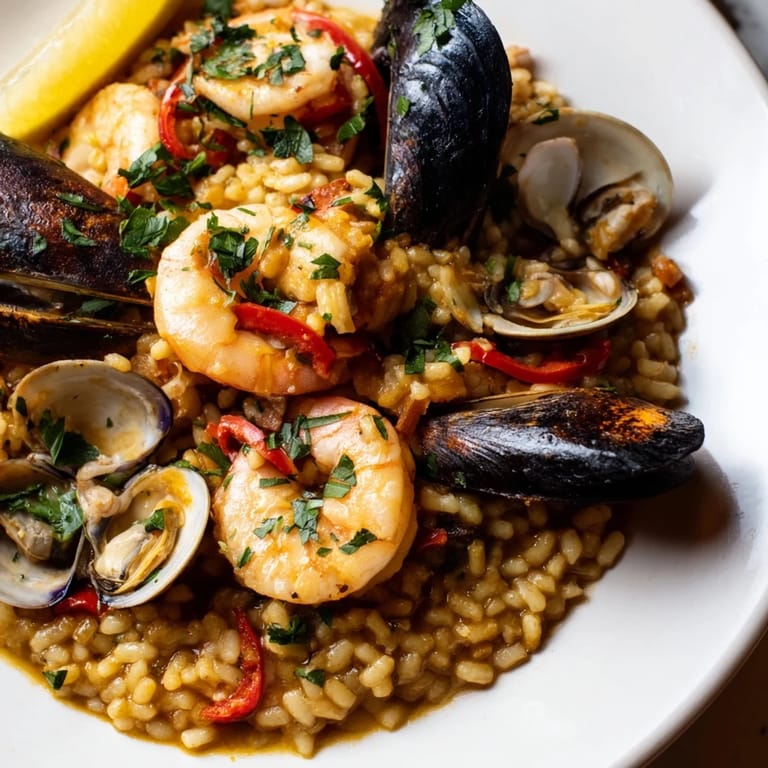
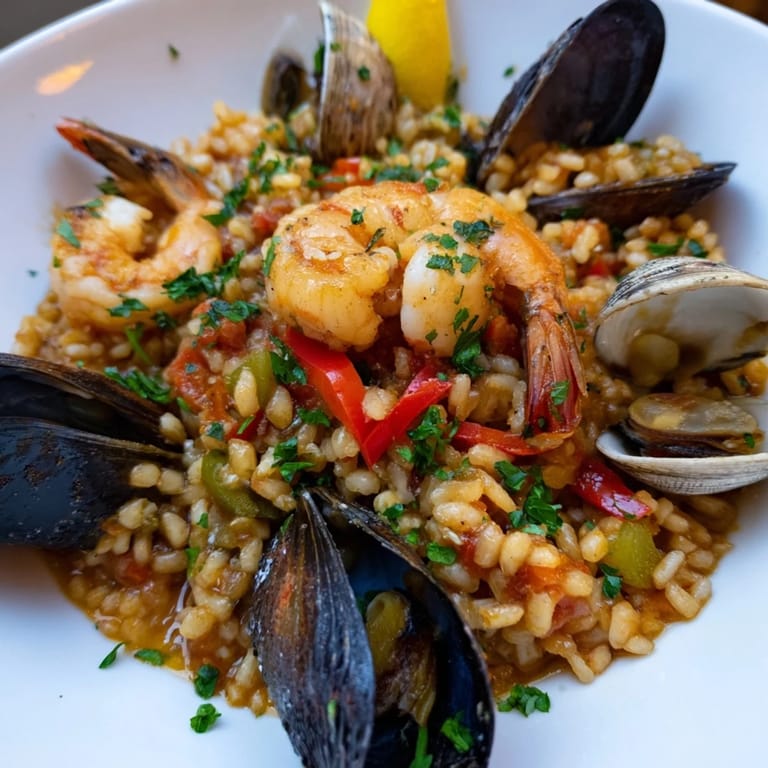
- Arrange your shrimp, mussels, and clams over the top of the rice, then cover loosely with foil or a lid. Let it cook for twenty to twenty-five minutes over medium-low heat; you'll hear a gentle sizzle from the bottom of the pan, which is actually perfect and means the rice is developing those slightly crispy edges that everyone fights over.
- Rest and finish:
- Once the rice is tender and the shellfish have opened, pull the pan from the heat and let it sit covered for five minutes—this resting time is when the flavors meld and everything settles. Sprinkle with fresh parsley, serve with lemon wedges, and watch people's faces as they take their first bite.
 Pin
Pin I remember my daughter, who was maybe seven at the time, asking why we didn't stir the paella like we do with other rice dishes. I tried explaining about the structure of the grains and the socarrat, but what I really meant was: some things are better when you leave them alone. She's remembered that lesson in ways that extend far beyond the kitchen.
The Magic of Saffron
Saffron is expensive enough to make you nervous the first time you use it, but a tiny amount goes an impossibly long way. The threads bloom and release their color and flavor into the warm stock, turning it into liquid gold that will make your entire kitchen smell like a Spanish market. You can buy it in small quantities from good spice shops, and it keeps for years in a sealed container away from light. It's the one ingredient in this recipe that you absolutely cannot substitute—it's not just flavor, it's the heart of what makes paella paella.
Choosing Your Seafood
The beauty of paella is that you can adjust the seafood based on what looks good at the market or what you actually like to eat. Some people swear by adding scallops, others use calamari, some mix in pieces of firm white fish. The one rule is: don't use anything frozen unless you've thawed it completely and dried it off, because you don't want extra moisture in your pan. Talk to whoever's behind the counter at the fish market—they know what came in that day and what's at its peak, and they'll point you toward the best choice.
Wine Pairings and Serving
Crisp Spanish white wines like Albariño or Verdejo are traditional because they cut through the richness of the seafood and saffron without overpowering them. But honestly, what matters is that you serve it cold and drink it alongside people you actually want to spend time with. Some people add a handful of frozen peas right when the stock goes in, which adds a touch of sweetness and color. Others serve it with a simple green salad on the side and call it a night. The paella itself is the main event.
- If you can't find fresh mussels and clams, some good fish shops will special order them for you with a day or two's notice.
- The resting time after cooking is not optional—those five minutes let the rice firm up just slightly, making it easier to serve.
- Leftover paella reheats beautifully in a low oven with a little splash of water, and it tastes even better the next day because the flavors have had time to deepen.
 Pin
Pin This is the kind of dish that reminds you why you cook in the first place—not out of obligation, but because something that tastes this good and feels this effortless is genuinely worth the small amount of attention it asks for.
Recipe Questions
- → What type of rice is best for this dish?
Short-grain rice varieties like Bomba or Arborio are ideal as they absorb liquid well while maintaining texture.
- → Can I substitute the shellfish ingredients?
Yes, calamari or firm white fish can replace some of the shellfish without altering the core flavors significantly.
- → How is the saffron used in this cooking method?
Saffron threads are infused in warm seafood stock to release color and aroma before adding to the rice.
- → What techniques ensure perfectly cooked rice and shellfish?
Pour the saffron broth evenly and avoid stirring afterwards; cook covered until rice is tender and shellfish open naturally.
- → Are there suggested accompaniments for this dish?
Serving with lemon wedges brightens flavors, and a crisp Spanish white wine complements the meal beautifully.