 Pin
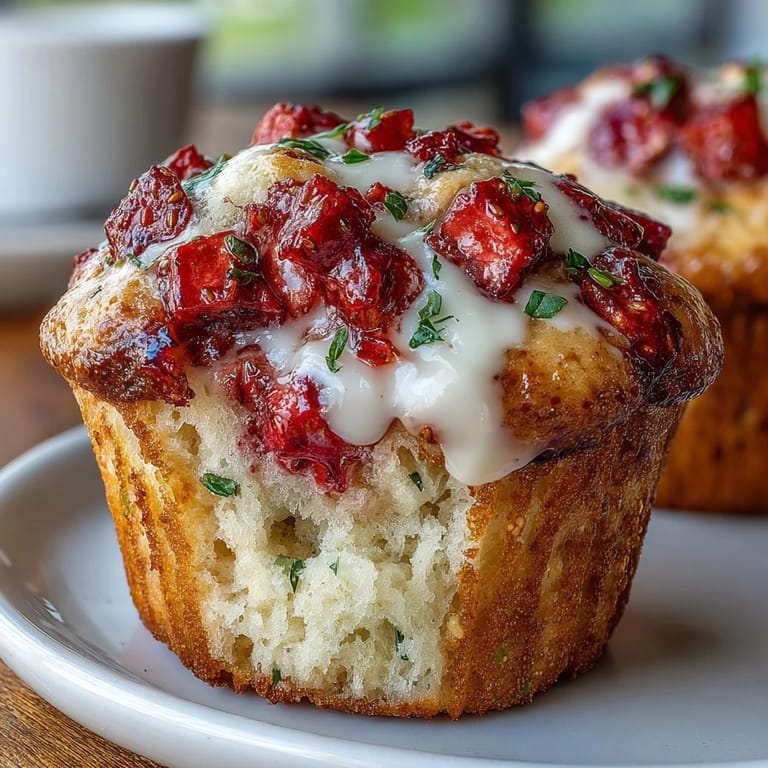
Pin My neighbor showed up at my door one Saturday morning with a container of Greek yogurt that was about to expire, and I suddenly remembered a half-pint of strawberries sitting in my fridge. Instead of letting either go to waste, I decided to bake something that would use both, and what emerged from the oven was so tender and bright that I've been making these muffins ever since. There's something about the way the Greek yogurt keeps them impossibly moist while the strawberries burst into little pockets of sweetness that just works.
I packed a batch of these into a container for my daughter's school field trip, and the teacher actually texted me asking for the recipe—turns out every kid in the class had traded their store-bought snacks for a muffin. That's when I knew these weren't just a quick breakfast fix, but something worth mastering.
Ingredients
- All-purpose flour (2 cups): The backbone of the muffin, and measuring by weight rather than volume gives you consistent results every single time.
- Baking powder and baking soda (1 teaspoon and 1/2 teaspoon): This combination lifts the batter without making it taste metallic or bitter.
- Salt (1/4 teaspoon): A tiny pinch that quietly amplifies all the other flavors without announcing itself.
- Eggs (2 large, room temperature): Room temperature eggs blend more smoothly and create a more cohesive batter than cold ones.
- Plain Greek yogurt (3/4 cup): The secret weapon that adds tanginess, moisture, and a delicate crumb structure all at once.
- Vegetable oil or melted coconut oil (1/2 cup): Oil keeps these muffins tender far longer than butter would, and they won't dry out by day two.
- Granulated sugar and light brown sugar (1/2 cup and 1/4 cup): The combination of both gives you sweetness plus a subtle molasses note that grounds the flavor.
- Pure vanilla extract (1 teaspoon): Don't skip this or use imitation; the real thing makes all the difference in the background notes.
- Fresh strawberries (1 1/2 cups, hulled and diced): Dice them into small pieces so they distribute throughout rather than sinking to the bottom.
- All-purpose flour for strawberries (1 tablespoon): This coating prevents them from releasing too much juice during baking, which keeps the muffins from becoming soggy.
Tired of Takeout? 🥡
Get 10 meals you can make faster than delivery arrives. Seriously.
One email. No spam. Unsubscribe anytime.
Instructions
- Set the oven and prep:
- Preheat your oven to 375°F and line your muffin tin with paper liners or a quick grease of the cups. This temperature is hot enough to give you a nice rise without burning the tops.
- Combine your dry team:
- Whisk together the flour, baking powder, baking soda, and salt in a medium bowl until everything is evenly distributed. You'll see the baking soda particles disappear into the flour, which means they're ready to work their magic.
- Mix the wet base:
- In a large bowl, whisk the room temperature eggs, Greek yogurt, oil, both sugars, and vanilla together until the mixture looks completely smooth and pale. This should take about a minute of whisking, and you'll notice the brown sugar dissolve into the wet ingredients.
- Bring it together gently:
- Pour the dry ingredients into the wet ingredients and stir with a spatula just until no flour streaks remain. This is the moment where restraint matters—overmixing develops gluten and makes your muffins tough instead of tender, so stop as soon as you can.
- Coat and fold the strawberries:
- Toss the diced strawberries with the 1 tablespoon of flour, then fold them into the batter with just a few gentle strokes. The flour coating protects them from bleeding too much color and juice into the batter.
- Fill your cups:
- Divide the batter evenly among the muffin cups, filling each about three-quarters full to leave room for rise. If you find yourself with extra batter, you can usually squeeze out one or two more mini muffins.
- Bake until golden:
- Bake for 18 to 22 minutes, checking at the 18-minute mark by inserting a toothpick into the center of one muffin. When it comes out clean or with just a few moist crumbs, you're done.
- Cool with patience:
- Let them sit in the pan for 5 minutes to set, then transfer to a wire rack to cool completely. The waiting is hard, but if you bite into them while they're steaming, you'll lose the structure.
 Pin
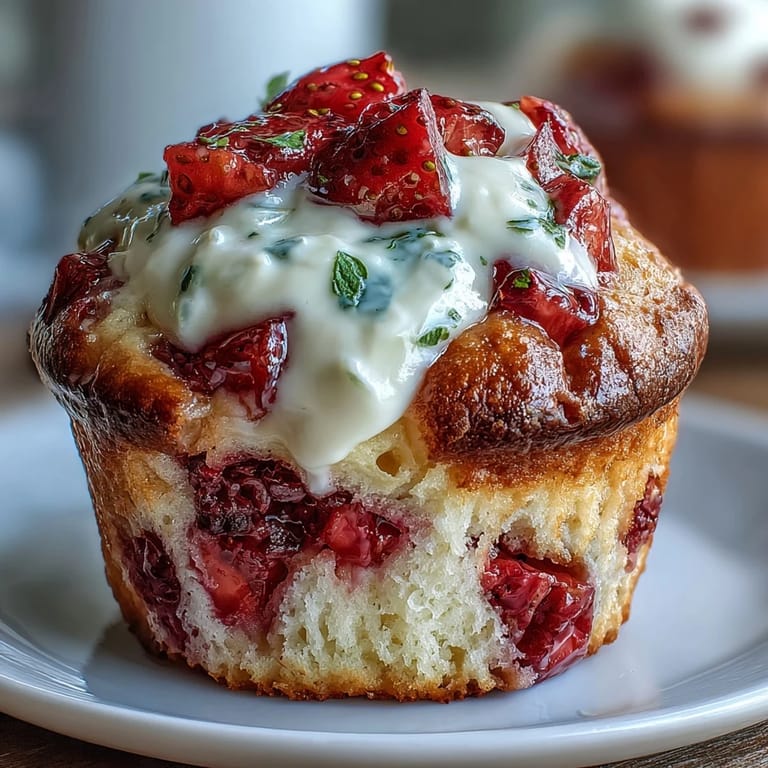
Pin There was a morning last spring when my house smelled so good from these baking that my kids actually left their screens and came to the kitchen just to hang around. Watching them fight over the warm muffins straight from the cooling rack felt like winning at something important.
Why Greek Yogurt Changes Everything
Most muffins rely on buttermilk or sour cream for that tender crumb, but Greek yogurt delivers something different—it's thicker, tangier, and adds just enough density to make the muffin feel substantial without being heavy. The protein in the yogurt also helps create a stronger structure, which means your muffins stay moist and won't crumble apart the way some homemade ones do. I've switched to Greek yogurt in almost every muffin recipe I make now because the results are so consistently good.
The Strawberry Strategy
Fresh strawberries are beautiful but they're also about 91 percent water, which means they're constantly trying to release liquid into your batter. The secret is to dice them small enough that they're distributed throughout rather than creating wet pockets, and to coat them in flour as a barrier against juice. In winter when strawberries are mealy and disappointing, I've had great success switching to frozen strawberries that are thawed and drained, or even pivoting to raspberries or blueberries entirely.
Storage and Keeping
These muffins stay fresh in an airtight container at room temperature for up to three days, or wrapped individually in the freezer for up to two months. I like to wrap them in parchment paper before placing them in a container, which prevents them from sticking together and makes it easy to grab one for a quick breakfast. You can thaw them at room temperature in about 20 minutes, or unwrap and microwave for 20 seconds if you're in a hurry.
- Store muffins in a single layer with parchment between them if you're freezing, so they don't fuse together into one block.
- If your muffins seem dry after a day, wrap them loosely in a damp paper towel in the microwave for 10 seconds to revive them.
- Bake a double batch and freeze half—your future self will thank you when breakfast is already made.
 Pin
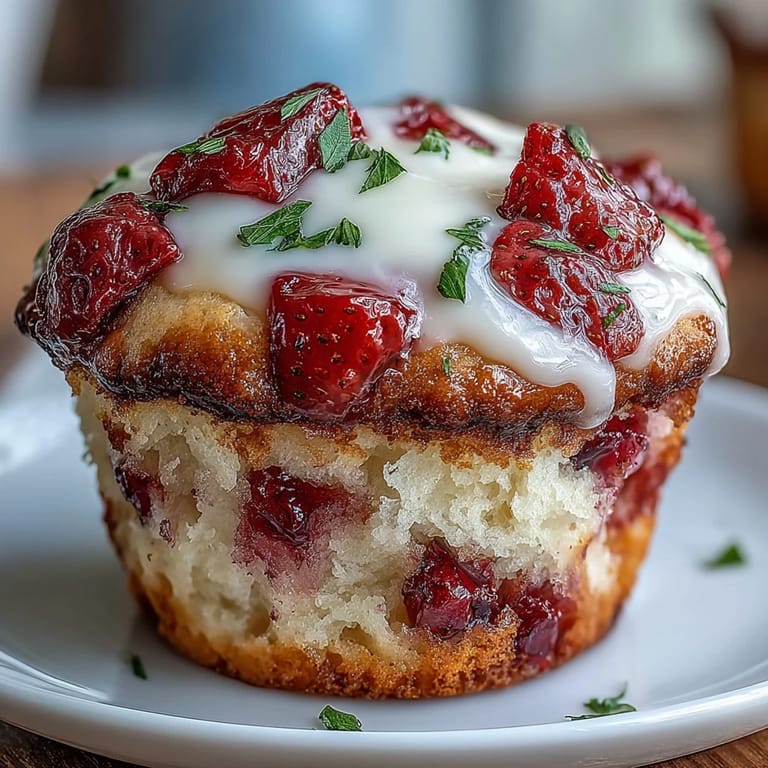
Pin These muffins have become my go-to recipe for almost every occasion, whether I'm packing a lunchbox or bringing something to share. They're proof that simple ingredients handled with care can become something genuinely special.
Recipe Questions
- → How do I keep the strawberries from sinking in the batter?
Toss diced strawberries with a tablespoon of flour before folding them into the batter; this helps prevent sinking during baking.
- → Can I substitute Greek yogurt with another ingredient?
Plain yogurt or sour cream can be used as alternatives, but Greek yogurt adds a creamy texture and slight tang that's hard to replicate.
- → What oil works best for these muffins?
Vegetable oil or melted coconut oil provide moisture without overpowering the strawberry flavor.
- → How do I store leftover muffins properly?
Keep them in an airtight container for up to 3 days at room temperature or freeze for longer storage up to 2 months.
- → Can I use other berries instead of strawberries?
Yes, blueberries or raspberries can be swapped in for a different fruity flavor and similar texture.