 Pin
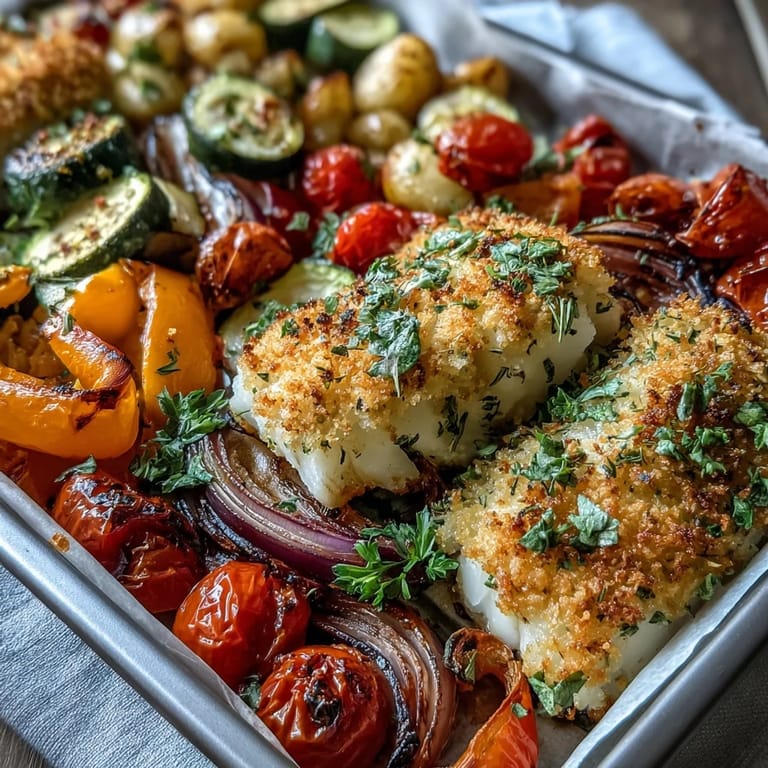
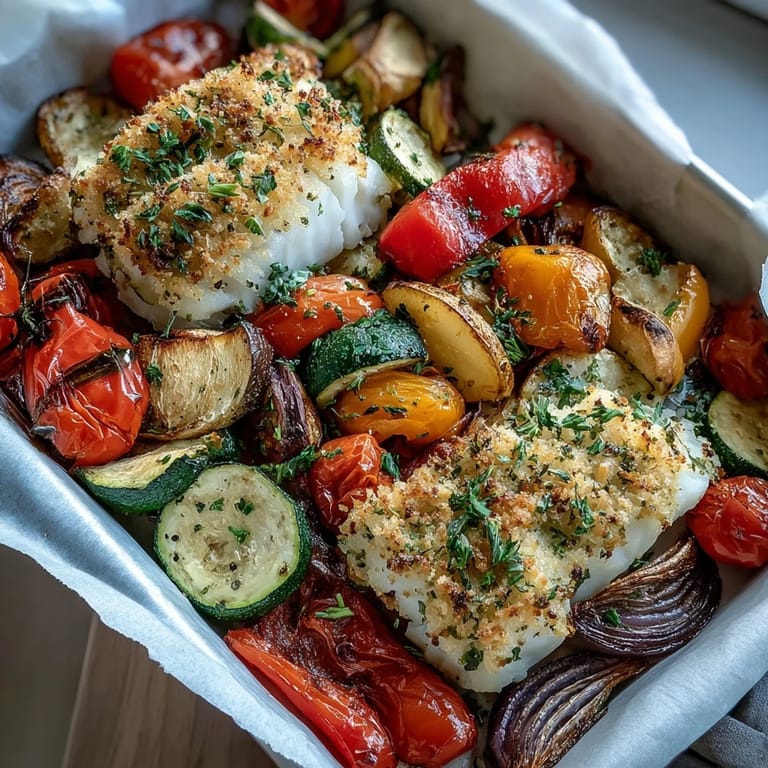
Pin There's something almost magical about watching a sheet pan transform in the oven—vegetables blushing at the edges while fish turns silky and tender beneath a golden, crackling crust. My neighbor stopped by one evening asking what smelled so incredible, and when I pulled this out, the aroma of toasted Asiago and fresh herbs seemed to fill the entire hallway. She asked for the recipe that night, and honestly, it's become the dish I make when I want to impress without the stress.
I remember making this for my sister on a random Tuesday when she mentioned being tired of boring lunches at work. The next day she texted me saying she'd prepped it the night before and heated it gently at her desk, and even cold it was delicious—that's when I knew this recipe had real staying power.
Ingredients
- Cod filets (4, about 5-6 oz each): Look for filets that are roughly the same thickness so they cook evenly; if one is much thicker, gently pound it to match the others.
- Panko breadcrumbs (1/2 cup): The secret to that shatteringly crisp crust—regular breadcrumbs won't give you the same texture.
- Asiago cheese (1/4 cup grated): Nutty and slightly sweet, it pairs beautifully with Parmesan but isn't overpowering on its own.
- Parmesan cheese (1/4 cup grated): The sharp bite that balances the richness; always grate it fresh if you can.
- Fresh parsley (2 tbsp chopped): Adds brightness and color to the crust, cutting through the heaviness of the cheese.
- Garlic powder (1 tsp): Distributes flavor more evenly than minced garlic would, preventing burnt spots.
- Black pepper and salt (1/2 tsp each): Season generously—the crust is where the flavor lives.
- Olive oil (4 tbsp total): Two tablespoons go into the breadcrumb mixture for texture, two for the vegetables, plus extra for drizzling.
- Large egg (1): Your binder—it helps the crust cling to the fish like edible glue.
- Red and yellow bell peppers (1 each, sliced): Slice them thick enough so they don't shrivel but thin enough to cook through in 25 minutes.
- Red onion (1 small, cut into wedges): The sulfur compounds caramelize beautifully in high heat, turning sweet and mild.
- Cherry tomatoes (1 cup, halved): Their natural sugars concentrate when roasted, almost tasting candied.
- Zucchini (1 small, sliced): Cut into half-moons about 1/4 inch thick so they're tender but not mushy.
- Dried oregano (1/2 tsp): A whisper of Mediterranean warmth without competing with the fish.
Tired of Takeout? 🥡
Get 10 meals you can make faster than delivery arrives. Seriously.
One email. No spam. Unsubscribe anytime.
Instructions
- Heat your pan and prep the workspace:
- Preheat the oven to 425°F and line a large sheet pan with parchment paper—this matters more than you'd think because it prevents sticking and makes cleanup actually enjoyable. Having everything prepped before you start means you won't be scrambling with wet hands covered in egg when the oven's already hot.
- Build the crust mixture:
- In a medium bowl, combine panko, both cheeses, parsley, garlic powder, pepper, and salt, then stir in 2 tablespoons of olive oil until the whole thing looks like wet sand. The oil helps the breadcrumbs brown evenly and bind together instead of falling off in the oven.
- Coat the fish:
- Beat the egg in a shallow bowl, dip each filet so it's lightly covered, then press it firmly into the breadcrumb mixture, working from the thickest part to the thin edges. Don't be shy—the more crust that sticks, the more texture you'll have.
- Arrange vegetables strategically:
- Toss the peppers, onion, tomatoes, and zucchini with 2 tablespoons of olive oil and seasonings in a large bowl, then spread them on the empty half of the sheet pan, leaving the other side clear for the fish. Keeping them separate at first means you can rotate them halfway through without disturbing the fish.
- Bring it all together:
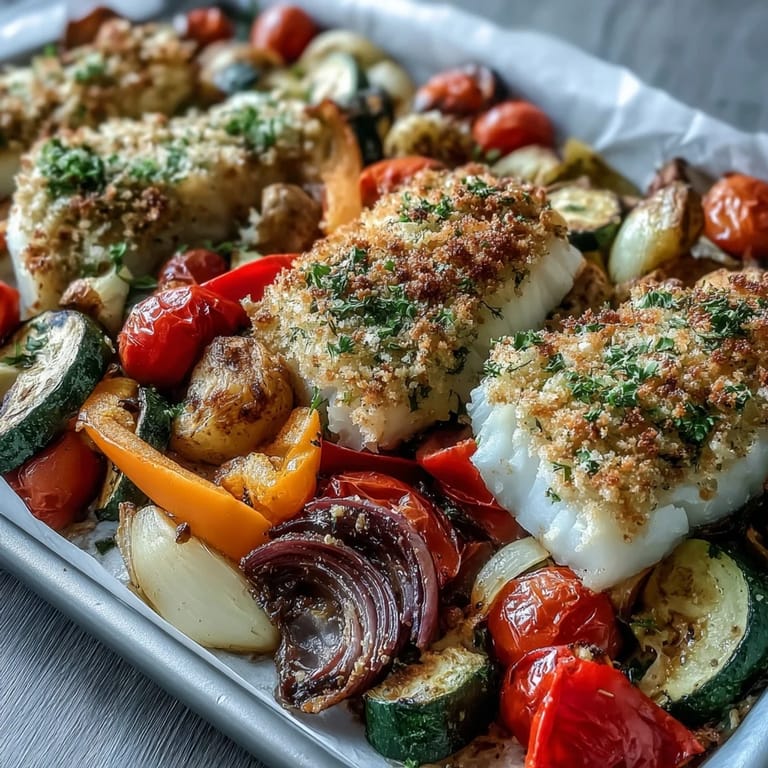
- Place the coated filets on their side of the pan and drizzle lightly with olive oil, then slide everything into the oven. After about 12 minutes, give the vegetables a quick stir so they brown evenly on all sides.
- Watch for the finish line:
- The fish is done when it flakes easily with a fork and the crust is golden brown, which usually takes 20 to 25 minutes depending on your oven's personality. If you love extra crunch, broil for the last 2 minutes—the crust will crackle like nothing else.
 Pin
Pin What struck me most about this dish was watching my kids actually ask for seconds without being asked, and then my youngest wanted to help make it again the next week. That's when I realized it wasn't fancy enough to feel like a chore, but satisfying enough to feel like a real meal.
The Magic of Sheet Pan Cooking
Sheet pans are underrated workhorses—they're where weeknight dinners stop feeling complicated and start feeling intentional. The real trick is understanding that roasting vegetables and fish together isn't a compromise; it's actually how they were meant to cook, with the fish's natural juices seasoning the vegetables while the high heat caramelizes their edges. I've learned that the vegetables aren't just a side; they're equal partners on the plate, absorbing flavor and adding textural contrast to the tender fish.
Why This Crust Stays Crispy
Most cheese-crusted fish ends up dense or greasy, but panko changes everything because of its coarse structure—those jagged edges toast instead of compress. The key is mixing the oil directly into the breadcrumb mixture rather than just dipping the fish in oil, which creates an almost self-supporting crust that doesn't rely on steam to puff up. I discovered this after one too many soggy experiments, and now it's become second nature.
Timing and Temperature Flexibility
If your filets are thicker than average or your vegetables are cut larger, give yourself up to 30 minutes, but start checking at 20 so nothing dries out. The beauty of this dish is how forgiving it is—if the vegetables finish first, pull them to the side of the pan where it's cooler; if the fish needs more time, you can protect the crust with a loose foil tent.
- Thicker filets should be pounded gently to an even 3/4-inch thickness before coating so everything finishes together.
- Fresh fish cooks faster than frozen, so thaw it completely and pat it dry at least 30 minutes before cooking.
- Every oven is different, so trust your eyes over the timer—a golden crust and flaking fish are your real signals, not the clock.
 Pin
Pin This recipe has quietly become one of my most-requested dinners, the kind people remember and ask you to make again. There's real comfort in knowing that something so elegant takes less time than most people spend deciding what to order.
Recipe Questions
- → What type of fish works best for this dish?
Firm white fish like cod, haddock, or tilapia are ideal as they hold the crust well and bake evenly.
- → How can I get a crispier crust on the fish?
For extra crunch, broil the fish for the last 2 minutes of cooking until the crust turns golden and crisp.
- → Can I substitute the Asiago and Parmesan cheeses?
Yes, hard cheeses with a similar texture like Pecorino Romano can be used to maintain the crust's flavor and texture.
- → Is it necessary to use panko breadcrumbs?
Panko provides a light, airy crunch, but regular breadcrumbs can be used if panko isn’t available.
- → What vegetables complement this dish best?
Bell peppers, cherry tomatoes, zucchini, and red onions are recommended for their color, texture, and roasting compatibility.
- → How should I season the vegetables?
A simple mix of olive oil, dried oregano, salt, and black pepper enhances the natural sweetness and ensures even roasting.