 Pin
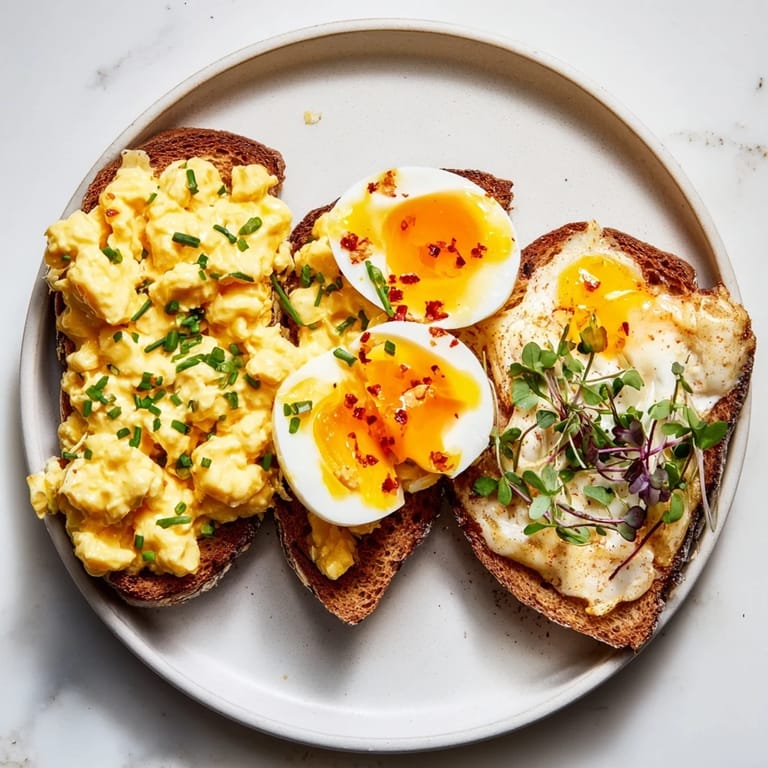
Pin There's something magical about the moment when three different egg preparations converge on a single slice of toast—it feels like you've cracked the code on breakfast itself. I discovered this dish during a lazy Sunday morning when I had three eggs staring at me from the fridge and absolutely no direction. Instead of making a choice, I thought: why not do all three? What emerged was this beautiful, almost architectural plate that somehow made a simple breakfast feel like a celebration.
I made this for my roommate on a Tuesday morning when she was stressed about a work presentation, and watching her face light up when she saw the plate made me realize breakfast doesn't have to be rushed or forgettable. She called it her "egg flight," and the name stuck. Now whenever someone visits, they ask if we're doing the flight—it's become one of those small rituals that says more than words ever could.
Ingredients
- 1 large slice sourdough or country-style bread: The foundation matters—you want something sturdy enough to support three eggs without becoming a soggy mess, with enough character to actually taste good on its own.
- 1 large egg for scrambling: Room temperature makes a difference; cold eggs from the fridge need a few extra seconds to warm up and cook evenly.
- 1 large egg for soft-boiling: Timing is everything here, and a small saucepan of boiling water is your best friend.
- 1 large egg for frying: Choose your favorite cooking method if you prefer poached or baked—the flight is flexible.
- 1 tbsp unsalted butter: Split between the scramble and the fried egg; unsalted lets you control the seasoning completely.
- 1 tsp olive oil: This goes with the fried egg and prevents sticking while adding a subtle richness.
- Salt and freshly ground black pepper: Season as you go, not all at the end—each egg deserves its own seasoning moment.
- Chopped fresh chives, chili flakes, and microgreens (optional): These aren't just pretty—chives add a subtle onion note, chili flakes bring heat, and microgreens give you a peppery crunch that ties everything together.
Tired of Takeout? 🥡
Get 10 meals you can make faster than delivery arrives. Seriously.
One email. No spam. Unsubscribe anytime.
Instructions
- Get Your Toast Ready:
- Preheat your oven to 180°C and place your bread on a baking sheet. Toast for 5–7 minutes until it's golden and crisp on the outside but still has a bit of give inside—you want it sturdy, not hard as a rock.
- Start the Soft-Boiled Egg First:
- Bring a small pot of water to a rolling boil and gently lower in one egg with a spoon. Set a timer for 6½ minutes—this is the sweet spot for a jammy, runny yolk surrounded by set whites. When the timer goes off, transfer it straight to an ice bath to stop the cooking.
- Scramble One Egg Low and Slow:
- In your nonstick skillet over medium-low heat, melt ½ tablespoon of butter. Whisk one egg with just a pinch of salt and pepper, pour it in, and resist the urge to rush—stir gently with a spatula, letting the curds form slowly and stay creamy. It should take about 2 minutes.
- Fry the Third Egg with Confidence:
- Wipe out your skillet (no need to wash it), add the remaining butter and olive oil over medium heat, and let it get shimmering. Crack in your last egg and let the whites set while keeping the yolk runny—about 2–3 minutes. Season right at the end.
- Assemble Your Flight:
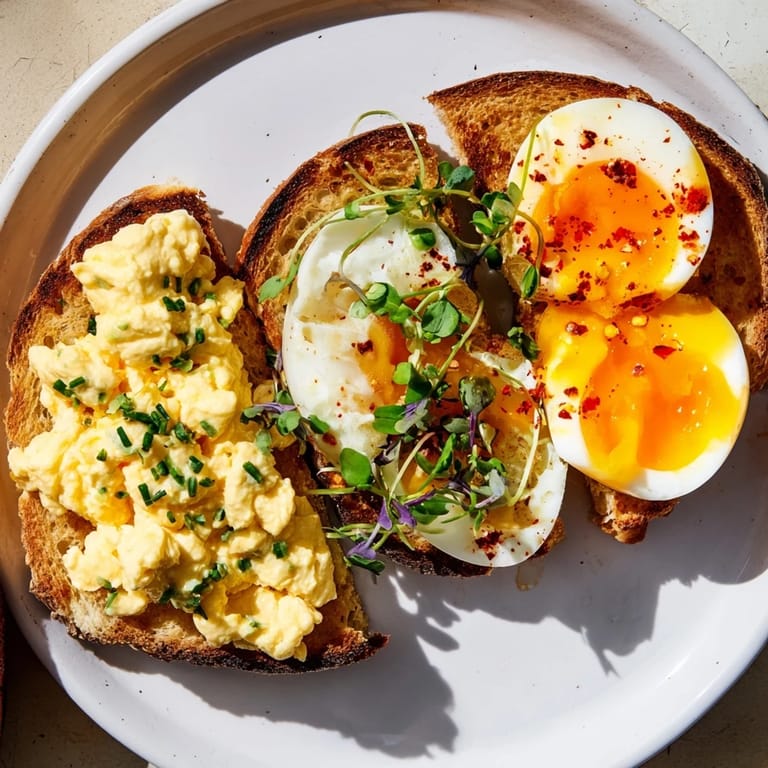
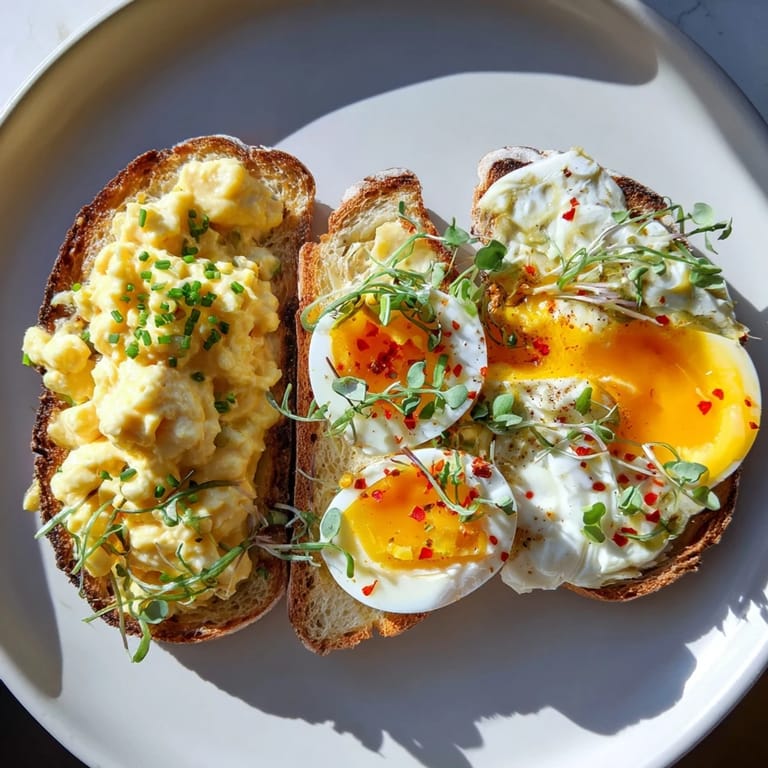
- Place your warm toast on a plate and divide it into three sections. Spread the scrambled egg on one third, nestle the halved soft-boiled egg on the second third, and slide the fried egg onto the last third—each one should be visible and celebrated.
- Finish with Purpose:
- If you're using garnishes, scatter chives over the scrambled egg, a pinch of chili flakes over the fried egg, and let microgreens sit wherever they look best. Serve immediately while everything is still warm.
 Pin
Pin There's a moment right before you take that first bite where you pause and think about how something so simple—three eggs, one slice of toast—can feel like such a treat. That's what this dish gives you: permission to slow down and actually taste breakfast.
The Secret to Each Egg Technique
Each egg preparation teaches you something different. The scrambled egg teaches you patience and gentle heat—rushing it with high temperature gives you chunky, rubbery results instead of those silky curds. The soft-boiled egg is a lesson in precision and timing; invest in a kitchen timer if you haven't already. The fried egg is about confidence: once you crack it in the pan, stop fussing and let the butter and heat do their work. Together, they remind you that cooking is as much about technique as it is about ingredients.
Making It Your Own
The beauty of an egg flight is that it's endlessly customizable without losing its spirit. Swap sourdough for gluten-free bread if you need to, or use a thicker slice of brioche for something richer. The egg styles themselves are negotiable—poach instead of fry, make a mini omelette instead of scrambling, or soft-boil two and skip one preparation entirely. I've seen people add avocado slices for creaminess, smoked salmon for elegance, or sautéed spinach for earthiness.
Timing and Rhythm
The real skill here is orchestrating everything so it all comes together hot. Start the soft-boiled egg first since it needs the most time, then get your toast in the oven, then begin the scramble, then finish with the fried egg while the scramble is still going. It sounds complicated but becomes intuitive after your first attempt.
- Keep all your ingredients and tools prepped and within arm's reach so you're not hunting for salt or a spatula mid-cook.
- Taste each egg separately before assembly so you know exactly what seasoning adjustments you need.
- Serve on a warm plate—this small detail keeps everything at its best temperature longer.
 Pin
Pin This breakfast is proof that you don't need fancy ingredients or complicated techniques to make something memorable. It's just about giving each element the attention it deserves and bringing them together with intention.
Recipe Questions
- → How long should I cook the soft-boiled egg?
For a perfectly soft-boiled egg with a slightly runny yolk, boil for about 6½ minutes, then transfer to ice water to stop cooking.
- → Can I use different types of bread?
Yes, varieties like sourdough or country-style bread work best for a crisp, sturdy base, but gluten-free options can be used if needed.
- → What is the best way to prepare scrambled eggs here?
Whisk the egg with salt and pepper, then gently cook it over medium-low heat until just set and creamy to retain a soft texture.
- → How do I get a runny yolk in the fried egg?
Cook the egg over medium heat for 2–3 minutes until the whites are set but the yolk remains runny. Season with salt and pepper.
- → Are there suggested garnishes to enhance the dish?
Chopped fresh chives, chili flakes, and microgreens add bright flavors and texture contrast to the eggs atop the toast.
- → Can I add other toppings for variety?
Ingredients like avocado slices, smoked salmon, or sautéed spinach pair well and add extra nutrition to the toast.