 Pin
Pin There's something almost meditative about stirring risotto. Years ago, a friend visiting from Milan laughed when she watched me make risotto for the first time—I was rushing it, barely waiting for the broth to absorb before adding more. She gently took the wooden spoon from my hands, slowed everything down, and suddenly the dish transformed into something altogether different: creamy, luxurious, alive. That afternoon taught me that risotto isn't about speed; it's about presence. Now whenever I make it, especially with wild mushrooms, I'm transported back to that kitchen moment, to the patience she showed me.
I made this risotto last autumn when my sister came home after months away. The kitchen filled with the smell of toasted mushrooms and garlic while we caught up at the stove, and by the time we sat down to eat, the whole evening felt warmer somehow. She took one bite and asked for the recipe immediately—that's when I knew this version had become my own.
Ingredients
- Arborio rice: This short-grain variety releases starch as it cooks, creating that signature creamy texture. Don't substitute long-grain rice; it simply won't give you the same silky result.
- Mixed wild mushrooms: The combination of cremini, shiitake, and porcini creates depth—cremini adds earthiness, shiitake brings umami, and porcini (fresh or rehydrated) adds an almost meaty richness.
- Vegetable broth: Keep it warm in another pot the entire time; cold broth will shock the rice and interrupt the cooking process.
- Dry white wine: This acidic note cuts through the richness and adds complexity; don't skip it or use cooking wine with added salt.
- Parmesan cheese, freshly grated: Pre-grated versions often contain anti-caking agents that prevent melting smoothly; grate it yourself just before you need it.
- Unsalted butter: Two separate additions—first for sautéing (where flavor development matters), then cold cubes at the end (for that final creamy finish).
- Garlic and onion: The aromatic base that builds the foundation; don't rush past them, as they carry flavor into every spoonful.
Tired of Takeout? 🥡
Get 10 meals you can make faster than delivery arrives. Seriously.
One email. No spam. Unsubscribe anytime.
Instructions
- Prepare your mise en place:
- Slice your mushrooms, mince your garlic, chop your onion, and have your warm broth ready in another pot. This matters more than you'd think—risotto moves quickly once you start, and scrambling for ingredients mid-stir breaks your rhythm.
- Sauté the aromatics:
- Heat olive oil and butter over medium heat, then add onion. Let it soften for 3–4 minutes until it turns translucent and sweet. Add garlic for just one minute—you want its fragrance, not browned garlic, which tastes bitter.
- Brown the mushrooms:
- This is where deep flavor lives. Sauté your mushrooms for 5–7 minutes, stirring occasionally, until they're golden and any liquid they release has evaporated. This concentrates their earthy umami.
- Toast the rice:
- Stir the Arborio rice into the mushroom mixture and cook for 1–2 minutes. You'll hear a subtle clicking sound as the grains move in the pan; this toasting seals each grain and prevents mushiness.
- Deglaze with wine:
- Pour in the white wine and stir constantly until it's completely absorbed. The acidity here awakens all the flavors you've built.
- Stir in broth, one ladle at a time:
- Add warm broth slowly, about a ladle at a time, stirring frequently. Wait until the liquid is mostly absorbed before adding more—this is the actual cooking method that creates creaminess. The whole process takes 18–20 minutes and is meditative, not rushed.
- Finish with butter and cheese:
- When the rice is creamy and tender (al dente, with a slight bite), remove from heat and stir in cold butter cubes and freshly grated Parmesan. This final step, called mantecatura in Italian cooking, creates that luxurious, velvety finish that separates good risotto from extraordinary risotto.
- Rest and serve:
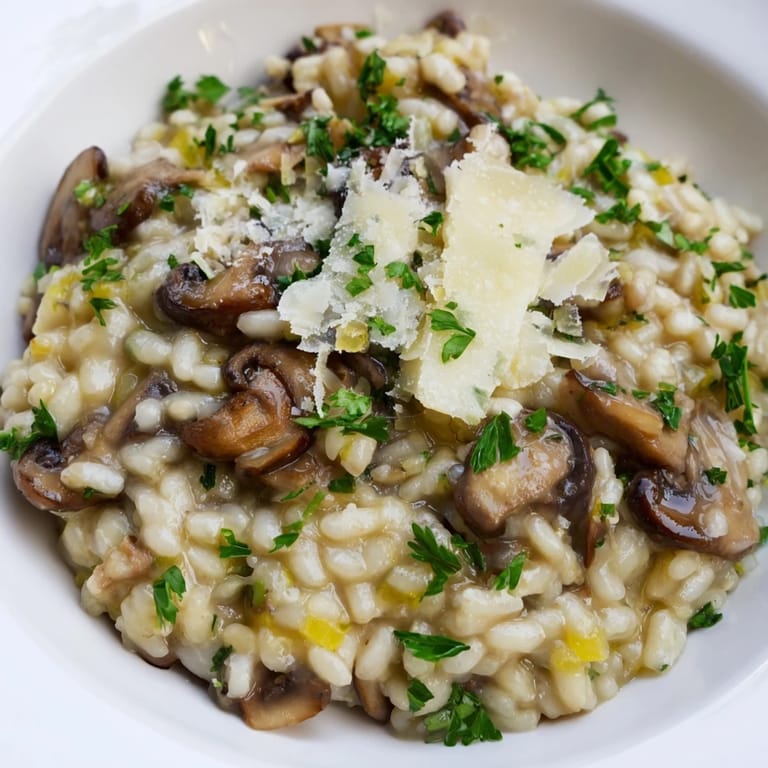
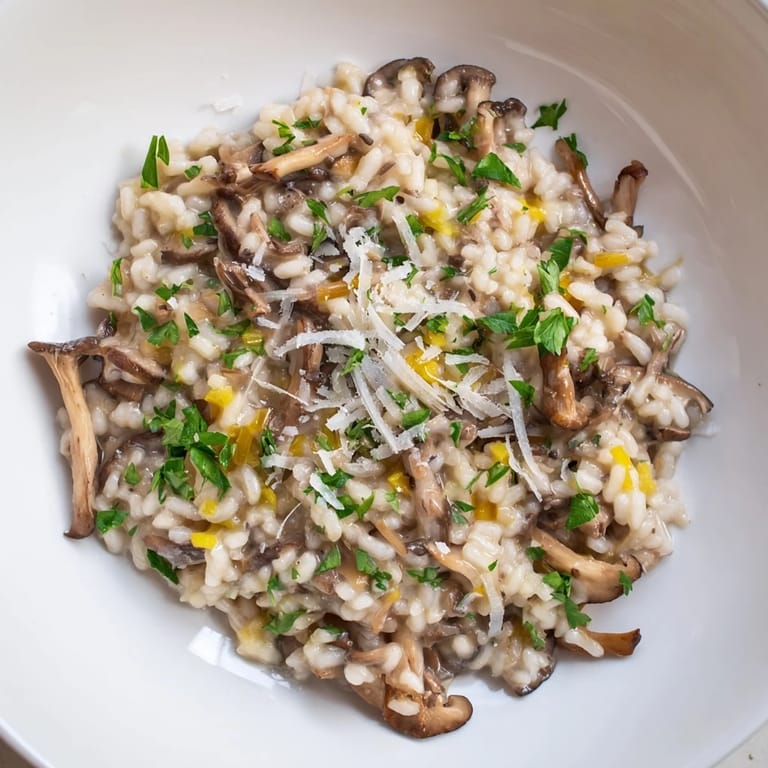
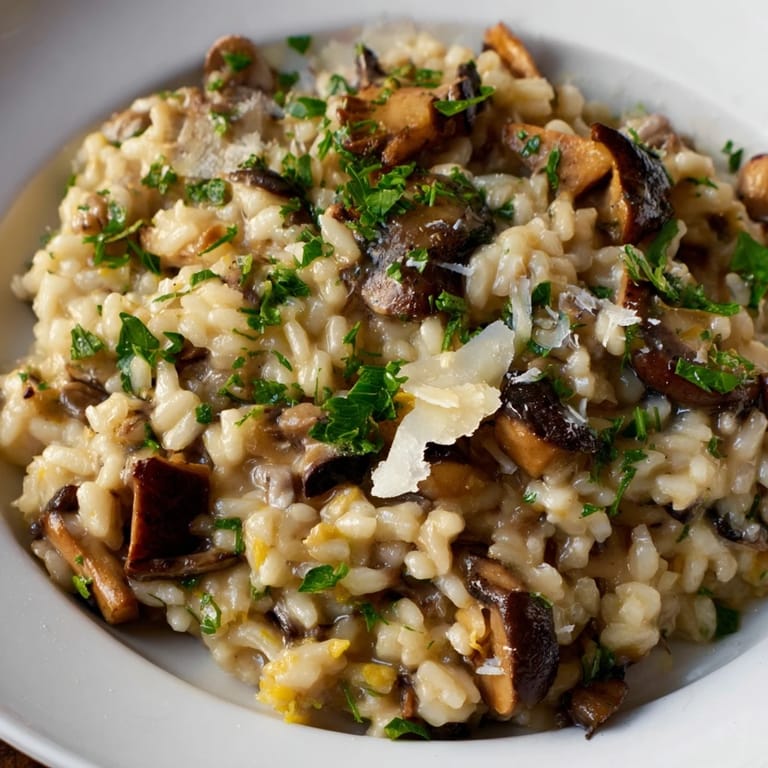
- Let the risotto sit for 2 minutes—this allows the starches to set slightly. Serve immediately, garnished with fresh parsley and extra Parmesan.
 Pin
Pin There was an evening when I made this risotto for someone I wanted to impress, and I realized halfway through stirring that food isn't just fuel—it's a way of saying I took time for you. The kitchen steamed with warmth, my arm moved in steady circles, and when we finally sat down and tasted that first creamy spoonful together, I knew that presence and care had made it into the dish.
Variations and Additions
This risotto is a canvas. I've added saffron threads with the broth for a golden, delicate version that felt like cooking in sunlight. Other times, I've stirred in fresh thyme or rosemary while the mushrooms cook, letting those herbs infuse the entire pot. Some seasons I use a mix of mushrooms and roasted root vegetables—butternut squash and mushrooms together create something almost creamy without extra butter. The foundation stays the same; the variations come from what's available and what you're craving.
Wine Pairing and Serving
A crisp Pinot Grigio or unoaked Chardonnay sits beautifully alongside this dish, the acidity echoing the white wine in the risotto itself. I've also paired it with a light Vermentino on warmer evenings, or a gentle Barbera when the weather turns cool. The risotto doesn't need much accompaniment—a simple green salad or some toasted bread is enough. It's meant to be the main event, rich enough to stand alone.
Storage and Reheating
Risotto is best served fresh, but life happens. If you have leftovers, store them in an airtight container in the refrigerator for up to three days. When reheating, add a splash of warm broth and stir gently over medium-low heat until it loosens back into a creamy consistency. Some people transform leftover risotto into risotto cakes—press the cold risotto into patties, pan-fry them until golden, and serve with a fried egg on top. That accident discovered years ago has become one of my favorite meals.
- Never microwave risotto; it disrupts the creamy structure.
- If you freeze risotto, know that the texture will change slightly upon thawing, but the flavor remains beautiful.
- Leftover risotto also makes an exceptional filling for stuffed peppers or mushrooms.
 Pin
Pin Risotto teaches patience in a world that wants everything fast. Make it for yourself on a quiet evening, or make it for someone you want to slow down with, and you'll understand why this dish has endured for centuries.
Recipe Questions
- → What type of rice is best for this dish?
Arborio rice is preferred for its high starch content that creates the creamy texture characteristic of risotto.
- → Can I use other mushrooms besides wild varieties?
Yes, cremini, shiitake, and porcini are great choices, but common button mushrooms work if wild types aren't available.
- → Why is white wine added during cooking?
White wine adds acidity and depth, balancing the richness of butter and cheese while enhancing mushroom flavors.
- → How do I achieve the perfect risotto texture?
Gradually adding warm broth and stirring constantly helps release starch and yields a tender, creamy yet al dente consistency.
- → What can I substitute for Parmesan cheese?
Pecorino Romano or Grana Padano are good alternatives, offering similar salty and nutty notes.
- → Is this dish vegetarian friendly?
Yes, by using vegetable broth and omitting any meat-based ingredients, it suits vegetarian dietary needs.