 Pin
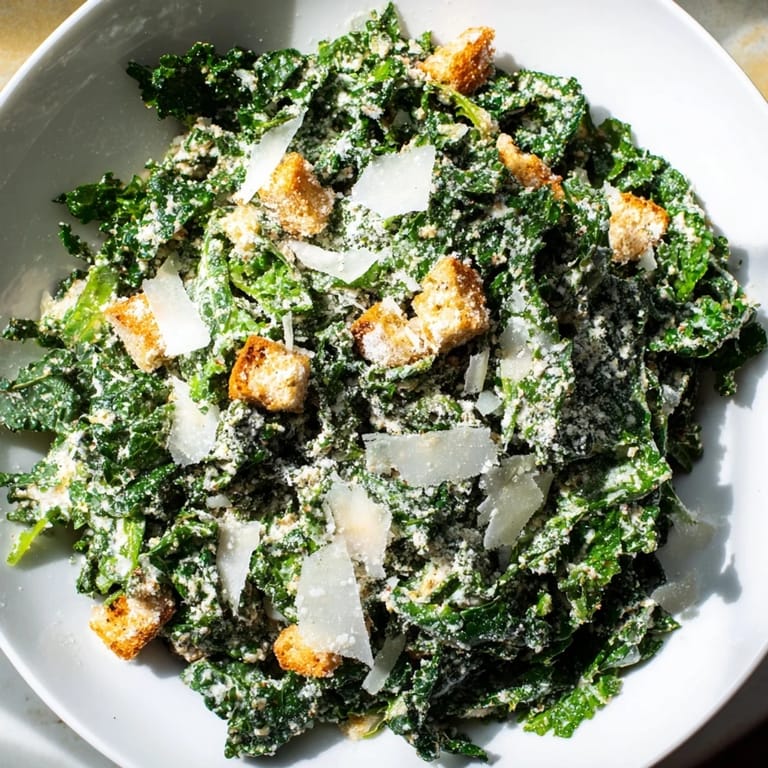
Pin There's something magical about the moment when you realize a dish you've loved forever can surprise you all over again. I was standing in my kitchen on a gray Tuesday afternoon, holding a bunch of kale that seemed too sturdy for a salad, when it hit me—what if I treated it like the Romans treated their lettuce, massaged it tender, and built something rich and creamy around it? That first bite of my kale Caesar, with its buttery dressing clinging to those now-silky leaves, reminded me why I fell in love with cooking in the first place.
I made this for my sister last spring when she was convinced she'd never enjoy a salad that didn't come from a restaurant kitchen. Watching her fork through those kale leaves, then pause mid-chew to ask for the dressing recipe, was one of those quiet victories that sticks with you. It wasn't fancy, but it felt important somehow.
Ingredients
- Kale (about 200 g): Use the sturdy, curly kind—it's tougher than you'd think and gets tender with just a little hand massage, which is oddly therapeutic.
- Olive oil for massaging: This step sounds precious, but it genuinely transforms those leaves from scratchy to silky.
- Egg yolk: The foundation of your dressing's silky texture; make sure it's at room temperature or it can seize up on you.
- Dijon mustard: A teaspoon is all you need to add body and tang without overpowering the other flavors.
- Anchovies (optional): They dissolve into the dressing and add a savory depth that lingers mysteriously—your guests won't know what makes it taste so good.
- Garlic clove: Minced finely so you get brightness without harsh bites.
- Fresh lemon juice: Squeeze it yourself if you can; bottled just won't give you that same snap.
- Worcestershire sauce: A teaspoon adds umami and a hint of funky complexity that makes people ask what's in this.
- Extra-virgin olive oil (½ cup): Go slowly when whisking this in—patience here means a luxurious, thick dressing instead of a broken mess.
- Freshly grated Parmesan: The difference between fresh-grated and pre-shredded is night and day; the fresh stuff emulsifies into the dressing like butter.
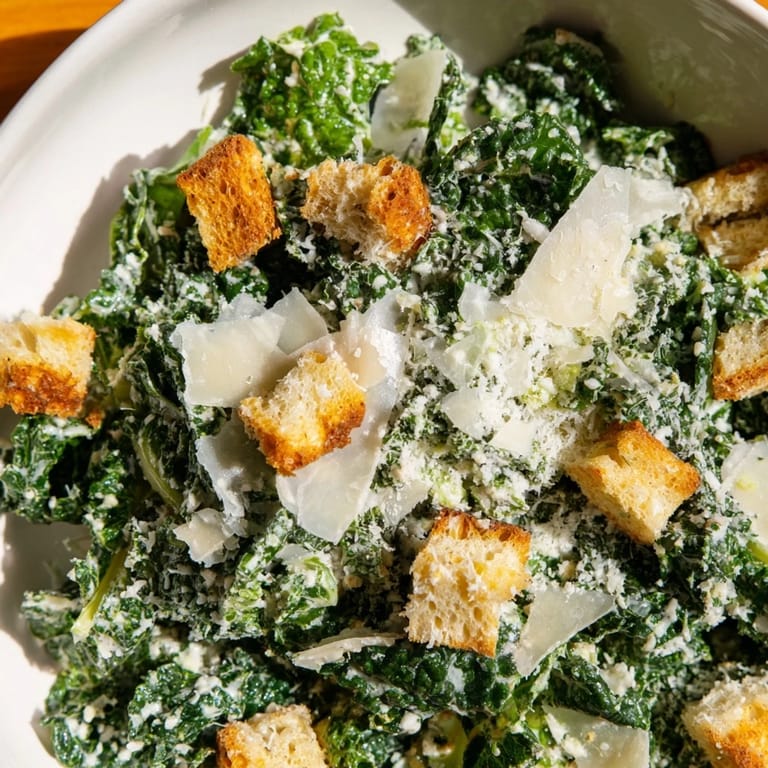
- Bread cubes: Rustic, slightly stale bread works better than soft white bread; it won't turn into mush.
- Sea salt and black pepper: Taste as you go—the dressing can take more seasoning than you'd expect.
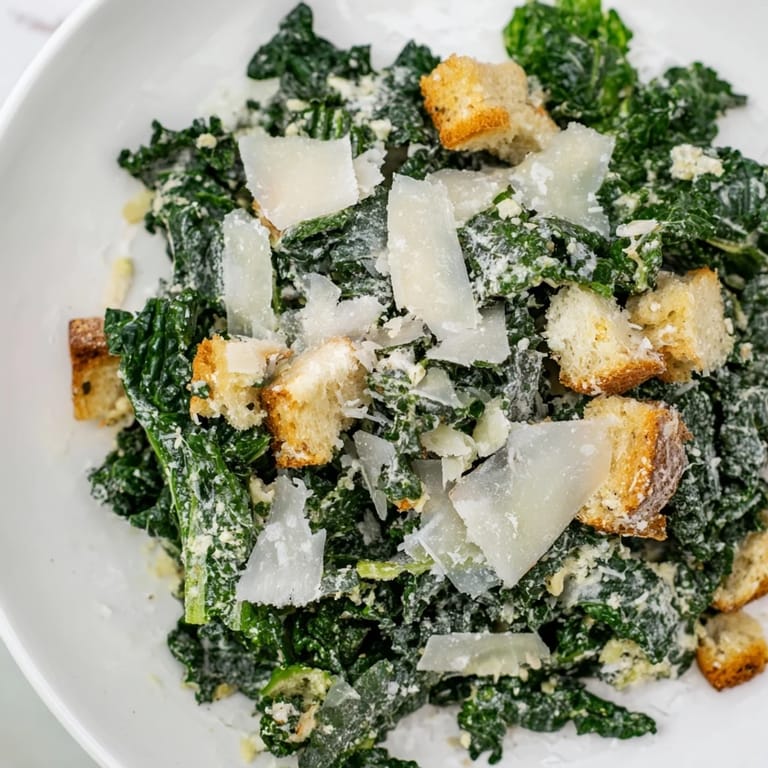
- Shaved Parmesan for topping: Use a vegetable peeler or a sharp knife to create thin ribbons that catch the light.
Tired of Takeout? 🥡
Get 10 meals you can make faster than delivery arrives. Seriously.
One email. No spam. Unsubscribe anytime.
Instructions
- Toast your croutons first:
- Preheat the oven to 375°F and toss your bread cubes with olive oil and sea salt, then spread them on a baking sheet. Bake for 8–10 minutes, shaking the pan halfway through, until they're golden and crispy on the outside but still have a tiny bit of give inside. Let them cool while you work on everything else—they'll crisp up more as they sit.
- Massage the kale like you mean it:
- Chop your kale and put it in a large bowl, then drizzle with olive oil and massage it with your hands for about 2–3 minutes. You'll feel the leaves soften and darken, becoming almost silky—this is the secret to kale that doesn't feel like eating a sweater.
- Build your dressing with patience:
- In a medium bowl, whisk together your egg yolk, Dijon mustard, minced anchovies (if using), garlic, lemon juice, and Worcestershire sauce until combined. Now comes the crucial part: add your olive oil very slowly—a drizzle at a time—whisking constantly, just like you're making mayonnaise. This emulsification is what gives you that creamy, thick dressing instead of a broken puddle.
- Finish the dressing:
- Once the oil is incorporated and the dressing is thick and silky, stir in your freshly grated Parmesan and season with salt and pepper to taste. Give it a final whisk to smooth it out.
- Bring it all together:
- Pour the dressing over your massaged kale and toss thoroughly, making sure every leaf gets coated in that creamy goodness. Add your cooled croutons and toss gently so they stay crunchy.
- Plate and serve:
- Transfer everything to a serving platter or individual bowls, top with shaved Parmesan, and bring it to the table right away while those croutons are still at their crispiest.
 Pin
Pin There was a moment last summer when I served this to a friend who'd been on a strict diet for months, and seeing her face light up as she took that first bite made me understand why people talk about food memories the way they do. It wasn't just salad; it was permission to enjoy something rich and delicious without guilt.
The Story of Caesar Dressing
Caesar dressing has one of those origin stories that feels almost romantic—created in Mexico in the 1920s by an Italian immigrant named Caesar Cardini when he was working with what he had on hand. There's something beautiful about a recipe born from necessity and improvisation, and every time you make a proper Caesar from scratch instead of reaching for a jar, you're honoring that spirit. The traditional recipe uses raw egg, which some people shy away from now, but if you start with the freshest eggs you can find and use them within a day, you're working with the same ingredient cooks have relied on for centuries.
Making It Your Own
The genius of this recipe is how forgiving it is to personalization. I've made it with baby kale when I wanted something more delicate, and I've added crispy bacon or roasted chickpeas when I needed the salad to feel more substantial. One night, I tossed in some grilled chicken breast and suddenly had a dinner instead of a side dish. The dressing is sturdy enough to handle additions without losing its character, which means you can build around it rather than feeling locked into one version.
Timing and Storage
This salad is best assembled right before you eat it, which actually makes it perfect for busy nights—you can do all your prep work whenever you have time, then come together in the final 5 minutes. The kale, massaged and sitting naked in the bowl, will keep in the fridge for a couple of hours without getting sad. Your dressing will last about 3 days in an airtight container, though I've never had any left over after one salad. If you're making this for a crowd, prep the dressing ahead, toast the croutons, massage the kale, and just do the final assembly when everyone's ready to eat.
- Make the dressing a few hours ahead if it helps with your timing—it actually tastes better when the flavors have had time to settle.
- Store your croutons in an airtight container so they stay crispy and don't go stale.
- If you need to transport this somewhere, pack the components separately and assemble just before serving.
 Pin
Pin This salad has become the thing I make when I want to feel like I'm taking care of people properly, and that's really all a recipe needs to be. There's something about sitting down to greens that taste like they were made with intention that makes everything feel a little more civilized, a little more worth savoring.
Recipe Questions
- → How do you soften kale leaves?
Massage chopped kale with olive oil using your hands for 2-3 minutes until the leaves become tender and darker in color.
- → Can anchovies be omitted?
Yes, for a vegetarian-friendly version, omit anchovies or substitute with capers for a similar briny flavor.
- → How are the croutons prepared?
Rustic bread cubes are tossed with olive oil and sea salt, then baked at 375°F for 8-10 minutes until golden and crispy.
- → What dressing ingredients add creaminess?
The dressing combines egg yolk, Dijon mustard, lemon juice, Worcestershire sauce, garlic, and Parmesan, emulsified with extra-virgin olive oil.
- → How to serve this salad?
Serve immediately after tossing the kale with dressing and croutons, topped with shaved Parmesan to maintain maximum crunch.
- → Can I add protein to this dish?
Grilled chicken or roasted chickpeas make excellent protein additions that complement the flavors and textures.