 Pin
Pin My flatmate came back from a ski trip in Zermatt with a tiny jar of kirsch and a fondue fork she'd accidentally pocketed. We didn't have a proper caquelon, so we used a battered enamel pot over a camping stove in the middle of the kitchen table. The cheese seized up twice before we got it right, but by the third glass of wine, nobody cared. That night taught me fondue isn't about perfection, it's about the mess, the laughter, and fighting over the last crusty bit at the bottom.
I made this for my sister's birthday once, and she invited six people without telling me. We ran out of cheese halfway through, so I grated whatever was in the fridge: a bit of cheddar, some leftover gouda, even a knob of parmesan. It tasted nothing like the original, but everyone still scraped the pot clean. Fondue has a way of making you feel generous, even when you're improvising wildly.
Ingredients
- Gruyère cheese: This is the backbone, nutty and smooth when melted. Grate it yourself because pre-shredded cheese has coatings that make it grainy.
- Emmental cheese: Adds a mild sweetness and those iconic holes mean it melts fast and creamy.
- Dry white wine: The acidity keeps the cheese from clumping. I've used Sauvignon Blanc when I couldn't find Swiss Fendant and it worked beautifully.
- Kirsch: A splash of this cherry brandy cuts through the richness, but if you skip it, nobody will know except you.
- Cornstarch: This is your insurance policy against a grainy, separated mess. Toss it with the cheese before adding.
- Garlic clove: You rub it inside the pot and throw it away, leaving just a whisper of flavor that doesn't overpower.
- Nutmeg and white pepper: Freshly grated nutmeg smells like winter, and white pepper adds warmth without black specks floating around.
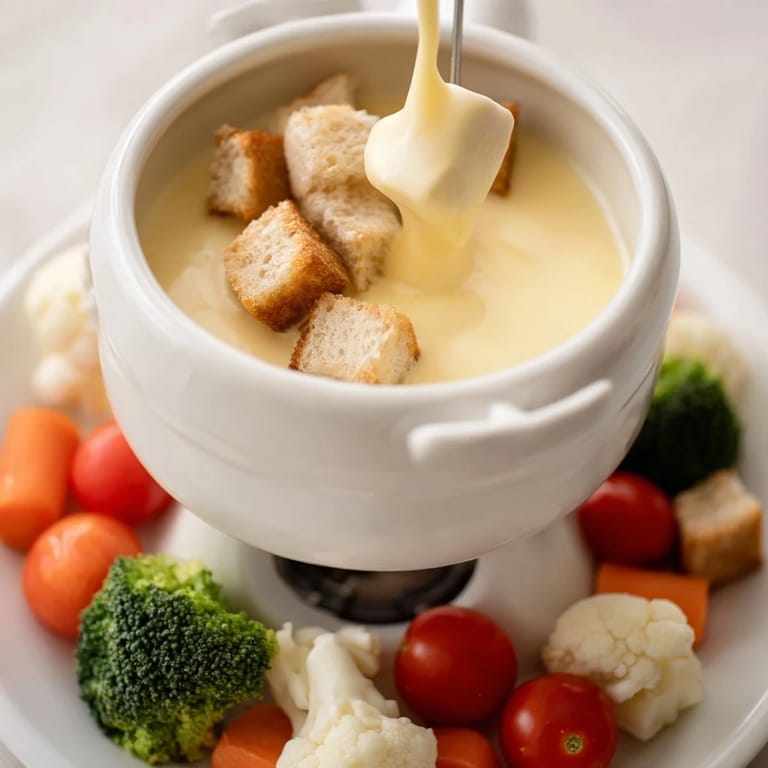
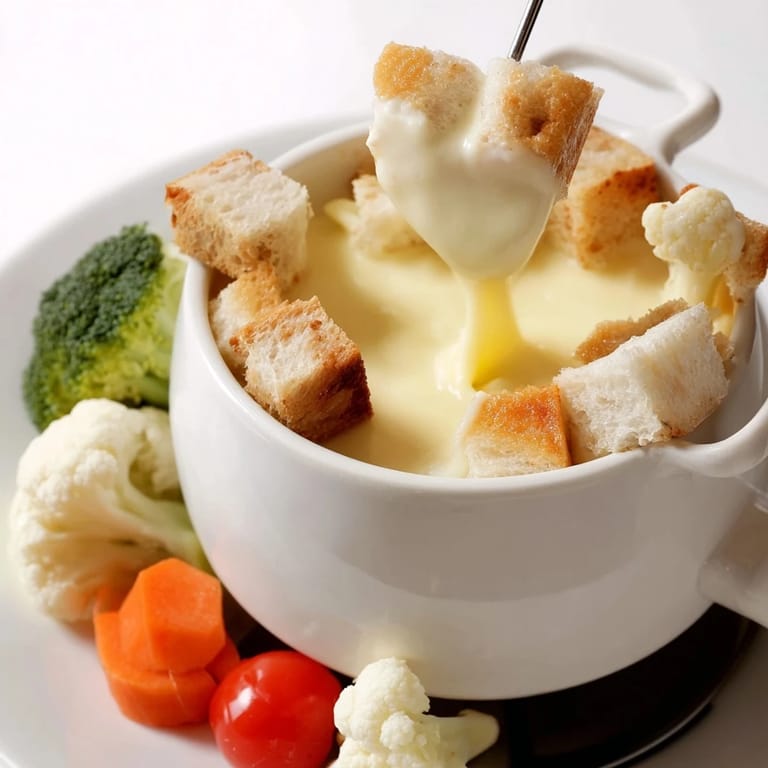
- Bread cubes: Slightly stale baguette holds onto the fork better. I leave mine out on the counter for a few hours on purpose.
- Blanched vegetables: Broccoli, cauliflower, carrots, and cherry tomatoes give you something lighter to dip when the bread starts feeling heavy.
Tired of Takeout? 🥡
Get 10 meals you can make faster than delivery arrives. Seriously.
One email. No spam. Unsubscribe anytime.
Instructions
- Rub the pot with garlic:
- Slice the clove in half and rub it all over the inside of your fondue pot. The oil clings to the surface and leaves a subtle, sweet garlic hint.
- Heat the wine gently:
- Pour in the wine and warm it over medium-low heat until you see tiny bubbles at the edge. Don't let it boil or the alcohol will cook off too fast and the flavor flattens.
- Toss cheese with cornstarch:
- In a bowl, mix the grated Gruyère and Emmental with the cornstarch until every shred is dusted. This stops the cheese from separating into an oily puddle.
- Stir in the cheese gradually:
- Add the cheese a handful at a time, stirring in a figure-eight pattern. It feels slow, but rushing it makes the cheese clump and resist melting smoothly.
- Add kirsch and spices:
- Once the cheese is silky, stir in the kirsch, nutmeg, and white pepper. Keep the heat low so the fondue stays creamy and doesn't scorch on the bottom.
- Serve over a burner:
- Transfer the pot to a tabletop burner set to low. Hand out forks, put the bread and vegetables in bowls, and let everyone dive in while it's still bubbling gently.
 Pin
Pin One winter, I made this for a friend who'd just moved to England and was homesick for the Alps. She cried a little when she smelled the nutmeg, then laughed and said it tasted better than her grandmother's. I didn't believe her, but I loved her for saying it. Fondue has this way of pulling people back to places they miss, even if the recipe's not quite the same.
Choosing Your Cheese
Gruyère and Emmental are traditional, but I've swapped in Appenzeller when I wanted something sharper and more complex. Comté works too if you can't find Swiss cheese, though it's a little creamier and less nutty. Whatever you use, make sure it's good quality and freshly grated, because fondue is all cheese and there's nowhere to hide.
Wine and Alcohol Alternatives
Dry white wine is classic, but I've used a crisp cider when I was out of wine and it gave the fondue a fruity, slightly tangy edge. If you want to skip alcohol entirely, replace the wine with a mix of vegetable stock and a squeeze of lemon juice for acidity. The kirsch can be left out completely, though I do miss the faint cherry warmth it adds at the finish.
Dipping Beyond Bread
Bread cubes are traditional, but I've dunked roasted fingerling potatoes, apple slices, cornichons, and even cooked sausage. Blanched vegetables lighten the meal and give you a break from all that cheese and carbs. My favorite surprise dipper is a chunk of firm pear, the sweetness plays beautifully against the sharpness of the Gruyère.
- Use slightly stale bread so it doesn't fall apart when you swirl it in the pot.
- Keep a bowl of cold water nearby to dip your fork tips in between bites so cheese doesn't build up.
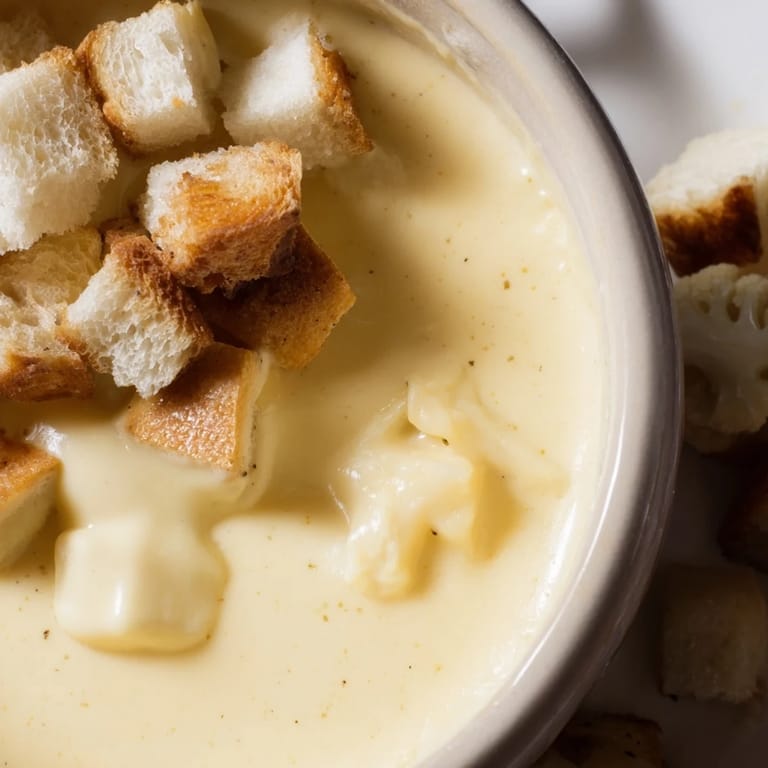
- Save the crusty layer at the bottom of the pot, called la religieuse, and scrape it out to share at the end.
 Pin
Pin Fondue is one of those recipes that gets better the more you make it, not because the technique changes, but because you stop worrying and start enjoying the ritual. Gather your people, pour the wine, and let the cheese do the rest.
Recipe Questions
- → What cheeses are best for this dish?
Gruyère and Emmental cheeses create the ideal creamy and flavorful blend typical of the dish.
- → Can I omit the kirsch (cherry brandy)?
Yes, kirsch is optional and can be left out without impacting the creamy texture, though it adds subtle aromatic depth.
- → How do I prevent the cheese from separating?
Coating the cheese in cornstarch before melting and heating gently over medium-low heat helps maintain a smooth texture.
- → What foods pair well for dipping?
Cubed rustic bread along with blanched broccoli, cauliflower, cherry tomatoes, and baby carrots work beautifully for dipping.
- → How to keep bread cubes from falling off forks?
Using slightly stale or crusty bread offers better grip on fondue forks to prevent slipping.